


Target Shopper Puts a $13.99 Mario Backpack in Her Cart. Then She Becomes the Victim of Dynamic Pricing: ‘I’m Incredibly Mad About It’
Dynamic pricing is increasingly becoming something shoppers despise.
Shopping gets a lot more complicated when the price you checked in the aisle is not the price waiting for you at the register. Most customers probably are not expecting to keep checking the same item while walking around a store just to make sure the cost has not changed.
Target customers already have reasons to pay closer attention at checkout. A price on the shelf does not always settle the matter, as one shopper found when a pair of shorts marked $10 allegedly rang up for $15. And when some products don’t have visible prices at all, shoppers may have little choice but to scan them and trust whatever appears on the screen.
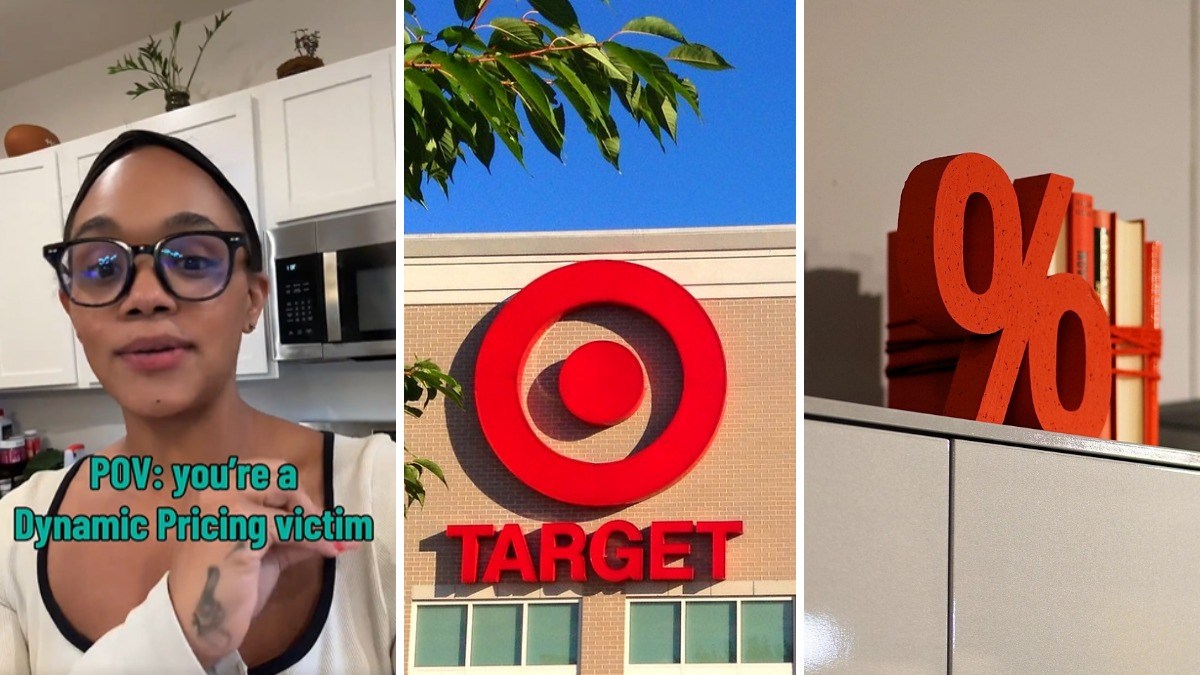
For one mother shopping for school supplies, that question came up before she even left the store. TikTok creator Patrice (@thefuturewiseoldwoman) claims a Mario backpack scanned for $13.99 when she checked the price, only to cost twice as much by the time she reached the register.
She thought she had found a great deal
Patrice explains that she was shopping for school supplies with her son when he chose a Mario backpack set with a lunch box and water bottle. With nearby JanSport backpacks around $60, she expected a similar price. But there was no price on the bag or wall. After scanning it at a kiosk, Patrice was “elated” to see a discounted price of $13.99.
“I was like, let me just go see what the price is,” she recalls. “I walk on over to little kiosk, scan the barcode. I was elated because it was $13.99.” With more money left to spend, Patrice added other items to her cart before heading to checkout.
Then the backpack rang up for $27.99. She told the cashier she had just seen it for $13.99, but a second scan showed the higher price again. After finding no other tag, the shopper returned to the same price checker, which now also displayed $27.99. “Long story short, I was a victim of dynamic pricing in real time,” she claims.
Patrice has a theory about what happened to her backpack. She estimates that she first checked its price at around 4:55 p.m. By the time she reached the register, it was after 5 p.m.
She wonders whether the price increased as more people shopped after work. However, there is no evidence Target changed it based on time or demand. A pricing update, ending promotion, or another system change could also explain the difference.
Shoppers have questioned sudden price changes at other major retailers, too. One customer claimed he watched a water filter’s price change on an electronic shelf label. Walmart denied using dynamic pricing, showing that a real-time price change does not necessarily reveal why it happened.
Still, the timing bothered Patrice enough to plan another visit, scanning the backpack before and after 5 p.m. to see if it happened again. “Target, you will never catch me slipping again,” she says.
She called for dynamic pricing to be illegal and urged shoppers to check prices before checkout. She described it as a 50% jump, though $13.99 to $27.99 is roughly a 100% increase.
Viewers did not hold back in the comments. “Dynamic pricing should be illegal,” one person wrote. Another shared how they try to avoid checkout surprises, writing, “I always take pictures when the price is low because you’re not getting one over on me.” “This happened to me at Walmart,” another claimed, saying scrub pants went from $15 to $25 between picking them up and reaching self-checkout. They canceled the transaction and went home.
For now, Patrice’s experience alone cannot establish that Target is using dynamic pricing. But if her account is accurate, it explains why a shopper might question what happened when the same barcode appears to show one price and then a much higher one before they can even leave the store.
Have a tip we should know? [email protected]
Follow The Mary Sue:
