


Secretary of War just silenced a reporter with a wild claim that Trump isn’t Netanyahu’s puppet, then doubled down with a bizarre defense
More spin than substance.
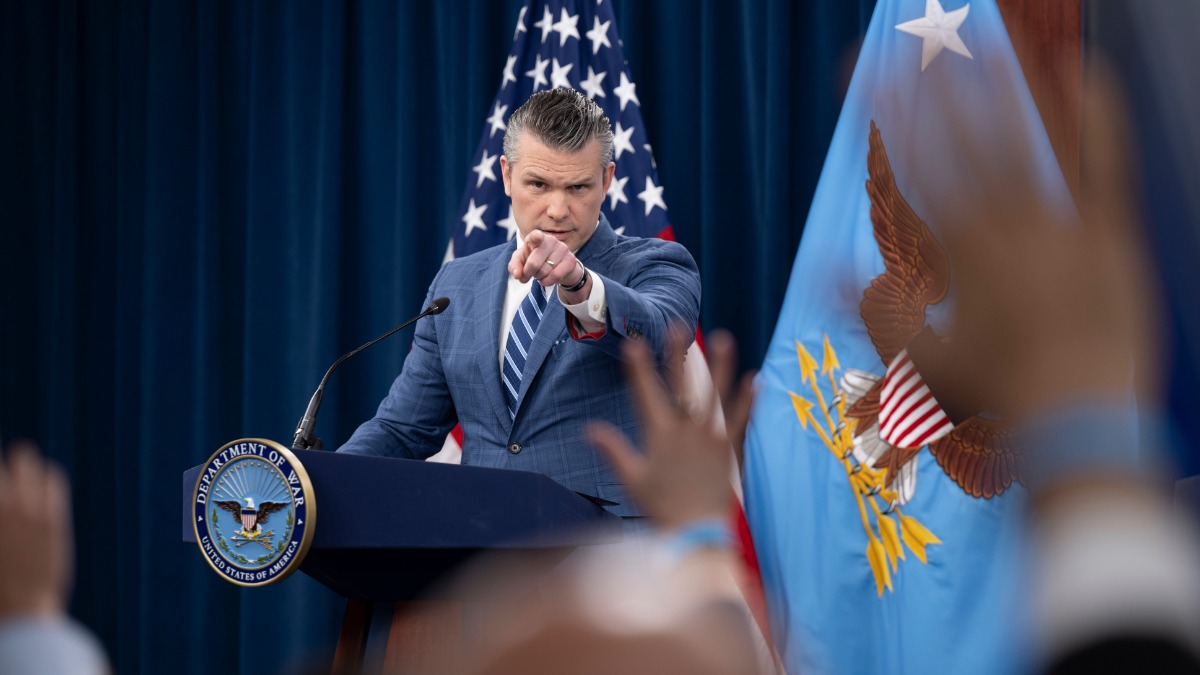
Pete Hegseth just shut down a reporter with a wild claim that Donald Trump isn’t Benjamin Netanyahu’s puppet, then doubled down with a bizarre defense that left the press room buzzing. The exchange happened at the Pentagon briefing on May 5, 2026, where Hegseth, the Secretary of War, cut off Zero Hedge White House correspondent Liam Cosgrove mid-question to insist Trump is the one calling the shots in the Iran war.
According to Mediaite, Cosgrove had just pointed out that Netanyahu and Israel’s Mossad chief have been vocal about their intent to keep fighting until the Iranian government collapses. That’s a pretty direct contradiction to Trump’s efforts to broker a ceasefire and push for lasting peace in the region.
Cosgrove was asking how the U.S. could avoid getting dragged back into war if Israel keeps escalating, especially since Netanyahu has been openly defiant, like continuing airstrikes in Lebanon despite Trump’s explicit requests to stand down. Before the journalist could finish, Hegseth jumped in with, “I would say your question is based on the false premise that somehow President Trump is being pulled in by Prime Minister Netanyahu to any of these actions.”
A bold claim, especially since Netanyahu has been playing by his own rules
Hegseth didn’t stop there, though. He doubled down, insisting Trump is the one steering the ship. “President Trump has led at every step of this based on his view of American interests and America First,” he said. “We’re grateful that Israelis have been very capable partners at many steps of this, and they may have some objectives that, at times, are slightly different than ours, but there’s only one hand on the wheel ultimately directing this… and it’s President Trump.”
That’s a top-tier spin move if you’re trying to sell the idea that the U.S. isn’t just following Israel’s lead. But let’s be real, Netanyahu has made it pretty clear he’s not exactly taking orders from Trump. The whole exchange left a lot of people wondering who’s really in charge here. Is Trump calling the shots, or is Netanyahu just doing his own thing while the U.S. scrambles to keep up?
Hegseth’s defense also came on the heels of another tense moment at the same briefing, where he was grilled about whether the ceasefire with Iran was still holding. A day earlier, Iran had fired cruise missiles at U.S. Navy ships and sent drones toward commercial vessels in the Strait of Hormuz. The U.S. intercepted the threats and even took out six Iranian small boats. So when a reporter asked point-blank if the ceasefire was over, Hegseth’s response was interesting.
“No, the ceasefire is not over,” he said, framing the clash as a “separate and distinct project.” He admitted there would be “some churn at the beginning” but insisted the U.S. would defend itself aggressively if needed. “Iran knows that,” he added. “And ultimately, the president’s going to make a decision whether anything were to escalate into a violation of a ceasefire, but certainly we would urge Iran to be prudent in the actions that they take.”
Claiming the ceasefire is on while acknowledging both sides just exchanged fire is wild
War Secretary Hegseth tried to sell it as a matter of freedom of navigation and protecting international waterways, but it’s hard not to see this as a pretty shaky truce. The Strait of Hormuz is one of the most critical chokepoints for global oil shipments, and any disruption there sends ripples through the global economy. If this is what “churn” looks like, what would a full-blown violation entail?
The bigger picture here is that the U.S. is trying to juggle a lot of moving parts. On one hand, Trump is pushing for a lasting peace deal with Iran, something that would be a massive win for his administration and a relief for American farmers and businesses. On the other, Israel is making it clear it’s not ready to stand down, and Iran isn’t backing off. Hegseth’s insistence that Trump is the one in control feels like trying to put out a fire with gasoline.
What’s worse is how Hegseth framed the U.S.-Israel relationship
He called Israel a “very capable partner” but made it sound like they’re just along for the ride. “They may have some objectives that, at times, are slightly different than ours,” he said. That’s a generous way to describe Netanyahu’s recent actions, which have included continuous bombing despite Trump’s explicit requests to stop.
The whole briefing left more questions than answers. If Trump is really the one calling the shots, why does it feel like Netanyahu is running his own playbook? If the ceasefire is still holding, why did the U.S. and Iran just exchange fire in the Strait of Hormuz? Hegseth’s answers didn’t do much to clear things up. They did make one thing clear: the U.S. is walking a tightrope in the war, and it’s not entirely clear who’s holding the safety net.
For now, all eyes are on Trump to see how he handles the next move. If Israel keeps pushing its own agenda and Iran keeps testing the limits of the ceasefire, the U.S. might not have much of a choice but to get dragged back into the conflict. If that happens, Hegseth’s insistence that Trump is the one in control might start to sound a lot less convincing.
(Featured image: SECWAR)
Have a tip we should know? [email protected]
Follow The Mary Sue:
