


Scientists Just Opened a Long-Ignored Drawer to Find the First Proof of a Giant That Shouldn’t Have Been in Antarctica
40 years later...
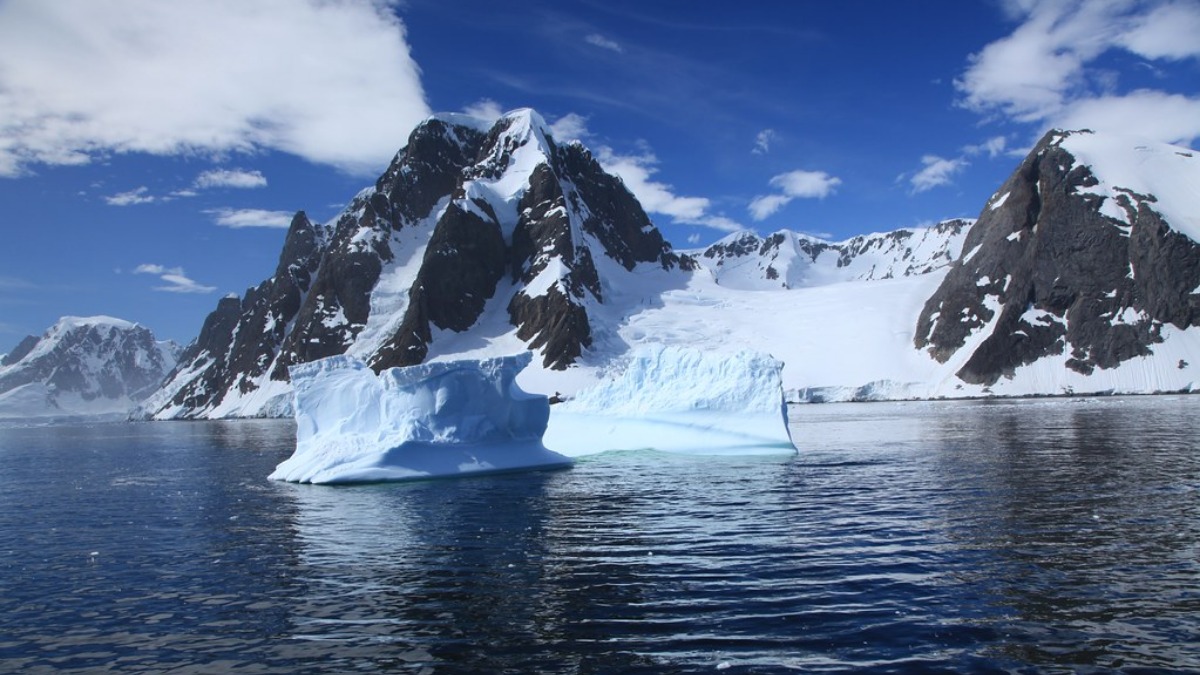
Scientists just cracked open a dusty drawer in a Cambridge lab and pulled out the first dinosaur bone ever found in Antarctica, a discovery that sat unnoticed for 40 years. According to BBC, the unassuming fossil, a tail vertebra about the size of a fist, turned out to belong to a Titanosaur, the group of long-necked giants that includes the largest land animals to ever walk the Earth.
It was dug up on James Ross Island in 1985, but the team that found it scribbled “vertebra of large reptile” in a field notebook and tucked it away, assuming it was just another marine creature from the icy continent. Dr. Mark Evans, the collections manager at the British Antarctic Survey, was the one who finally spotted it decades later.
“It’s only when you start thinking ‘what’s in this drawer,’ that sometimes you come across something and you think, ‘Ah, this looks interesting,’” he said. Evans immediately noticed the bone’s dinosaur-like shape and called in Prof. Paul Barrett from the Natural History Museum to confirm it.
Barrett didn’t need long to ID it
Holding the fossil, he pointed out the telltale ball-and-socket joint that’s unique to Titanosaurs. “As soon as I saw it, I knew what we were dealing with… it was a dead cert we were dealing with a Titanosaur,” he said. The bone’s size suggests the dinosaur was about 23 feet long, though Barrett thinks it might have been a juvenile or just a smaller species bucking the trend of its massive relatives.
This discovery is a big deal because Antarctica’s fossil record is sparse, thanks to the continent’s harsh conditions and thick ice cover. The bone dates back 82 million years to the Late Cretaceous Period, when Antarctica was a lush, forested paradise instead of the frozen wasteland we know today.
Barrett put it best: “It shows that an area that we now think is really uninhabitable was once actually very habitable and had this huge cast of characters living on it.” The find also helps fill in gaps about how these dinosaurs lived in extreme southern ecosystems, where daylight swings between endless summer sun and months of winter twilight.
The story of this fossil is almost as wild as the dinosaur itself. It was collected during a 1985 expedition, where researchers were mostly focused on marine fossils. The vertebra was found alongside ammonites, which helped scientists precisely date the rock layer to the Campanian stage of the Late Cretaceous.
Barrett explained that the dinosaur’s remains likely washed out to sea after it died, floating alongside those ancient sea creatures. “It’s quite precisely dated because it’s from marine rocks,” he said. That makes this fossil not just the first dinosaur bone found in Antarctica, but also one of the most accurately dated.
Titanosaurs were everywhere during the Late Cretaceous
Over 100 titanousaur species have been identified across the globe. These plant-eaters had ridiculously long necks for reaching treetops and tails that acted as counterbalances. The biggest ones stretched over 115 feet and weighed as much as 60 tonnes, but this Antarctic specimen was on the smaller side. Barrett thinks it might have been a juvenile or part of a species that stayed petite, which is fascinating given how most Titanosaurs were absolute units.
What’s even cooler is how this fossil might help solve a mystery about dinosaur migration. Titanosaurs have been found in New Zealand, but curiously, none have turned up in Australia. Antarctica, which was connected to South America at the time, might have been the missing link.
“At the time, New Zealand was, weirdly, quite a long way away from Australia,” Barrett said. “It was closer to southern South America and the Antarctic Peninsula than it was to Australia.” That means these giants could have wandered from South America through Antarctica and into New Zealand, completely bypassing Australia. It’s a theory that needs more fossils to confirm, but this little vertebra is a solid first step.
Antarctica during the Late Cretaceous was a far cry from today’s icy landscape. The continent was still attached to South America and covered in temperate forests full of ferns, palms, and conifers. It would have looked a lot like modern-day Tasmania, with dramatic seasonal shifts in daylight. Despite the challenges, the ecosystem was thriving.
So far, scientists have identified about half a dozen dinosaur species from Antarctica
According to the Natural History Museum this list included small herbivores like Morrosaurus, armored ankylosaurs like Antarctopelta, and two-legged predators like Imperobator. There were even early birds, like Vegavis, an ancient relative of ducks and geese. The discovery of this Titanosaur vertebra adds another piece to the puzzle, proving that these massive sauropods were part of the mix too.
The fact that this fossil sat in a drawer for 40 years is a reminder of how much we still don’t know about Earth’s history. Antarctica is one of the toughest places for paleontologists to work, with ice and extreme weather hiding most of the prehistoric record. But every now and then, a forgotten specimen like this one turns up and rewrites what we thought we knew.
Barrett summed it up perfectly: “It’s helping us to work out how they fitted into these broader ecosystems at the very bottom of the world about 80 million years ago.” This tiny bone might not look like much, but it’s a giant leap for understanding how dinosaurs thrived in one of the most extreme environments on Earth.
(Featured image: Liam Quinn)
Have a tip we should know? [email protected]
Follow The Mary Sue:
