


Trump’s DOJ just revived firing squads for federal executions, a move critics call a return to the dark ages of justice
A fundamental realignment of federal policy.
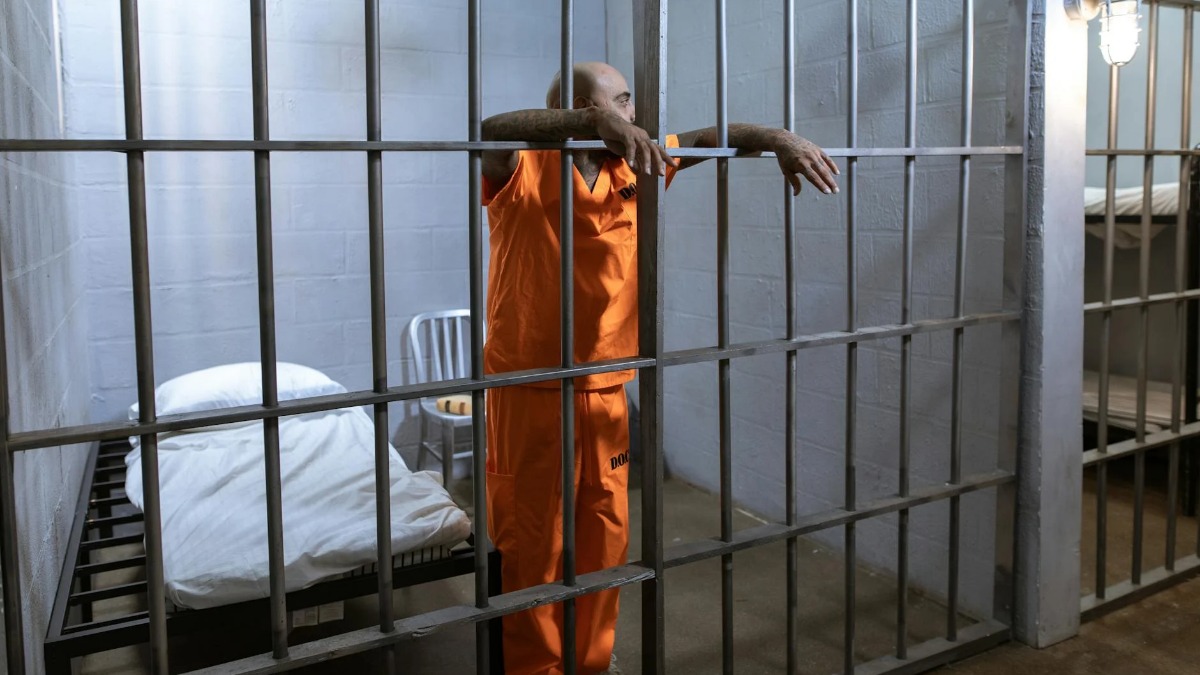
The Department of Justice (DOJ) just announced it’s bringing back firing squads for federal executions, a move that’s already drawing sharp criticism from opponents of capital punishment. The policy shift, unveiled in a document on April 24, 2026, outlines plans to expand the use of the death penalty under the current administration, including the revival of execution methods like firing squads, electrocution, and lethal gas.
According to Al Jazeera, the DOJ framed the decision as a return to justice, arguing that the federal death penalty had been effectively gutted under the Biden administration. The policy document explicitly calls the pause on federal executions a failure that turned death sentences into de facto life terms.
Acting Attorney General Todd Blanche didn’t mince words, stating, “Justice had been thwarted. Under President Trump’s leadership, the Department of Justice will do everything in its power to reverse these failures and restore justice.” The administration is also doubling down on the use of pentobarbital for lethal injections, dismissing concerns about the drug’s potential to cause unnecessary pain and suffering.
Firing squads operate in a grimly methodical manner today
Take South Carolina’s recent execution of Brad Sigmon, the first firing squad execution in the U.S. since 2010, per CNN. Sigmon, 67, convicted of double murder, was strapped to a chair, hooded, and shot by a three-person team from 15 feet away. Witnesses described the moment the shots rang out – three rifles firing simultaneously, each loaded with live rounds designed to shatter bones and destroy the heart.
Sigmon was declared dead just over two minutes later, though the execution was far from a quick, clean process. His attorney called the death “horrifying and violent,” noting that none of the bullets struck Sigmon’s heart directly, prolonging his suffering. The mechanics of firing squads vary by state. In Utah, a five-person team fires from 20 to 25 feet away, with one rifle loaded with blanks to obscure which shooter delivered the fatal shot.
South Carolina’s protocol is even more clinical, with the rifles hidden from witnesses and the inmate’s profile visible only from one side. The bullets used – like the .308 Winchester TAP Urban rounds in Sigmon’s execution – are designed for rapid expansion and fragmentation, ensuring a swift but brutal end.
Critics argue that firing squads are a step backward, both legally and ethically
The Eighth Amendment prohibits “cruel and unusual punishments,” but the DOJ maintains that methods like firing squads, electrocution, and lethal gas are constitutionally acceptable. That stance is hotly contested. Autopsies of past firing squad executions have raised serious questions about whether the method is as humane as proponents claim.
There’s also the issue of wrongful convictions. Since 1973, at least 202 people on death row in the U.S. have been exonerated, according to the Death Penalty Information Center.
Studies consistently show that the death penalty is disproportionately applied to minorities and the poor. The Trump administration’s push to expand executions is framed as a way to deliver justice for victims and closure for their families, but opponents argue it’s a regressive move that ignores the systemic flaws in the justice system.
The document even calls for expanding federal death row and constructing new facilities to accommodate additional execution methods, signaling a long-term commitment. Public opinion on capital punishment has been shifting, with a growing number of countries abolishing it entirely. The U.S. is an outlier among its peers. Canada and Mexico have both banned the practice, and all but one European nation (Belarus) have done the same.
The previous administration executed 13 federal prisoners in its final months, ending a nearly two-decade informal moratorium. The current administration had taken the opposite approach, commuting the sentences of 37 of the 40 inmates on federal death row to life imprisonment just last December. Now, the DOJ is vowing to reverse those commutations, framing them as a miscarriage of justice.
The revival isn’t happening in a vacuum
States like Idaho are already moving to make firing squads the primary method of execution, a response to ongoing challenges in obtaining lethal injection drugs. South Carolina’s execution of Sigmon was the first firing squad death in 15 years, but it likely won’t be the last. It has 28 inmates on death row, and with lethal injection drugs becoming harder to source, firing squads may become the default option.
Sigmon himself chose the firing squad over lethal injection or electric chair, a decision his attorneys say was made out of desperation. They’d fought to obtain basic information about the drugs in lethal injections – expiration dates, test results, storage conditions – but were stonewalled.
His final statement was a plea for mercy, not for himself but for the broader system. “I want my closing statement to be one of love and a calling to my fellow Christians to help us end the death penalty,” he said, quoting Bible passages that emphasize forgiveness.
His attorney, Gerald “Bo” King, described Sigmon as a man who had devoted himself to faith and ministry during his 23 years behind bars, committing no acts of violence while incarcerated. That didn’t stop the state from carrying out his execution, or the Supreme Court from declining to intervene. As is often the case, the Court didn’t explain its reasoning, leaving Sigmon’s fate in the hands of a system that critics say is broken.
For those who support capital punishment, the move may be seen as a necessary step to hold the worst offenders accountable. The DOJ’s statement called it a way to “deter the most barbaric crimes, deliver justice for victims, and provide long-overdue closure to surviving loved ones.” But for opponents, it’s a return to a darker era of justice – one where the state’s power to kill is wielded with little regard for the flaws in the system.
(Featured image: RDNE Stock project on Pexels)
Have a tip we should know? [email protected]
Follow The Mary Sue:
