


Newsom Is Calling for a National Economic Reset, and His Plan to Tax the Richest Americans Includes a Surprising Stake in the AI Boom
Wealth inequality and economic justice.
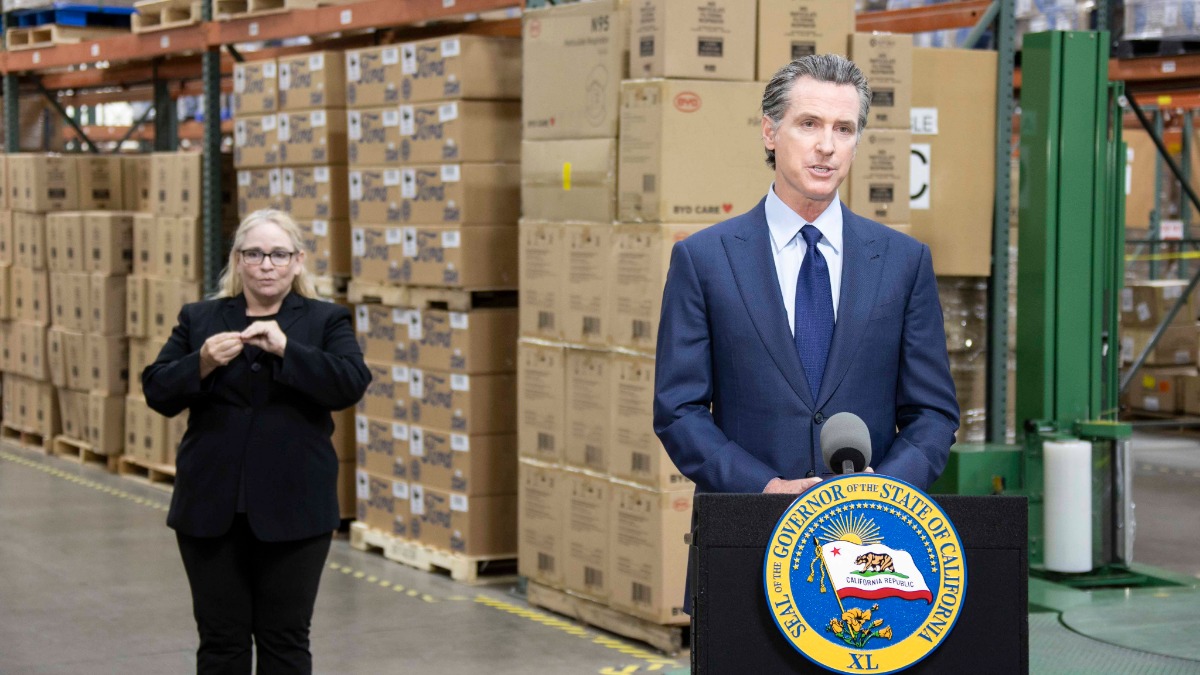
Governor Gavin Newsom just dropped a proposal that could reshape how America taxes its richest citizens, and it comes with a surprising twist – giving everyday Americans a direct stake in the AI boom. According to The Hill, in an op-ed published on Substack, Newsom called for a national billionaire tax paired with a public equity fund that would let citizens share in the financial windfall of artificial intelligence.
California voters will decide this November on a separate billionaire tax that Newsom has actively fought against. Newsom’s plan targets individuals with a net worth of $100 million or more, imposing what he calls a “true minimum tax” on their wealth. That’s a step beyond the one-time 5% tax on billionaires that California’s healthcare union pushed onto the ballot.
Newsom argues the state-level measure is flawed because it funnels most of its revenue into a single spending category – offsetting federal healthcare cuts – while ignoring other priorities like schools and housing. His national proposal, on the other hand, would overhaul inheritance laws to prevent what he describes as a “permanent American aristocracy of inherited wealth.”
Newsom didn’t hold back in his criticism of the California initiative
He wrote that “wealth is movable, and it shops for the state with the lowest taxes.” He insists the real fight belongs at the federal level, where the tax system was created and where it can be fixed without driving wealthy residents out of high-tax states. That’s a direct shot at tech billionaires like Google co-founder Sergey Brin, who have already moved assets out of California in response to the proposed ballot measure, according to POLITICO.
Newsom’s national plan isn’t just about taxing the ultra-rich, though. It also includes a national public equity fund that would let Americans invest in the profits generated by AI companies. That’s a savvy move, considering AI is one of the fastest-growing sectors in the economy.
By giving citizens a share in those gains, Newsom is betting he can build a broad coalition that includes both blue-collar and white-collar workers – groups that might not always see eye to eye but share concerns about economic disruption. He framed the idea as part of a larger push to “democratize the economy” and, in his words, “save democracy.”
This isn’t the first time Newsom has dabbled in economic populism, but it marks a noticeable shift from his earlier stance on wealth taxes. Just two years ago, he snapped at reporters asking about a state-level wealth tax, saying, “Are you supporting a wealth tax? No, yet again. Why the hell do you keep writing about that?”
Now, he’s not only embracing the idea but pushing for it on a national scale. He told reporters the pivot isn’t a reaction to the California ballot measure, insisting he’s been laying the groundwork for months. “It’s not like I woke up and thought, ‘Oh, the billionaire’s tax is on, I need to say something,’” he said. “I’ve been saying this for many, many months.”
Still, the timing is hard to ignore
Newsom’s op-ed landed just hours after the California billionaire tax secured its spot on the November ballot, and his national proposal reads like a direct counter to the state-level measure. Supporters of the California initiative aren’t buying his explanation.
Dave Regan, the leader of the healthcare union behind the ballot measure, accused Newsom of political maneuvering. “I do know [until] we came forward with this and we crossed the deadline, he had not been talking about anything of the kind,” Regan said. “So we welcome his evolution on the issue. We just wish the governor would focus on the immediate needs of California and not worry about what happens in two to four years in Washington, D.C.” Progressive critics have been even harsher.
California Rep. Ro Khanna, who’s eyeing a 2028 presidential run, called Newsom’s national proposal a “political dodge.” Khanna argued that opposing a concrete state tax while pushing a hypothetical national one is classic flip-flopping. “It’s not going to pass muster to say, ‘well, when we were fighting to have a billionaire tax to save health care for 3 million Californians, I sided with the billionaires, but in the future I want to tax these billionaires,’” Khanna said. “That just isn’t going to pass muster.”
Newsom’s team is betting that voters will see the bigger picture
His opposition to the California tax has already shored up his reputation as a fiscal moderate, countering criticism that he’s an unrestrained tax-and-spend liberal. It’s also helped him maintain ties with Silicon Valley, a key source of campaign funding. But his national proposal could strain those relationships, especially since it includes taxing tech billionaires and creating a public equity fund that would let Americans profit from AI.
The governor isn’t backing off. When asked about detractors who call his plan communist or insufficient, he brushed them off. “I don’t care. You say it’s communist … that’s not even interesting to me,” he said. “If you say it’s not good enough, well, with all due respect, I went with the teachers, the firefighters, I went with Planned Parenthood and with the vast majority of people who know better about what the impact of this particular initiative would do to California.”
Newsom’s national billionaire tax and public equity fund proposal is more than just a policy idea. It’s a strategic play to position himself as a leader with a bold economic vision. Whether it resonates with voters or backfires as political opportunism remains to be seen.
Either way, it’s clear he’s staking out ground in the Democratic Party’s ongoing debate over wealth inequality and economic justice. And with AI poised to reshape the economy, his plan to give Americans a direct stake in its profits could be a game-changer.
(Featured image: Office of the Governor of California)
Have a tip we should know? [email protected]
Follow The Mary Sue:
