


FIFA President Gianni Infantino Is Preaching Sustainability While Racking up a Massive Carbon Footprint on a Private Jet
Excess, not efficiency.
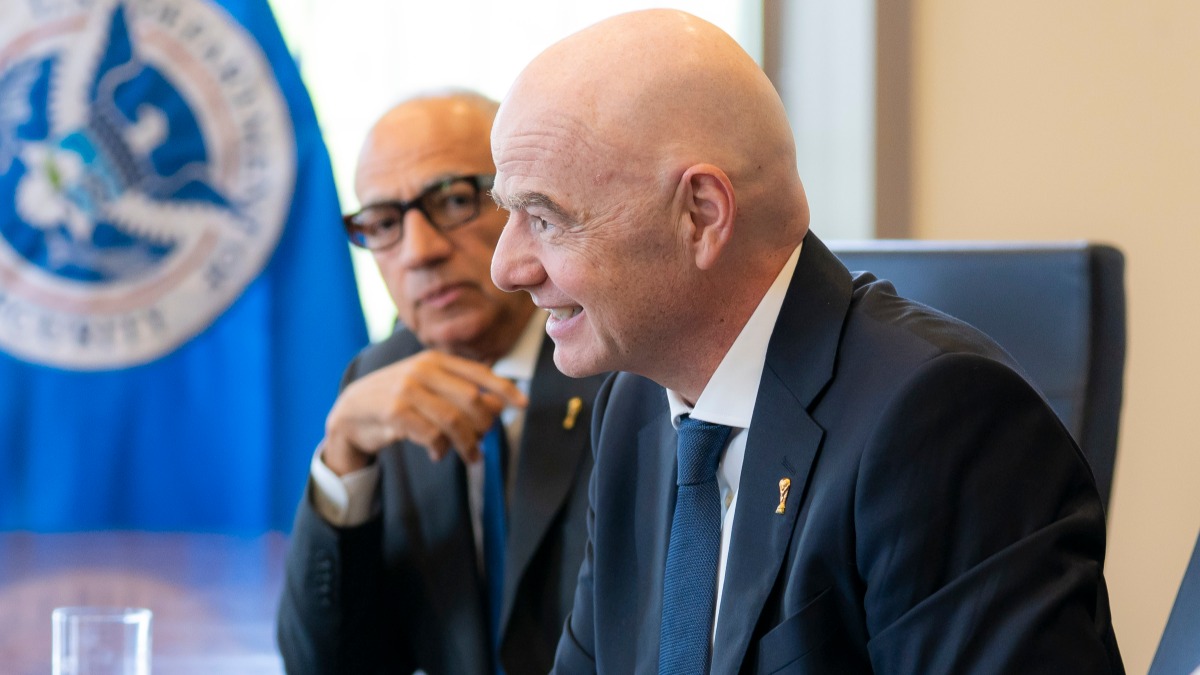
FIFA President Gianni Infantino is flying around the 2026 World Cup in a private jet, racking up a carbon footprint equivalent to 78 people’s yearly emissions in just two weeks. That’s the latest finding from tracking data that mapped 27 flights linked to Infantino during the tournament’s group stage, all while he’s been preaching sustainability as a core FIFA value.
The numbers are staggering. According to the BBC, the jet logged at least 31,144 miles and spent more than 66 hours in the air since the tournament began. The estimated emissions from those flights, around 516 tons of CO2-equivalent.
Infantino has attended 24 matches so far, often crisscrossing the continent to catch two games in a single day. On June 15, he flew from Miami to Seattle to watch Belgium play Egypt, then headed south to Los Angeles for Iran’s match against New Zealand, covering over 3,600 miles in one day.
FIFA had pledged to cut emissions
FIFA’s sustainability strategy for the 2026 World Cup, which spans the U.S., Canada, and Mexico, explicitly promises to “play our part” on climate issues. The organization has pledged to cut emissions by 50% by 2030 and reach net-zero by 2040. This year’s tournament was designed with regional hosting in mind, aiming to reduce long-haul travel for fans and teams.
FIFA also touted efforts to boost energy efficiency, promote electric vehicles, and conserve water. But Infantino’s travel habits tell a different story. The jet he’s reportedly using, a Gulfstream G650ER, burns about 1,817 liters of fuel per hour. Private jets are not just inefficient – they are the most carbon-intensive way to fly.
The contrast between FIFA’s promises and its president’s actions hasn’t gone unnoticed. Freddie Daley, a researcher at Sussex University and part of the sport climate action network Cool Down, called Infantino’s private jet use “symptomatic of FIFA’s failings on the environment and sustainability.” “The fact that Infantino’s choosing to use a private jet is just completely at odds with the level of leadership that we need to see at the top of FIFA on environmental issues,” he said.
Denise Auclair, a sustainable travel expert at the European Federation for Transport and Environment, put it even more bluntly. Private jets, she said, are “five to 14 times more polluting than commercial planes and 50 times more than trains.”
FIFA’s response to the scrutiny has been vague
A representative told BBC Sport that Infantino “routinely travels, together with relevant officials, on business and tournament-related matters” and that the mode of transport – whether commercial or private – is chosen based on what’s “more efficient and cost-effective under the circumstances.”
The organization didn’t answer specific questions about whether any of the flights were on commercial airlines, how many people were on board the private jet, or whether FIFA offsets the emissions from these trips. That silence speaks volumes, especially when you consider the scale of the tournament itself.
This World Cup is already shaping up to be the most polluting ever. A 2025 report from Scientists for Global Responsibility estimated the tournament’s total carbon footprint could hit nine million tonnes of CO2-equivalent. That’s nearly double the average of the last four World Cups.
The sheer size of the event – 16 host cities across three countries – makes it a logistical nightmare for sustainability. But FIFA’s environmental pledges were supposed to mitigate that. Instead, the organization is facing skepticism before the knockout rounds have even begun.
The criticism isn’t new
In 2023, a Swiss regulator ruled that FIFA had “made false statements” by claiming the 2022 Qatar World Cup was carbon-neutral. The regulator found that FIFA’s offsetting efforts, which relied on investments in low-carbon initiatives, didn’t hold up under scrutiny.
FIFA responded by acknowledging that climate change is “one of the most pressing challenges of our time” and insisting it’s committed to “immediate and sustainable climate action.” But actions, as they say, speak louder than words. And right now, Infantino’s jet-setting is drowning out FIFA’s green rhetoric.
It’s worth noting that the 2022 World Cup in Qatar was a very different beast. All 64 matches were played in eight stadiums within an hour’s drive of each other. Infantino attended every single game, but the carbon footprint from his travel was a fraction of what it is now.
This year’s tournament, spread across an entire continent, was always going to be a challenge for sustainability. But FIFA’s own president isn’t just failing to rise to that challenge – he’s actively undermining it.
The irony is hard to ignore
FIFA’s sustainability strategy for 2026 includes efforts to reduce reliance on long-haul travel, yet Infantino’s schedule reads like a masterclass in the opposite. On June 22, the jet flew just 92 miles from Philadelphia to Teterboro Airport in New Jersey. Infantino didn’t even attend a match that day. He was in New York for a Fox News interview before flying to Boston and Toronto later that evening.
If you’re a fan of the World Cup, you might be wondering what all this means for the future. FIFA’s environmental pledges aren’t just empty words. They’re supposed to set a standard for global sports. But when the organization’s own president is burning through carbon like it’s going out of style, it’s hard to take those pledges seriously. The 2026 World Cup was always going to be a test for FIFA’s sustainability efforts. So far, it’s not going well.
(Featured image: DHSgov)
Have a tip we should know? [email protected]
Follow The Mary Sue:
