


Minnesota Traveler Went to Iran Before the US Bombings. It Wasn’t Anything Like He Expected: ‘You Look Through the Fog’
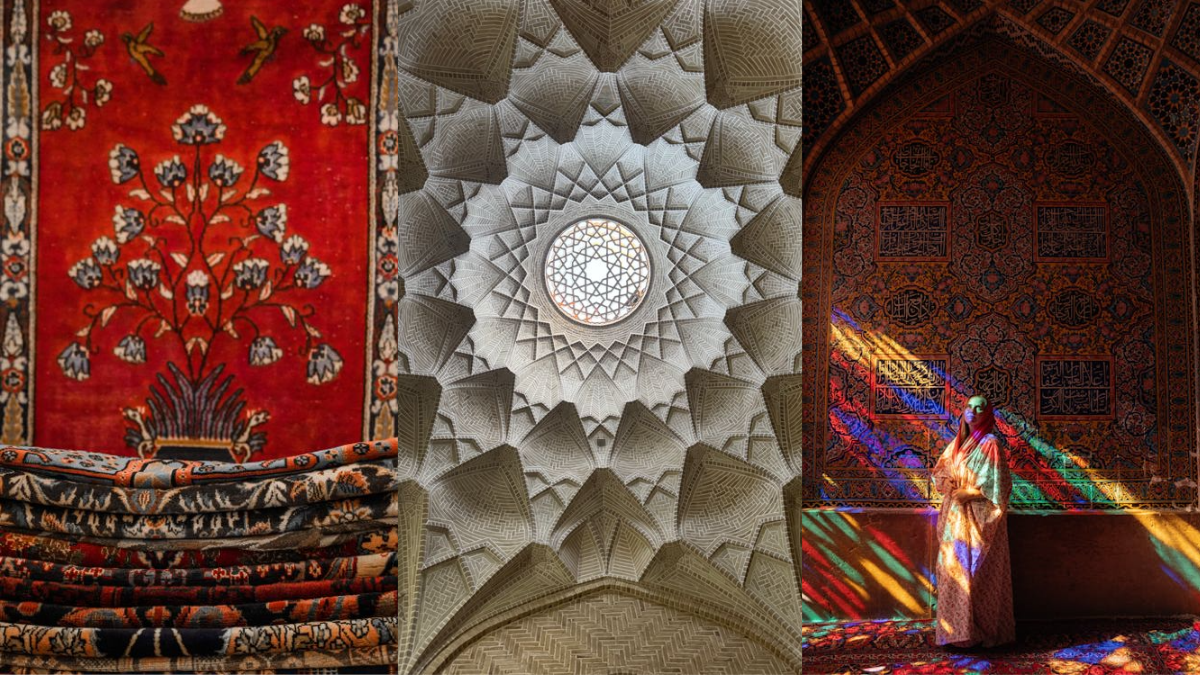
Through the years, Iran and the United States have been antagonistic against each other. With President Donald Trump’s strike against Iran, a catastrophic war has begun—with an end that’s nowhere in sight. But Alex Page (@alex.by.air), a traveler from Minnesota, went to Iran before war broke out. He didn’t know what to expect, but through his travels, he was able to see beyond the narratives back home.
“So, they say that if you fly to Iran, you’ll be taken, abducted,” he told TikTok.
But he continued, “Into one of the most transformative travel experiences you’ve ever had.” Page’s introduction isn’t without context. The United States government strictly issues warnings against traveling to Iran.
Even Trump’s rhetoric prior to his attack has shown that he did not see Iran favorably.
“A world of stunning architecture, thousand-year-old Persian rugs, traditional ice cream,” Page’s clip panned to a scene of Nasir al-Mulk Mosque. Otherwise known as the “Pink Mosque” located in Shiraz, it’s notable for its stained glass windows that are over 130 years old.
Page acknowledged that the country is facing some of the worst air pollution in the world. Nevertheless, he continued with his travels. “But to see the real Iran, you look through the fog.”
Different people, but still people all the same
He mentioned the people he’s met in Qom, one of the most religious cities in the country. Despite being consistently portrayed as a religious dictatorship, Page was able to have a candid conversation with what he called an Islamic leader (imam).
“You’re from opposite worlds in almost every way. And yet somehow, you find a way to have the most amazing three-hour conversation because you really aren’t very different,” Page said. After which, he filled up the car with gas, full-tank, for just $2 before heading to Isfahan.
It’s no surprise that gas is cheap, as Iran is one of the top oil producers in the world. Interestingly, the United States is also rich in crude oil and natural gas—and yet, full-tanking any vehicle in the country would only be possible in dreams. Undoubtedly, these are the result of policy decisions.
Page went to Isfahan to meet a woman his age. She told him about her experiences of being Gen Z and living in Iran for the past year.
“You become good friends. That’s why she had the crazy idea of climbing a mountain together in the middle of the night,” he said. If it were back home, Page would have probably refused to go hiking up a mountain in the wee hours of the morning. And yet, he emerged unscathed, fondly recalling the thrilling experience.
Iran has a sense of community
“You have dinner with a stranger, learn backgammon the Iranian way,” he narrated. Page went to Yazd with his party, bearing witness to the city’s sound-dampening clay structures. Going into these buildings, Page said that they were silent from within—there’s nothing less to expect from a UNESCO heritage site.
“And yet, there is this intangible thing you can sense, and it hits you. As you’re having your third dinner with a stranger in the same week. Iran has something almost no other country has—a social rule, that it’s normal and welcome to talk with people as you walk around the streets,” he explained. If anyone tried that in New York City to a stranger, they’d probably be stared at strangely or ignored—not because they’re rude, but because they’re wary of strangers. A country where strangers are encouraged to converse suggests mutual trust.
Page even noted that it was impossible not to talk to people, as they would often start a genuine conversation. “They actually have community, which is something I think the rest of the world could really learn from.”
(featured images: Amir Mazlumi, Faruk Tokluoğlu, Oksana Shchegolkova)
Have a tip we should know? [email protected]
Follow The Mary Sue:
