


Jersey Mike’s worker says customers keep ordering the plain ham and provolone No. 3. Then he points out: ‘It’s literally cheaper to make it at home’
Half the reason I buy a sub is so I don't have to slice anything myself.
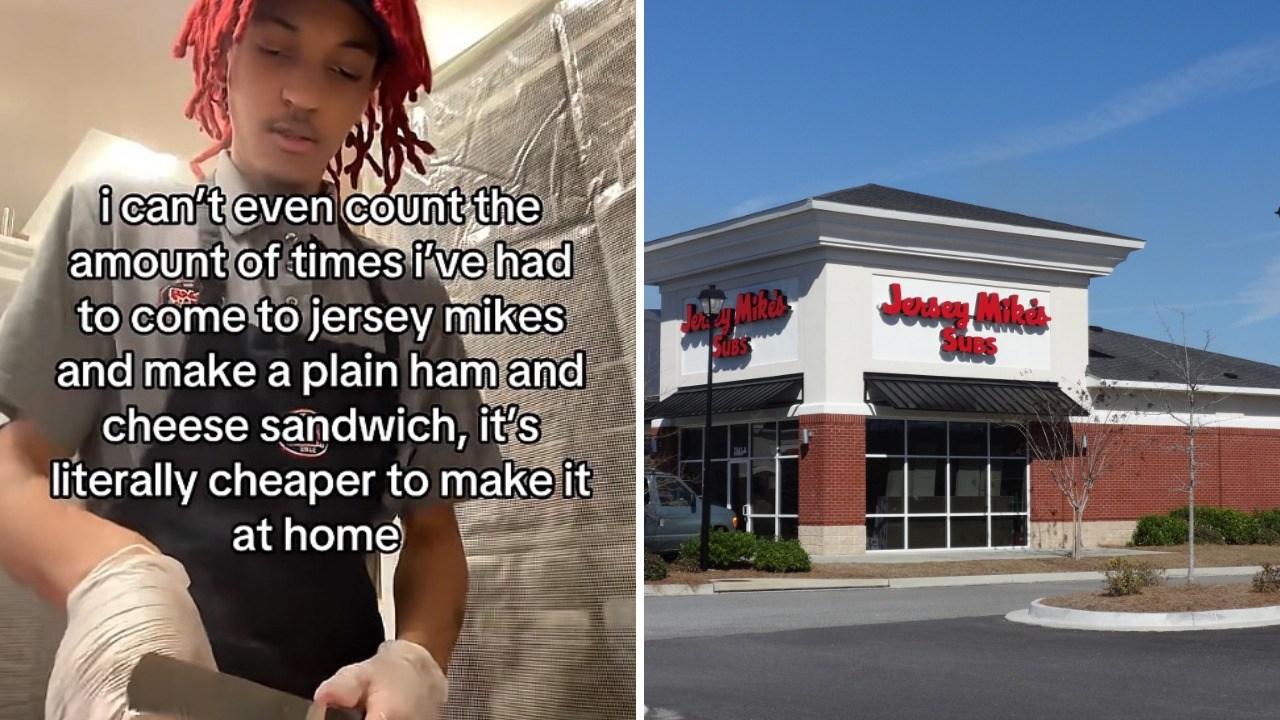
A Jersey Mike’s worker says plain ham and cheese subs are among his most frequent orders, and he thinks customers are overpaying. “I can’t even count the amount of times I’ve had to come to Jersey Mikes and make a plain ham and cheese sandwich, it’s literally cheaper to make it at home,” Izzy Santana wrote on TikTok.
The order he describes matches the No. 3 on the Jersey Mike’s menu: a cold sub made with just ham and provolone. Customers can have it made Mike’s Way, which adds onions, lettuce, tomato, vinegar, oil, oregano, and salt. His video also lands as some regulars have complained about paying $13 for smaller subs at the chain.
Commenters cited in the report pushed back, arguing that a sandwich tastes better when someone else makes it. Jersey Mike’s does not appear to have publicly responded to the video. Santana is not the first Jersey Mike’s employee whose comments on value have reached TikTok, as another worker reportedly told a diner the subs had less meat.
Ham and provolone is about as simple as a sub gets
The price of a Jersey Mike’s No. 3 varies from store to store, at least on delivery apps. A DoorDash listing for a location in Clifton Park, New York, shows a regular starting at $8.34. However, an Uber Eats listing for another store prices it at $10.74 and tags it as that location’s most popular item.
Santana’s argument rests on cost, as deli ham, provolone, and sub rolls are everyday grocery items. The Bureau of Labor Statistics put the national average price of boneless ham at $5.26 a pound in October, according to Federal Reserve Economic Data. A single regular No. 3 costs more than that full pound at both of the stores listed above.
A copycat breakdown from Daily Meal priced a homemade version of the chain’s Original Italian at about $7.50 per sub, compared with more than $12 at Jersey Mike’s. However, that estimate assumed one round of groceries would cover at least four sandwiches. Jersey Mike’s delivery listings also pitch its cold subs as sliced fresh in front of the customer.
The government’s numbers back Santana up
The gap Santana describes shows up in federal price data. The Bureau of Labor Statistics reported that food away from home prices rose 3.5% in the 12 months ending in September, while grocery prices rose 1.8%. Limited service meals, the category covering fast food and other counter-service spots, climbed 3.2% over the same period.
October brought more of the same, with food away from home prices up 0.5% for the month, compared with a 0.4% rise at the grocery store. The agency could not publish annual comparisons for October, as it did not collect survey data that month in 2025 during the government shutdown.
Part of that difference comes from what a restaurant price has to cover. The USDA’s Economic Research Service found that 92.9 cents of every 2024 food-away-from-home dollar went to costs beyond the farm, against 81.5 cents for groceries. The agency said the share runs higher as outlets like restaurants carry the added cost of preparing and serving meals.
Spending on meals out has kept growing anyway. The agency’s data shows food away from home made up 56.3% of total U.S. food spending in 2025, at about $1.41 trillion. Food at home, which covers groceries, came to roughly $1.10 trillion that year.
The USDA’s latest Food Price Outlook, updated in November, forecasts that food-away-from-home prices will rise 3.6% in 2026. Grocery prices are expected to rise 2.4%, with both projections built on the most recent October consumer and producer price data.
For 2027, the USDA forecasts restaurant and other food-away-from-home prices will rise another 3.6%, nearly double the 1.9% increase it expects for groceries.
Have a tip we should know? [email protected]
Follow The Mary Sue:
