FAA grounds all flights nationwide, then Transportation Secretary Sean Duffy states the communication-based reason why: ‘Extraordinary circumstances’
Over four hours of panic.
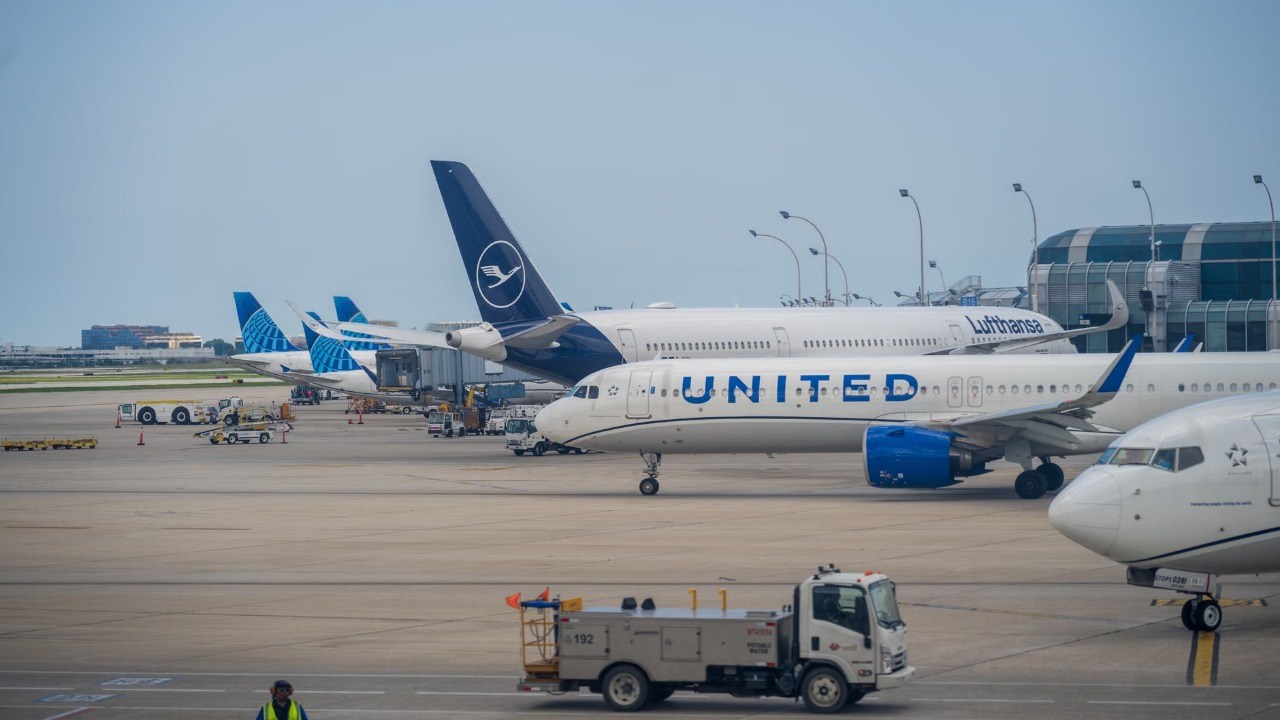
The Federal Aviation Administration (FAA) officially lifted a nationwide ground stop that kept thousands of planes on the tarmac for hours this Friday, November 13, 2026. According to the Associated Press, the agency gave the green light for departures to resume after addressing the communication issues that triggered the rare halt earlier in the day. This event marked only the second time a nationwide ground stop has occurred since the aftermath of the September 11, 2001, attacks.
The trouble started Friday afternoon when the FAA issued a stop for all flights across the country. Transportation Secretary Sean Duffy cited “extraordinary circumstances” as the primary driver for the decision. The agency noted the situation stemmed from communication problems at regional air traffic control centers. These facilities are responsible for guiding planes at high altitudes while they travel between airports nationwide.
Homeland Security Secretary Markwayne Mullin addressed the situation from the White House, telling reporters that there was no indication yet that “this was a nefarious attack against us. It’s just a telecommunications outage as of right now.” He added that the public should remain calm regarding the safety of those in the air. “Everybody’s safe. There’s no reason to be concerned about your loved ones if they’re flying,” Mullin said. He later noted during a press conference that the situation “appears this was mechanically driven.”
The grounding was the result of an ‘abundance of caution’
The FAA, which posted on X that it acted out of an “abundance of caution,” dealt with a massive logistical headache. CNBC reports that data from the aviation analytics firm Cirium shows that at least 827 flights were diverted as a result of the order.
By 7:05 PM EST, 670 of those flights had been sent back to their original departure airports, while 157 were redirected to different locations. Major hubs like Washington Dulles, Los Angeles International, Cincinnati/Northern Kentucky, and Nashville International saw a high volume of these diversions.
For travelers, the experience was understandably frustrating. Amber McQuilkin, a 27-year-old software engineer from Seattle, found herself stranded at Chicago O’Hare Airport while trying to reach New York for the League of Legends world finals. “There’s not really any information being passed to me,” she said.
Austin Curtis, another traveler stuck at O’Hare while trying to get to a baby shower in Denver, shared similar sentiments. After being told to deplane, he and his wife were left to wonder if they should book a hotel or wait out the uncertainty at the terminal. “We did see them taking luggage off our plane and others, so we’re assuming it’s going to be a pretty substantial delay,” Curtis said.
The ripple effects of the ground stop were felt across various sectors
Sports teams, including NBA, NHL, and college squads, were left stranded, while NFL teams had to wait to see if they could reach their destinations for weekend games. Cargo operations also hit a wall. FedEx, the world’s largest cargo airline, stated it was prepared to activate contingency plans to keep any potential disruptions at a minimum.
The incident highlights the ongoing challenges the government faces as it attempts to modernize outdated infrastructure. Congress approved $12.5 billion last year to help overhaul the technology that air traffic controllers rely on. While crews have been busy replacing old copper wires with fiber optic lines and updating radio systems, much work remains. Secretary Duffy has indicated that an additional $30 billion will be needed to finish the project.
Aviation safety expert Steve Arroyo, a former United Airlines pilot, noted that the problem appeared similar to a regional outage in September that snarled flights across the Northeast. He suggested that the issue might be linked to the aging technology in use.
“If you don’t have that ability, whether it’s because the old wires that they have are just run down or for whatever reason, you’ve got to stop airplanes on the ground,” Arroyo said. He noted that it is safer to keep planes on the ground than to risk losing communication while they are in the air.
Technical failures have caused major headaches for the aviation industry in the past
In January 2023, the FAA grounded flights due to an issue with a pilot alert system. In 2025, controllers lost contact with aircraft near Newark Liberty International Airport, leading to massive delays and reigniting debates about staffing and infrastructure. Furthermore, a cut fiber cable in New Jersey caused significant issues in September, proving just how vulnerable the system can be.
As operations slowly return to normal, the fallout is expected to stretch into the weekend. JetBlue Airways told staff it would cancel the remainder of the day’s flights, excluding European routes, as well as others scheduled for Saturday to ensure crews and planes are in place for normal service.
Airlines like United and American are working to accommodate passengers, but the sheer volume of 11,000 flights scheduled to depart after 4:00 PM EST on Friday means many people will face lingering delays. The FAA says it will manage the recovery through coordination with the air traffic control system, but the road to a full recovery will take some time.
Have a tip we should know? [email protected]
Follow The Mary Sue: