


Woman claims a wig company stole her photos to advertise on Target’s website, then she saw what they were doing with AI: ‘You have explaining to do’
A woman asks followers whether to sue over what she claims is her photo in wig ads, saying “I’m so scared.”
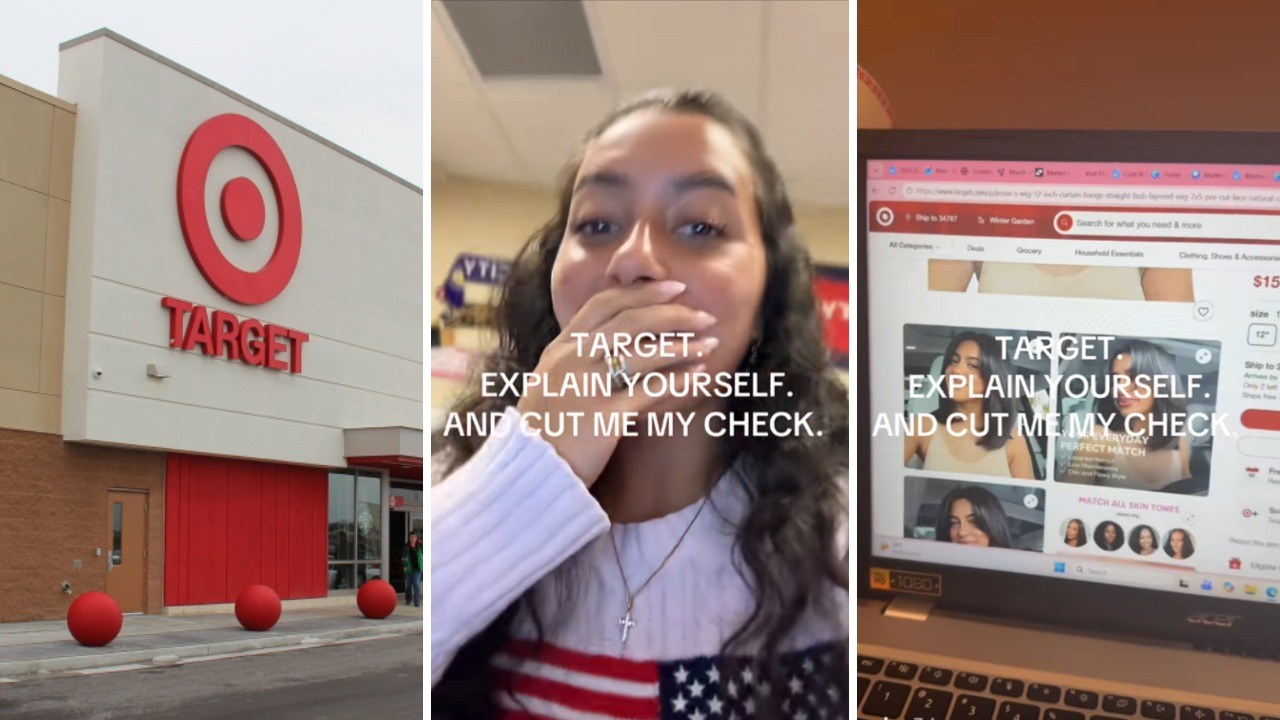
A woman claims a wig company is using her photo and AI to sell wigs on its social media profiles. In a TikTok video, she says the image shows her real hair, not a wig, taken from a video she posted about two years ago. She opens by addressing Target, telling the retailer “you have explaining to do.” Text on the video reads “TARGET. EXPLAIN YOURSELF. AND CUT ME MY CHECK.”
In her caption, she tags Target and Jessie’s Wig Store and writes “I DID NOT approve of any images of myself being used. Explain yourselves.” She says the image is “literally me” and asks viewers to weigh in through the comments on what she should do, including whether to sue Target or the wig company. She says “it gets worse,” claiming the company is “using my photo as AI to sell these wigs on their social media profiles.”
One clip begins with “Everyone asks where I got my hair done,” then teases a $300 haircut before the reveal that it is just a wig. Another says “I can’t stop wearing this layered Italian bomb wig,” and a third calls a glueless style quick and easy. She ends the video by asking again what she should do and says “I’m so scared.” All details are based on her TikTok video and its caption.
A federal rule bans fake reviews and testimonials
The Federal Trade Commission has a rule banning fake reviews and testimonials, including AI-generated fake reviews attributed to people who do not exist. The rule’s categories include celebrity and consumer testimonials. It also covers buying or spreading fake testimonials when a business knew or should have known they were false. The agency states that it can seek civil penalties against knowing violators.
Brands that lean on AI imagery in their marketing have drawn backlash before. Artists criticized a Wacom image that appeared AI-generated, and the company later deleted the posts. Fans also pushed back after Bloomsbury was accused of AI cover art on a bestselling author’s paperback, with some trying to cancel their orders.
The U.S. Copyright Office explains that only a copyright owner or the owner’s authorized agent can send an online takedown notice. Owners can authorize others, such as attorneys or takedown companies, to send one for them. After a compliant notice, a provider that wants legal protection must act quickly to remove the material and notify the user who posted it.
The person who posted the material can file a counter-notice, and the office states that the provider must then restore it after 10 to 14 business days unless the sender reports a court action. Responding to notices is voluntary for a provider, and a takedown notice does not mean anyone is being sued, since owners can also take a case to federal court.
Have a tip we should know? [email protected]
Follow The Mary Sue:
