


El-Sayed calls out ‘unpaid debts’ to Black communities with new policy agenda focused on housing, health and voting rights
Historical neglect.
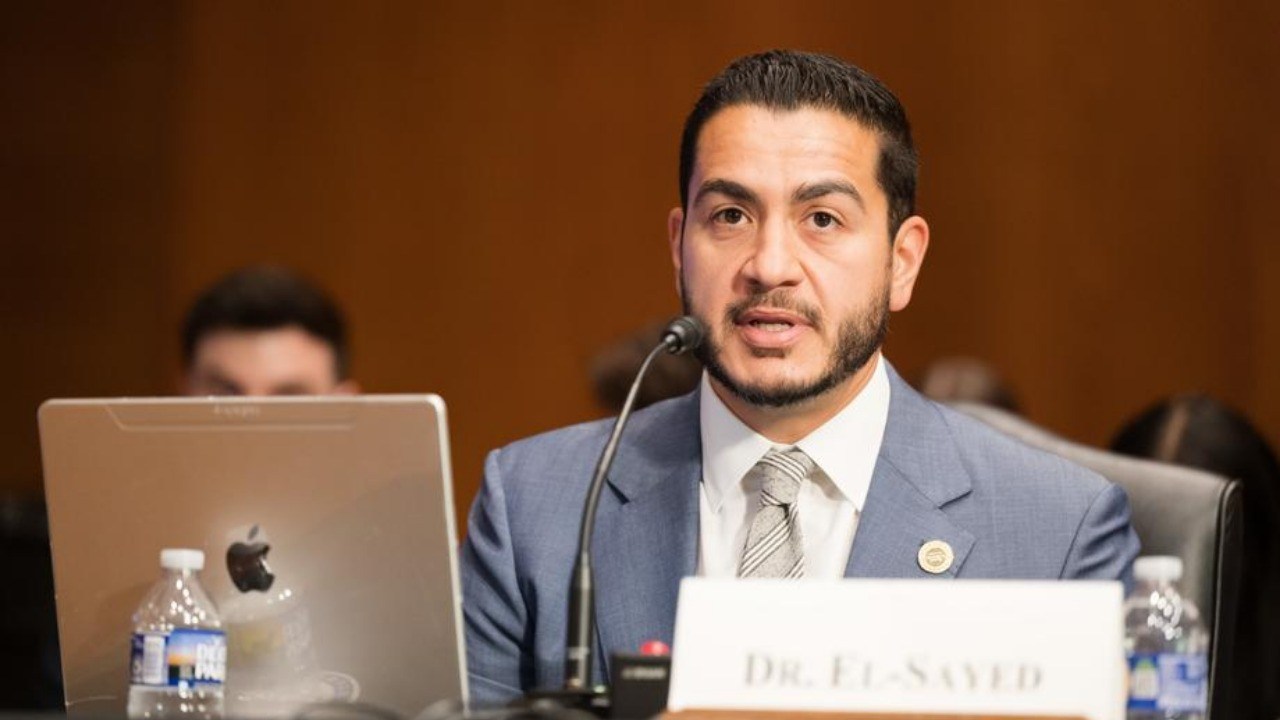
Michigan Democratic U.S. Senate candidate Abdul El-Sayed recently stepped up his outreach to Black communities with a new policy framework. He argued that the U.S. must confront ‘unpaid debts’ owed to Black residents. El-Sayed made these comments on September 12, 2026, at a meeting with women faith leaders hosted by The Woman Difference Collaborative in Detroit. C-SPAN shared video footage of his remarks during the gathering.
El-Sayed faces Republican nominee Mike Rogers in one of the most closely watched Senate races in the country. This contest marks the second straight cycle that Rogers has run for a Senate seat. According to Fox News, El-Sayed previously served as the Wayne County health director. He also launched an unsuccessful run for Michigan governor in 2018.
El-Sayed framed his platform around the concept of historical neglect. He said, “When it comes to Black communities in Michigan – when it comes to Black communities in America – there are unpaid debts that have long since come due that we are unwilling to acknowledge, let alone pay down.” He further emphasized his role as a candidate by adding, “And I understand that we need leaders who are going to understand those debts and address them.”
El-Sayed was talking about securing the support of Democratic voters who earlier chose other candidates
His comments came in response to a question about how he plans to energize Democratic voters who supported other candidates during the primary. El-Sayed said his approach involves showing up and engaging directly with voters. He also intends to emphasize his professional record. He challenged critics to examine his history and judge his commitment to the issues he champions.
Beyond the rhetoric, the campaign recently unveiled a specific set of policy goals known as the THRIVE Agenda. This acronym stands for Transforming Housing, Resources, Infrastructure, Value & Economic Opportunities. El-Sayed says this plan outlines the legislation he will support if elected to the U.S. Senate. He designed the proposal to address the priorities of African American communities across the state.
“For generations, Black communities in Michigan have received promises of federal investment that never fully arrived, or arrived without any way to track whether it actually improved people’s lives,” El-Sayed said in a press release. He views this agenda as a commitment to keeping these priorities centered in his work. He claims he will fight for a world where often forgotten communities have the opportunity to thrive.
The THRIVE plan tackles several systemic issues
One major focus involves closing the lending and contracting gap for minority businesses. El-Sayed proposes expanding Community Development Financial Institutions and Small Business Administration lending. He set a five-year goal of doubling the share of SBA-backed loans reaching Black and Latino-owned firms.
Housing remains another core pillar. The plan calls for expanding Low-Income Housing Tax Credit allocations. It also suggests adjusting HUD’s Area Median Income calculations. He wants to expand down-payment assistance and access to FHA and USDA loans in majority-Black neighborhoods. Furthermore, he aims to set an enforceable 90-day standard for HUD-VASH and Housing Choice Voucher applicants to move from application to lease-up.
Health outcomes also feature heavily in his platform. El-Sayed plans to fight for Medicare for All and secure multi-year funding for community health centers. He also wants to expand telehealth and food access in underserved areas. Regarding maternal health, he supports locking in 12-month postpartum Medicaid coverage, according to The Michigan Chronicle. He also intends to expand Medicaid reimbursement for doulas and midwives.
He specifically highlighted his past work on infant and maternal mortality, asthma, and lead exposure. He also wants to take the RxKids program national. El-Sayed describes himself as an architect of the largest expansion of RxKids in Michigan during his time as health director. That program provides cash assistance to new mothers and babies.
El-Sayed is also focused on environmental justice and voting rights
The Michigan Senate hopeful proposes accelerating the replacement of lead service lines. He also wants to expand PFAS remediation efforts. His plan includes a guarantee of 50 gallons of clean water per person per day. He suggests capping water bills at 2% of household income.
The agenda also targets education and voting rights. He supports the John Lewis Voting Rights Advancement Act. He also wants to establish a federal automatic voter registration standard. For education, he advocates for fixing school infrastructure funding formulas. He also hopes to expand investment in HBCUs and apprenticeships. Ultimately, he wants to work toward debt-free and tuition-free higher education.
El-Sayed still faces questions from some voters who supported U.S. Rep. Haley Stevens in the August 4 primary. However, many former Stevens supporters have already pledged their support to him.
The Congressional Black Caucus PAC recently announced its endorsement of his campaign. Meanwhile, his opponent Mike Rogers continues to campaign in Detroit. Rogers visited the area near Eastern Market on September 13 to discuss housing affordability. The race remains a high-stakes battle for control of the Senate.
Have a tip we should know? [email protected]
Follow The Mary Sue:
