


Egypt man uncovers a stone block while working on his land. Then experts realize it belongs to a 3,000 year old king allegedly from the Bible
Not what you expect to find in your yard.
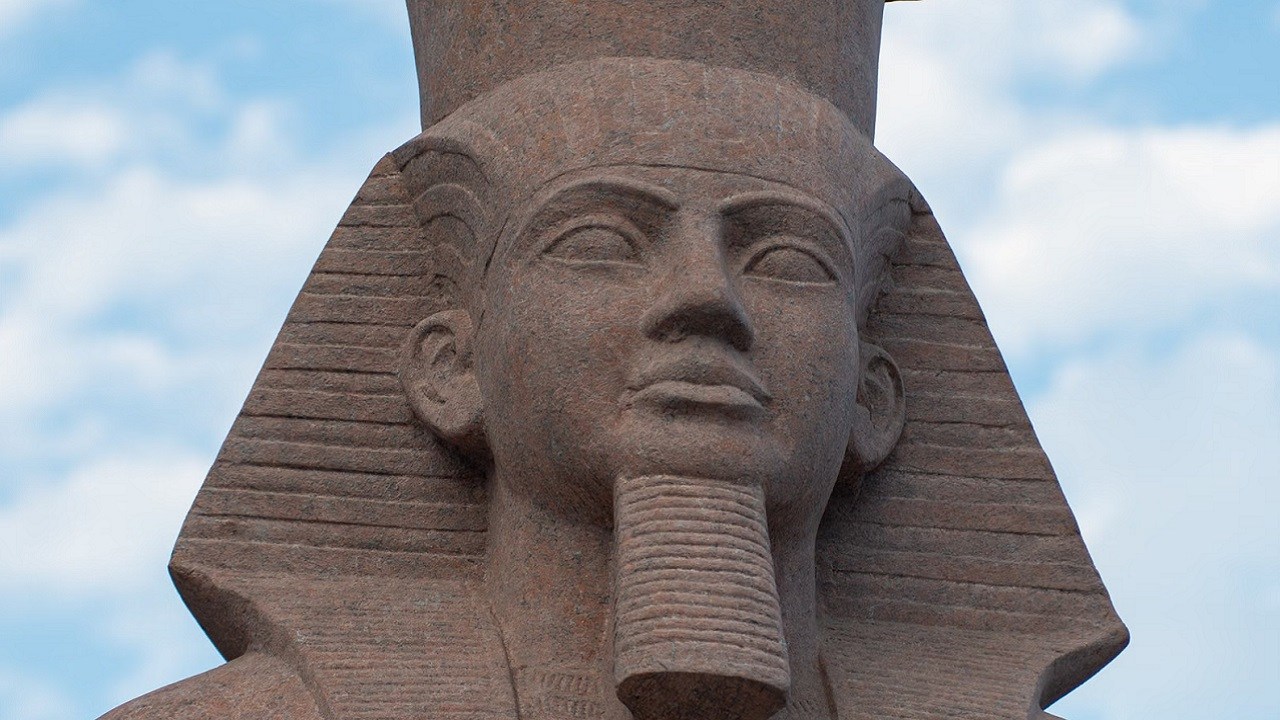
While working on his land in Egypt, a resident of Behbeit El-Hagar discovered a stone block buried in his yard that was covered in inscriptions, according to Dexerto. Egypt’s Supreme Council of Antiquities excavated the area, and archaeologists found pieces of two statues, one of which seems to be Ramses II.
Archaeological discoveries happen all the time, even accidentally, like the Viking treasure found in a yard while a patio was being built, but few get the attention a relic like Cleopatra’s body would. However, because of Ramses II’s biblical connections, the discovery of his statue has formed some excitement.
Archaeologists estimate the statue could’ve been 28 feet tall
Since both statues are in pieces, archaeologists estimated how tall they may have been by using the proportions of the pieces they found. The head of the Ramses II statue measured just over five feet tall, so they estimate that the statue’s full height may have been around 28 feet tall.
The second statue is roughly eight feet tall, but is missing its legs and base. While the identity of this statue isn’t as clear as that of the other statue, archaeologists think it could be another depiction of Ramses II. This identification was helped by the inscriptions on a nearby granite rock that said it was the ruler of Upper and Lower Egypt and the Son of Ra, which would be Ramses II.
Ramses II was also known as Ramses the Great
According to Britannica, Ramses II reigned from 1279–1213 BCE, making his reign the second longest in Egyptian history. His reign included a lot of building programs, which resulted in the creation of statues like the one recently found by a resident of Behbeit El-Hagar.
Ramses II is often considered being the pharaoh reigning during the Book of Exodus in the Bible, although the Armstrong Institute of Biblical Archaeology isn’t sure that this is the case because other verses from the Books of Kings, Judges, and Chronicles put the estimated time period for when Exodus takes place as two centuries before Ramses II’s reign.
The belief that Ramses II was the ruler at that time comes from Exodus 1:11, which reads, “And they built for Pharaoh store-cities, Pithom and Raamses.” Pithom and Raamses, or Pi-Ramesses, is generally accepted by Egyptologists as the metropolis built by Ramses II, but it seems that scholars who study the Bible, Egypt, and history all have different opinions on whether Ramses II was the pharaoh of Exodus or not.
Have a tip we should know? [email protected]
Follow The Mary Sue:
