College freshman unearths 2,000-year-old artifact on her first archaeology dig: ‘I didn’t expect to find anything like that my whole career’
Beginner’s luck?
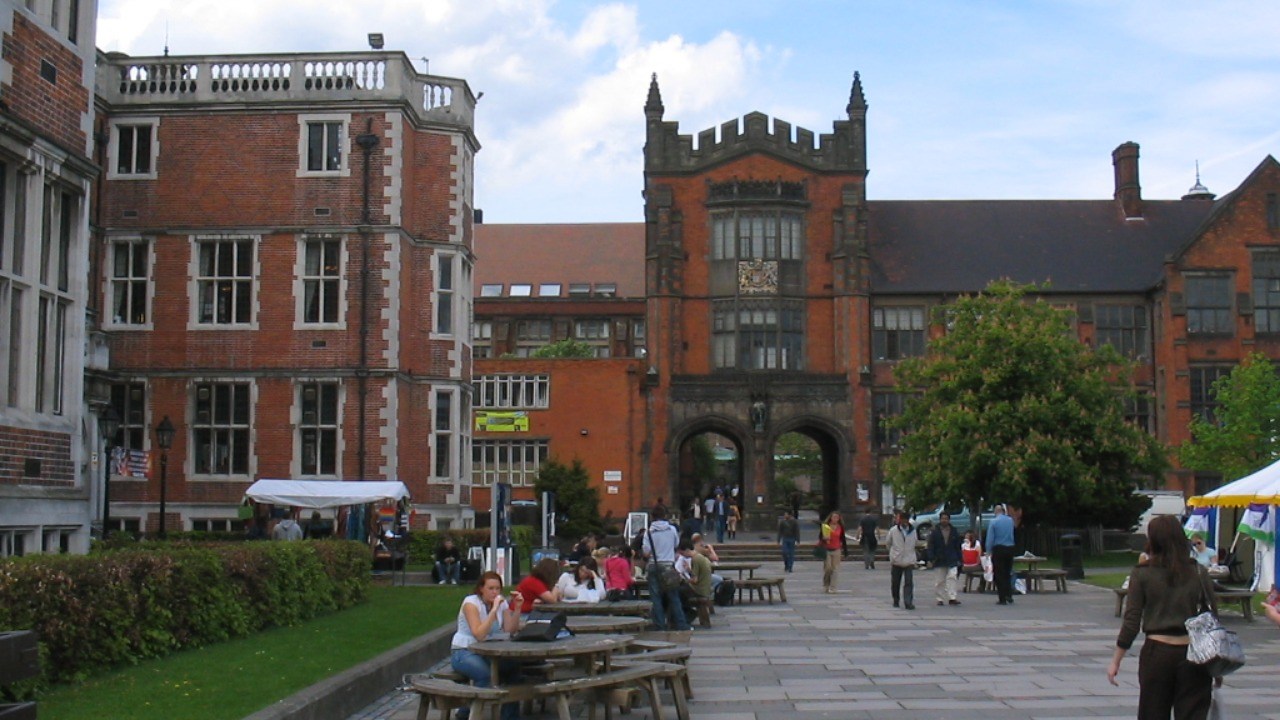
A group of first-year archaeology students from Newcastle University recently hit an incredible streak of luck while working on their very first excavation. During a summer 2026 fieldwork project in Redesdale, Northumberland, these students uncovered a collection of Roman treasures that have surprised even the most experienced researchers. The finds offer a look into the lives of the people who lived and worked on the northern frontier of the Roman Empire nearly 2,000 years ago.
The most eye-catching discovery happened on the very first day of the dig. According to the New York Post, Elise Zallu, a first-year student, found a delicate section of gold chain that had remained buried for centuries. The chain measures about 2.8 inches long and is in such great shape that researchers noted it could still be worn today if the rest of the piece were intact. Zallu was understandably stunned by the find.
“Finding the gold chain was really surreal, especially given it was the first day of my first dig,” she said. “I didn’t expect to find anything like that my whole career, so it was definitely a surprise. I’m really grateful that studying archaeology at Newcastle has given me the opportunity to gain such valuable experience in the field, which I feel will really benefit me in the future.”
The chain was made using the loop-in-loop technique
This method involved pinching individual gold rings into figure-eight shapes, folding them, and weaving them together to create a flexible, high-quality piece. Such craftsmanship was usually reserved for expensive jewelry or military gear belonging to wealthy individuals or high-ranking officers.
Dr. Eric Tourigny, from the university’s School of History, Classics and Archaeology, noted that these items are quite rare. “Finding a gold artifact is something many archaeologists can go an entire career without experiencing,” he stated. “For a first-year student to discover a beautifully preserved Roman gold chain on their first day in the trench is truly remarkable.”
Zallu was not the only one to find something special on that first day. Shannon Wood uncovered a folded lead sheet with traces of Latin writing scratched into the surface. Experts think this object might have been a commercial seal used for trade or military supply operations. Another possibility is that it served as a personal message or a curse tablet, which were common across the Roman world.
The momentum continued into the second day
On the next day of the dig, Megan Potter discovered an ornate bronze cavalry fitting. The item, known as a peltate cavalry dangler, still retained much of its original gold gilding. This crescent-shaped piece would have likely been attached to a military belt, a sword scabbard, or a horse harness.
It features a pelta design, which is a motif based on small shields used by classical warriors. The level of detail and the presence of gold suggest this belonged to a cavalry officer or someone of high status stationed at the frontier.
Later in the season, students Maisy Watmough and Zoe Yuill found a tiny, beautifully carved carnelian intaglio. This gemstone features an image of Jupiter, the king of the Roman gods, holding a scepter and a miniature figure of Victory, with an eagle at his feet. Intaglios were typically mounted in rings and used as personal seals to authenticate documents by pressing them into warm wax.
This is the fourth intaglio recovered from the site, with two others found in 2025 and one discovered during the 19th century. Watmough shared her excitement about the find, mentioning, “It was so exciting to find the intaglio. Studying archaeology at Newcastle has benefited me in terms of experience and working in a professional setting. Working with archaeologists has allowed me to gain a better understanding of the practice and engage with new people.”
The students also unearthed a variety of other artifacts
These included coins, spearheads, and pottery fragments. Some of the pottery even featured graffiti, including a bowl fragment with the inscription “MARTIN_” or “MARTIN[US],” which likely identifies a person named Martinus. The discovery of this name on multiple pieces suggests it might have been an ownership mark.
A total of 52 freshmen participated in the summer 2026 fieldwork, working alongside volunteers from the Redesdale Archaeology Group. The project is directed by The Archaeological Practice Ltd. and focuses on understanding how the Roman military frontier functioned.
Richard Carlton, the site director and a visiting fellow at Newcastle University, pointed out the importance of these finds. “These finds are exciting not only because of their quality, but because of the stories they tell,” he explained, per phys.org. “A gold chain, a signet gemstone, inscribed pottery and a decorated brooch illuminate the lives of the people who made this site work almost two millennia ago.”
The ongoing research, which began in 2021, aims to reconstruct the daily lives of soldiers, civilians, and traders in this area. By studying the enclosures and industrial features, the team is gaining a clearer picture of how these communities interacted along the northernmost edge of the Roman Empire.
Have a tip we should know? [email protected]
Follow The Mary Sue: