Houston jeweler was killed in $3.6m diamond heist in 1996. Years later, his killer’s execution takes over an hour as staffers struggle to find a vein
‘It’s not working like it’s supposed to.’
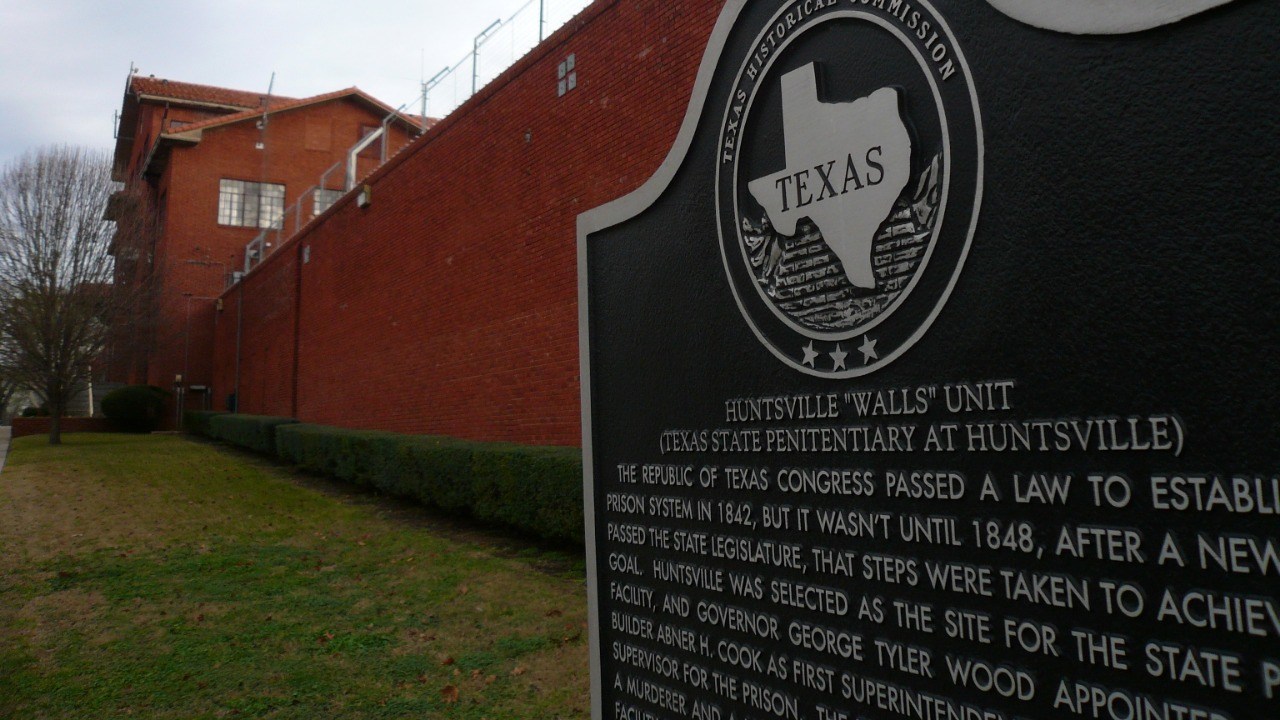
The execution of Reinaldo Dennes in Texas took over an hour on Thursday, November 19, 2026, as prison staffers encountered significant difficulty finding a suitable vein for the lethal injection. According to The Guardian, Dennes, who was 70 years old, had been convicted for the 1996 murder of Houston diamond dealer Johnny Szucs. This procedure, held at the penitentiary in Huntsville, marks the ninth execution carried out by Texas this year.
The process became chaotic once the pentobarbital was administered. According to witnesses, Dennes groaned repeatedly and exhibited signs of distress. USA Today reports that Rev. Jeff Hood, a spiritual adviser who was present in the death chamber, described the scene as the worst he has witnessed. Hood noted that Dennes thrashed violently on the gurney while calling out in pain.
“He began shifting violently on the gurney back and forth, back and forth. He screamed out, ‘My leg, my leg, my leg,’” Hood said during a livestream outside of the prison. “As he was contorting and going back and forth it was very clear that the drugs were not working as quickly as they were supposed to… He screamed out twice, ‘It’s not working like it’s supposed to.’”
Officials have said that all procedures were followed appropriately
The Texas Department of Criminal Justice stated that IV lines were placed in the inmate’s left foot and left side of the neck. Spokeswoman Amanda Hernandez claimed that Dennes complained of pain in areas where no IVs were established. Officials maintained that all procedures were followed appropriately. Dennes was officially pronounced dead at 7.08 p.m.
The crime that led to his death sentence was a calculated $3.6 million diamond heist. Dennes, who worked as a jeweler in the same building as Szucs, used his position to coordinate the robbery. He enlisted the help of a cleaning lady, Estrella Martinez, to grant him and his brother access to the building after hours.
The plan involved a violent confrontation with a security guard, David Copeland, who was shot twice but survived the ordeal. When police arrived, they found Szucs’s office ransacked and the safe empty. The stolen diamonds were never recovered.
Nicole Szucs, the widow of the victim, described the betrayal as malicious. She explained that Dennes had lured her husband into a trap by pretending a high-profile buyer was interested in his merchandise. Dennes’ brother, Jose Albert Dennes, later pleaded guilty to murder in the same case and received a 45-year prison sentence.
Thomas Mitchell Overton was put to death in Florida on the same day
The situation in Texas occurred on the same day Florida carried out its 20th execution of the year, setting a new state record. Thomas Mitchell Overton, 71, was put to death for the 1991 murders of Mike and Susan MacIvor and their unborn child. The couple was killed during a break-in at their home in the Florida Keys. Autopsies revealed both were strangled, and Susan MacIvor was raped. Overton was pronounced dead at 6.19 p.m. at the Florida state prison in Raiford.
Overton maintained his innocence until the end. Before his death, he told witnesses, “I’ve never sexually assaulted anyone. I never killed anyone. I didn’t kill the MacIvors.” His defense team had long argued that DNA evidence used against him was planted by investigators. Despite these claims, the state moved forward with the execution after the US supreme court denied a final appeal.
The back-to-back executions of these two elderly men highlight the aging population on death row across the country. Florida has been particularly active under Governor Ron DeSantis, who has pursued the death penalty with frequency. Critics of the governor, including the group Floridians for Alternatives to the Death Penalty, have suggested his actions are motivated by political ambition.
The two cases come during a period of intense scrutiny regarding lethal injection protocols
Tennessee recently faced national attention following the failed execution of Christa Pike in September. Pike survived two doses of pentobarbital, leading to an investigation and the resignation of the state’s correction commissioner. Concerns persist regarding the reliability of these procedures when inmates have underlying medical conditions or when staff struggle to find access points for the drugs.
As of Thursday, Dennes and Overton were the 38th and 39th inmates executed in the United States this year. At least three more executions are slated for the coming weeks. While states like Texas and Florida continue to move forward, the events in Huntsville serve as a stark reminder of the technical difficulties that can arise during these final procedures.
Have a tip we should know? [email protected]
Follow The Mary Sue: