Abdul El-Sayed has a blunt message for Donald Trump after calling him a bully: ‘There’s a lot we could work on’
Planning ahead.
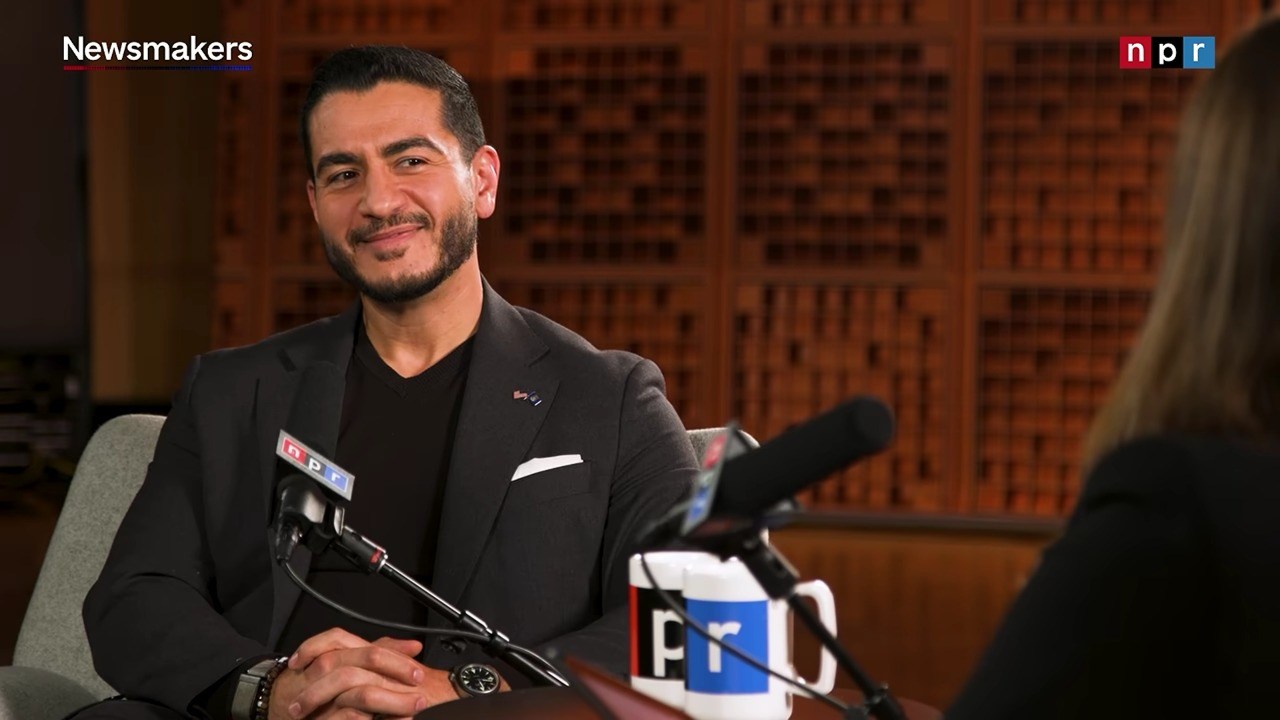
Senator-elect Abdul El-Sayed has a blunt message for President Donald Trump following his recent victory in Michigan. While the two have not spoken yet, El-Sayed is extending an invitation to work together on behalf of the American public. During a recent interview on NPR’s video podcast Newsmakers with Leila Fadel, the 42-year-old Democrat said, “Donald, if you’re listening, there’s a lot we could work on. Happy to have a meeting. Let’s figure out what we can work on and get done.”
El-Sayed, set to become the first Muslim elected to the U.S. Senate, is already looking toward the future. He remains focused on the affordability crisis that many families face across the country. He believes that the current administration’s policies are not serving the needs of everyday people. El-Sayed specifically pointed to the rising costs of gas and groceries as primary concerns. He suggested that ending the war in Iran and reversing current tariff policies could provide immediate relief to struggling households.
In a candid moment with Fadel, El-Sayed explained his perspective on why he characterizes the President as a bully. “Because he’s a bully alongside being a narcissist. And the only way you deal with bullies is to stand up to them,” he stated. El-Sayed believes that ignoring bullying behavior only signals weakness. He argues that standing up to a bully forces them to reconsider their approach because it makes them feel weak rather than strong.
Despite his harsh criticisms, El-Sayed insists he is a professional who is willing to move past personal attacks
He noted that he has already had conversations with Republican senators who have previously said terrible things about him. He prefers to keep the focus on policy matters, such as auto policy, which is vital for Michigan. El-Sayed emphasized that his goal is to serve his constituents rather than hold onto personal grudges. He even floated a creative idea regarding healthcare legislation to encourage cooperation. “Put his name on it,” El-Sayed remarked. “He’ll probably pass it. I’m not above doing that. I don’t care what it’s called.”
The Senator-elect is also concerned about the future of the Democratic party. He believes that voters have given Democrats a temporary mandate, and the party must act boldly to maintain that trust. He is advocating for new leadership within the Senate and has expressed a preference for Senator Chris Van Hollen to challenge Senate Minority Leader Chuck Schumer.
When discussing the broader political landscape, El-Sayed argued that the traditional left-right spectrum is no longer the most accurate way to frame the debate. He sees the real divide as being between those who are locked out of power and those who hold the keys.
El-Sayed believes that big corporations and special interests have manufactured a consensus that prevents necessary changes, such as Medicare for All. He is determined to challenge this influence by putting the needs of the public first. He noted that even among Trump voters, there is a strong desire to get money out of politics and put more money into people’s pockets.
The campaign itself was marked by significant hostility
The President and other Republicans used bigoted language regarding El-Sayed’s name, faith and heritage. El-Sayed said he saw these attacks coming from a mile away but remained confident that Michigan voters would not be swayed by them. He took pride in fully claiming his name, Abdulrahman Mohamed El-Sayed, during his victory speech to show the breadth and diversity of America.
As he prepares for his term in January, he is also considering the historic nature of his election. He plans to swear his oath on the Quran, though he is still deciding which one to use. He has considered using a copy once owned by Thomas Jefferson or the oldest Quran in Michigan, which is held at the University of Michigan.
Regardless of the choice, he emphasizes that the act is a sign of his allegiance to the Constitution. He describes the document as the reason he was able to run for office and be elected by the people of his state. He maintains that the book one swears on is less important than the book to which one swears allegiance.
Have a tip we should know? [email protected]
Follow The Mary Sue: