


A Missouri Woman Allegedly Traded Her Foster Child for a Monkey, but a Judge Suspended Her Prison Sentence
"This is not the end we wished for."
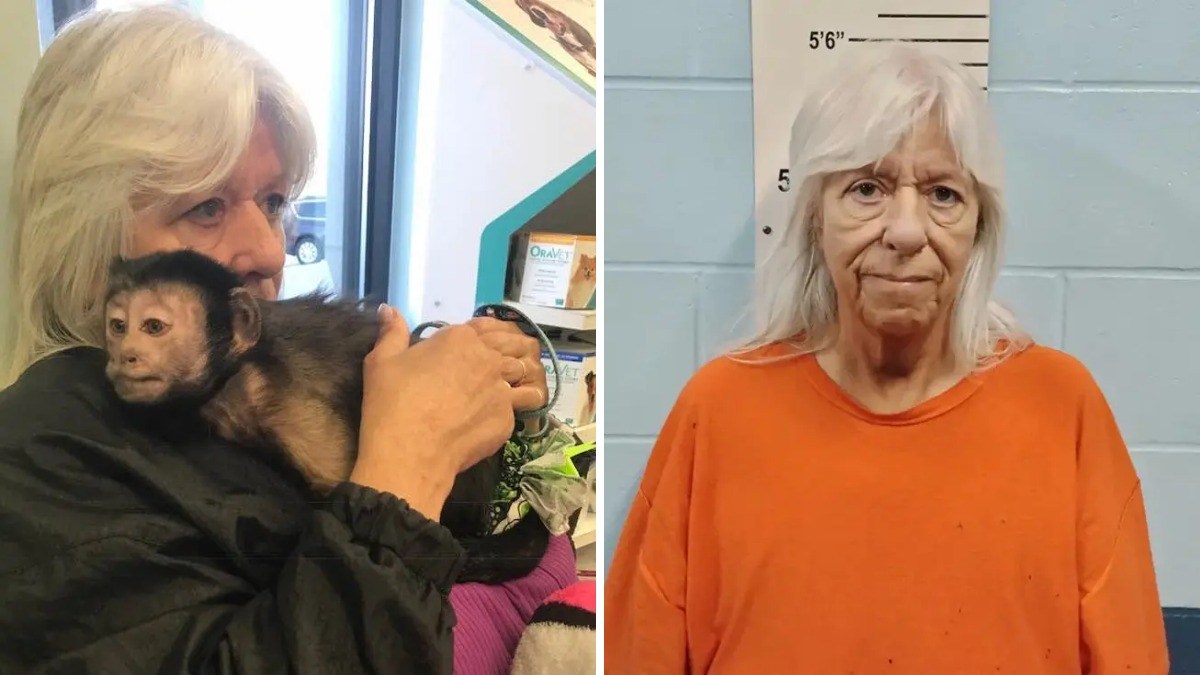
A Missouri foster mother accused of trading a teenage girl for a monkey avoided prison time, even as a judge condemned her as reprehensible. According to New York Post, Brenda Deutsch, 70, was sentenced to seven years for child endangerment, but a Lincoln County judge suspended execution of the sentence and placed her on three years of probation instead.
Judge Thomas Frawley revoked Deutsch’s foster care license from the bench, criticizing Missouri for allowing her to keep it as long as it did. He apologized to the alleged victims in the courtroom, saying the system had failed them. Deutsch’s biological daughter, Brina Johnson, who testified about alleged abuse, said the outcome wasn’t what the family had hoped for. “I’m kinda lost for words because this is not the end we wished for,” she said, as reported by FOX2 St. Louis.
Deutsch was arrested in April after investigators looked into allegations she’d sent her foster child, now 17, to stay in a Texas home she admitted in court she knew nothing about. Court documents said the investigation began after Deutsch requested permission to take the teenager to visit a friend in Texas. Five days later, an anonymous caller told Missouri’s Children’s Division that Deutsch was allegedly abusing the child. Investigators then learned of an allegation that the girl had been traded for an exotic animal.
What Deutsch Actually Pleaded Guilty To
According to the teenager, Deutsch told her Texas host that the woman could keep the child, but that Deutsch “will be keeping the check.” A witness said the girl was left in an unsanitary Texas home filled with exotic animals before being taken into Texas child protective custody. She also described being struck with objects, including a paddle and shoes, and said Deutsch once threatened to kill her “if she did not shut up.”
Deutsch was originally charged with three felony counts covering abuse, neglect, and endangerment. In June, she pleaded guilty to just one of them, first-degree endangering the welfare of a child, in exchange for the other two felony counts being dropped. That single count is what the seven-year sentence and probation actually apply to; the specific abuse allegations and the monkey trade itself were never the subject of a conviction, since the charges tied most directly to them were dismissed as part of the plea deal.
Prosecutors did investigate whether the case amounted to human trafficking. Lincoln County Prosecutor Mike Wood told reporters investigators couldn’t find enough evidence to support that charge, despite witnesses describing a monkey being transported back to Missouri around the same time the girl was sent to Texas.
The seven-year sentence Deutsch received reflects a specific tier under Missouri’s child endangerment statute, RSMo 568.045. That law treats first-degree endangerment as a Class D felony carrying up to seven years, unless the offense caused serious physical injury or death, which raises it further. What made her avoid prison despite that sentence is a specific mechanism in Missouri law called a suspended execution of sentence, or SES. Under an SES, a judge formally imposes the prison term and enters a conviction, but immediately suspends enforcing it in favor of probation.
That’s different from Missouri’s other common option, a suspended imposition of sentence, where no formal conviction is entered at all if probation is completed successfully. With an SES, Deutsch already has a conviction on her record. She simply won’t serve the prison time unless she violates her probation terms, which reportedly include no contact with the victim, mental health treatment, and a cognitive behavioral intervention program.
Deutsch declined to comment outside the courthouse, shielding her face with a piece of paper as she left. She has reportedly fostered more than 200 children over the years. Johnson said the judge’s acknowledgment of the system’s failures offered some validation despite her disappointment with the sentence. “It was good to know somebody knows from the other side of the street, that this shouldn’t have happened,” she said.
“None of it should. And the system did fail us, failed them all.”
Have a tip we should know? [email protected]
Follow The Mary Sue:
