


Los Angeles Woman Makes a $10 Auction Mistake. In 7 Days, She Has To Figure Out How To Collect a Full-Sized Elephant: ‘I’m Panicking’
She won a what?!
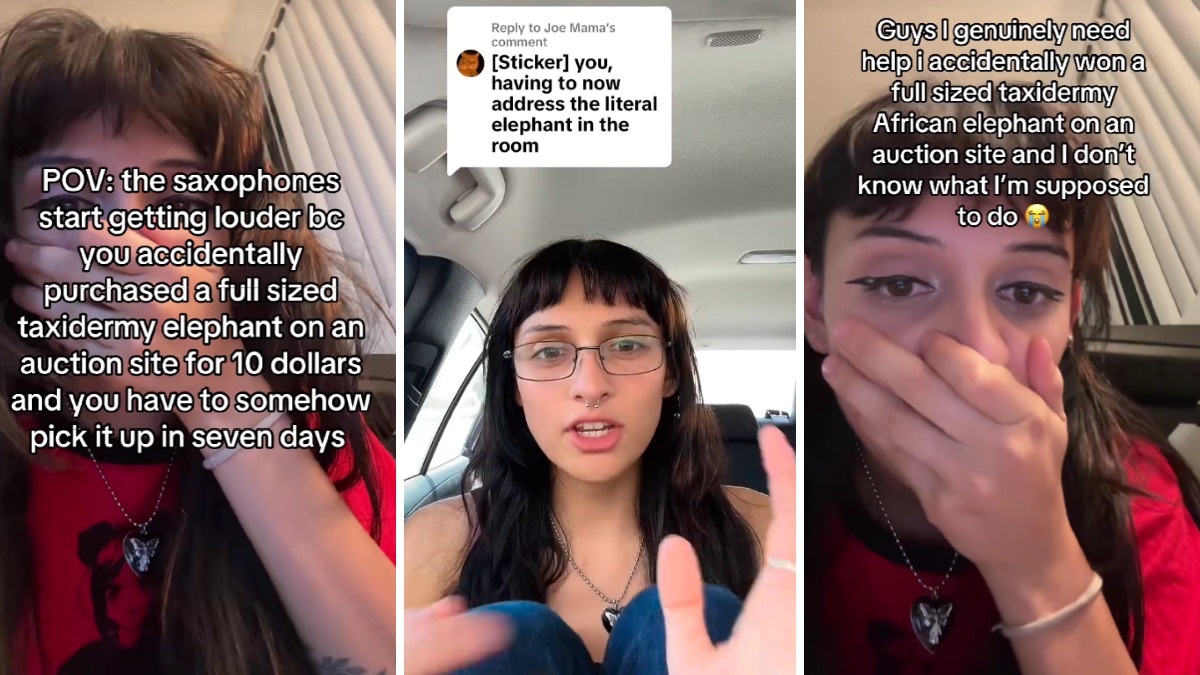
An LA-based Native American woman just learned that winning an online auction isn’t always a victory. Earlier this month, Lucy June, @lucy_june_ on TikTok, accidentally placed the winning bid on a full-sized taxidermied African elephant for $10, and found that she had seven days to figure out how to collect it. The listing, Lot 2271 from Kraft Auction Service in Evansville, Indiana, popped up with the title “Extraordinary African Elephant Full Body Mount No Base US RESIDENTS ONLY.”
Lucy’s videos document her panic and the dreaded “Lot won” status, her maximum bid glaring at $10. In one video, on-screen text spells out the nightmare: “POV: the saxophones start getting louder bc you accidentally purchased a full-sized taxidermy elephant on an auction site for 10 dollars and you have to somehow pick it up in seven days.”
Her caption is just as frantic: “(Finally posted an update) Yes I did make two videos cuz I’m panicking.” Earlier clips show her looking visibly distressed, auction screenshots flashing across the screen with text overlays begging for help. The auction house made it clear the item is non-refundable and must be collected within about a week, leaving Lucy scrambling for solutions.
The drama didn’t stop there
In a follow-up video, she shared conflicting communications from the auction house. Initially, she was told she couldn’t take the elephant, but then she received pickup instructions with specific July dates and times for taxidermy items. The instructions came with strict warnings of forfeiture and no refunds. Her caption for that one read, “Guys I didn’t actually want the elephant at first but now this is making me want it.”
It’s the kind of emotional whiplash that only a $10 elephant could deliver. The series has since racked up millions of views, with comments ranging from skepticism – taxidermy elephants usually cost tens of thousands – to practical advice like contacting museums or local game wardens to check on legality and permits. Others joked about “the elephant in the room,” because of course they did.
If you’re wondering how a full-sized taxidermied elephant even ends up in an online auction, you’re not alone. The logistics of moving something that large are mind-boggling, not to mention the ethical and legal questions. Lucy’s situation highlights the perils of impulsive online bidding, especially when the “bargain” turns out to be a 10,000-pound problem. As of now, there’s no update on whether Lucy has successfully collected, donated, or forfeited the elephant.
Taxidermy has been having a moment lately
A few weeks ago, Norway’s striker Erling Haaland made headlines when he left the U.S. after his team’s World Cup quarter-final loss to England. Business Insider reported that he boarded his flight at Oslo’s Gardermoen Airport on July 13 carrying a $750 taxidermy raccoon in one hand and a Dolce & Gabbana tote in the other. “It followed me home,” he joked the next day.
Haaland’s raccoon might have been a lighthearted oddity, but taxidermy has deeper roots in conservation and education. Earlier this year, Kenya Wildlife Service announced an unprecedented initiative to preserve the body of Craig, one of Africa’s most iconic elephants, through professional taxidermy. According to Africa Sustainability Matters, Craig, a super tusker with tusks weighing around 99 lbs each, died at Amboseli National Park on January 3 at the age of 54.
His preservation is about education and conservation. Born in 1972 into the CB elephant family, Craig was a living archive of ecological history. Researchers logged his movements, social behavior, and breeding patterns over decades, data that now contributes to understanding elephant social structures and genetics.
Craig’s story is a testament to the success of conservation efforts in Amboseli, where super tuskers like him were once common but are now rare. His preserved body will serve as a tangible link between current and future generations, offering students, scientists, and the public a rare chance to engage with a species that’s increasingly under threat.
Kenya Wildlife Service has said this initiative isn’t about vanity
When Craig’s mount is eventually displayed at a yet-to-be-announced facility, it will draw visitors, educators, and researchers alike, all eager to learn from his legacy. Taxidermy itself is a scientific art, one that’s been used for centuries. Natural history museums around the world, from the American Museum of Natural History in New York to the Amathole Museum in South Africa, house taxidermied mammals that have educated generations about biodiversity.
These exhibits help contextualize the natural world within broader narratives of environmental change and human impact. However, they also raise complex ethical questions about representation, colonial legacies, and how best to honor animal lives while teaching about conservation. Craig’s preservation is positioned squarely within that debate. Unlike trophy taxidermy, which often glorifies the hunt, his mount is meant to serve a public good.
Tourism revenues linked to charismatic megafauna contribute billions to regional economies, yet those same species are vulnerable to the decline of the natural systems they depend on. Craig’s preservation is a step toward ensuring that future generations can learn from the past, even as they work to protect the present. It’s a far cry from Lucy’s accidental $10 elephant, but both stories highlight the complex relationship humans have with these majestic animals.
Whether it’s a viral auction mishap or a carefully planned conservation effort, the elephant in the room is always the same: how do we honor, protect, and learn from these incredible creatures? For Lucy, the answer might involve a lot of phone calls, a very large truck, and maybe a museum donation. For Kenya, it’s about ensuring that Craig’s legacy lives on, not just as a memory, but as a tool for education and change.
(Featured images: Lucy June @lucy_june_ on TikTok)
Have a tip we should know? [email protected]
Follow The Mary Sue:
