



Woman in Tampa Opens Her Two-Bedroom Lease Renewal on Camera. The Number She Sees Makes Her Jaw Hit the Floor: ‘Over $1,000’
Tough choices.
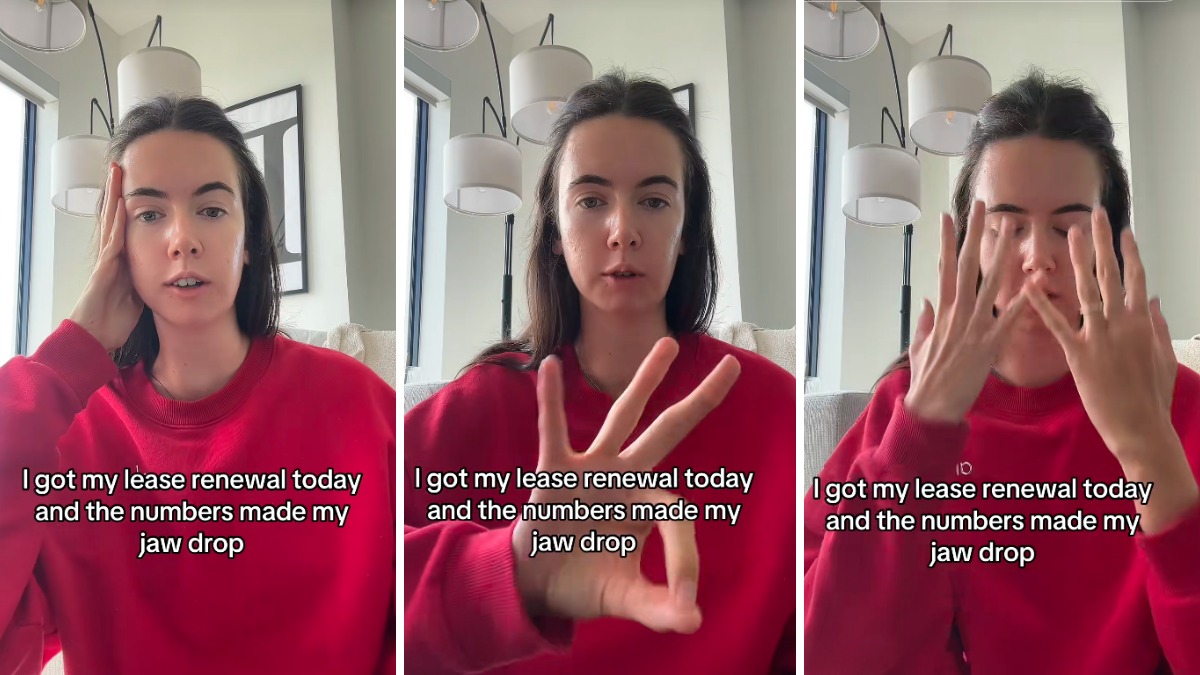
A woman in Tampa just opened her two-bedroom lease renewal on camera, and the number she saw made her jaw hit the floor. Content creator Emlegs, @emlegssssss on Tiktok, shared a video detailing a staggering rent increase on her New York-area apartment. If she renews for another 12 months, her rent jumps by over $1,000. If she stays month-to-month, the price skyrockets to an eye-watering $11,438 per month.
Visibly stunned, she told viewers she “definitely cannot afford it,” calling the hike “almost like they pulled it right out of their a**.” The video, posted just days ago, has already racked up over 7.7 million views. It’s struck a nerve with renters across the country, sparking frustration and solidarity in the comments. Emlegs’ story reflects the ongoing U.S. rental affordability crisis, where housing costs are outpacing wages and leaving millions cost-burdened.
In the video, Emlegs walks viewers through the numbers. She lives in Channelside, Tampa, in a two-bedroom apartment. Her current lease is month-to-month, but renewing for another 12 months would mean a $1,000 increase. The alternative, month-to-month, is even more absurd. “11,438 USD,” she says, shaking her head. “I don’t even know how that number is calculated.”
Her experience isn’t an outlier
According to the New York Times, nearly half of all renter households in America – 22.7 million – were rent-burdened in 2024, meaning they spend more than 30% of their income on rent and utilities. That’s the highest number on record, up nearly 9 percentage points since 2001.
The problem is even worse in high-cost states like California and Florida, where more than half of renters are burdened. And it’s not just low-income households feeling the squeeze. Almost half of renters earning between $45,000 and $74,999 are now rent-burdened, double the share from 2001.
The trend is clear. Housing costs are rising faster than incomes, and more people are being priced out of stable housing. Whitney Airgood-Obrycki, a senior research associate at the Joint Center for Housing Studies of Harvard University, said, “The biggest trend is, it’s happening everywhere, across all these income groups.” Rent burden isn’t just a statistic. It’s a daily reality for millions, forcing tough choices between housing, food, transportation, and other essentials.
So how did we get here?
The answer comes down to two things. Income and housing costs. Rents have been climbing faster than wages for years, and the gap is only widening. Demand for rental housing is up, partly because homeownership is less accessible with higher interest rates. Meanwhile, construction hasn’t kept pace, leaving fewer units available and driving prices up. The result? More renters competing for fewer affordable options.
But the rent burden doesn’t tell the whole story. The 30% threshold, a long-standing benchmark in housing policy, has its limits. For low-income households, spending 30% of income on rent might still leave little for other needs.
For middle- or high-income households, the same percentage leaves far more disposable income. And measures of gross income don’t account for things like food stamps, tax credits, or retirement savings. As Brad Greenburg, executive director of the NYU Furman Center, noted, the 30% rule has become “a heuristic over time more than anything.”
The consequences are drastic. Housing insecurity is rising, and eviction filings are climbing. In 2025, landlords filed one eviction case for every 13 renter households, according to The Eviction Lab. Severe rent burden and homelessness are closely linked. When households are stretched thin by housing costs, losing a home becomes that much easier. Politicians on both sides of the aisle are taking notice, from Congress to city councils, but solutions remain elusive.
Emlegs’ video is a perfect example of how this crisis plays out in real life
She’s not alone in her frustration. Commenters on her TikTok have shared their own stories of unaffordable rent hikes, with many blaming corporate landlords for prioritizing profits over people. One user wrote, “I worked in property management and upper management won’t admit it, but I swear they do this to push old tenants out to get new ones they can charge even just a few hundred dollars more monthly.”
The video’s viral success shows just how many people are feeling the pinch. For Emlegs, the choice is clear. She can’t afford the increase, and she’s not willing to pay $11,438 a month for a two-bedroom apartment in Tampa. But where does that leave her? With few affordable options, she’s facing the same impossible decisions as millions of other renters.
Do you renew and stretch your budget to the breaking point? Do you move and risk instability? Or do you push back and risk eviction?
The rental affordability crisis is about real people, real struggles, and real consequences. Emlegs’ story is a snapshot of a much larger problem, one that’s only getting worse. Until incomes rise faster than rents, or more affordable housing hits the market, millions will continue to face the same impossible choices. For now, all they can do is share their stories, commiserate online, and hope for change.
(Featured images: Emlegs @emlegssssss on Tiktok)
Have a tip we should know? [email protected]
Follow The Mary Sue:
