


The White House Is Already Eyeing a 2038 World Cup Return, Sparking Debate Over Whether the US Can Ignore the Current Host Nation Controversies
A big if.
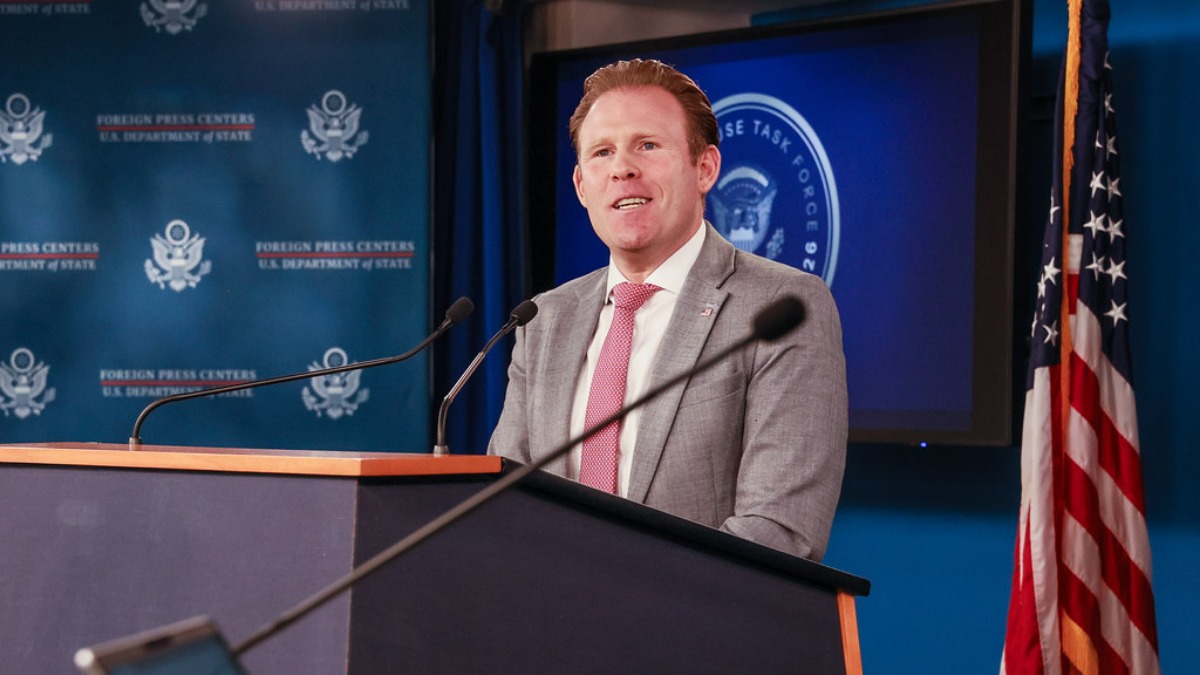
The White House is already floating the idea of bringing the FIFA World Cup back to the United States in 2038, just twelve years after co-hosting the 2026 tournament with Canada and Mexico. According to the BBC, Andrew Giuliani, executive director of the White House’s World Cup Task Force, confirmed the administration is eyeing another bid, even as the current event faces criticism over travel restrictions, visa denials, and rising costs.
Giuliani didn’t hold back on his confidence in the U.S. pulling it off again. “There’s no better country that’s positioned to host a World Cup than the United States, and I think we’re seeing that on social media,” he said.
“We have such an incredible infrastructure. We have the stadiums built, so for the US, compared to other host nations, where it costs tens and tens of billions of dollars, you know, it cost us a couple of billion.” That’s a bold claim, especially when you consider the logistical headaches already playing out this summer.
The 2026 World Cup is the first to feature 48 teams
Some fans love the expanded field, while others argue it waters down the drama of the group stage. FIFA is already teasing an even bigger tournament – 64 teams – for 2030 or beyond. Giuliani seems unfazed by the potential scale.
“When you think that this World Cup may at some point expand out to 64 teams, I think the United States can handle it,” he said. But before making any official moves, he’s keeping his focus on the current tournament. “Let me make sure we get through this World Cup on July 19 before we make our pitch for 2038 or other ones.”
The timing of this conversation is awkward, to say the least. The U.S. is currently hosting 78 of the 104 matches, and it hasn’t been smooth sailing. In April, over 120 rights groups issued a travel advisory warning visitors to “exercise caution” due to what they called the Trump administration’s “violent and abusive immigration crackdown.”
Then there’s the visa issue – Iran’s backroom staff was denied entry, forcing the team to set up camp in Tijuana, Mexico, and commute across the border for games. Somali referee Omar Artan was also blocked from entering. These aren’t minor hiccups. They’re major controversies that have overshadowed the tournament’s early days.
Giuliani is choosing to look beyond the many controversies
He framed the World Cup as a celebration of America’s 250th birthday, calling it “gratifying” to see the world’s “love affair with the United States.” That’s a rosy take, especially when you consider the backlash. Travel costs have skyrocketed in host cities, pricing out some fans. And while Giuliani boasts about the U.S. being “extremely welcoming,” the visa denials and travel advisories tell a different story.
According to LADBible, if the U.S. does land the 2038 bid, it would become only the second country to host the World Cup three times, after Mexico. It would also set a record for the shortest gap between tournaments – 12 years. For context, Mexico hosted in 1970 and 1986, a 16-year span. England, the birthplace of football, has only hosted once, back in 1966.
The U.S. is clearly positioning itself as a global leader in sports hosting, but the controversies of 2026 raise serious questions about whether it’s ready to do it all over again so soon.
The 2030 World Cup will be co-hosted by Spain, Portugal, and Morocco, with the opening matches in Uruguay, Argentina, and Paraguay to mark the tournament’s 100th anniversary. Then, in 2034, Saudi Arabia will take center stage. That leaves 2038 as the next open slot, and the U.S. is already jockeying for position. But with the current event still unfolding, and still facing criticism, it’s fair to ask whether the country should be looking that far ahead.
The expanded format has its defenders
More teams means more nations get a shot at the global stage, and so far, the quality of play hasn’t dipped as some feared. But the complaints about the group stage’s lack of drama are hard to ignore. If FIFA does push to 64 teams, the U.S. would have to prove it can handle not just the logistics, but the fan experience.
Giuliani’s enthusiasm is understandable. He grew up attending the 1994 World Cup as an eight-year-old, and he’s clearly eager to see the tournament return. “There’d be nothing more gratifying as somebody who went to a couple World Cup matches as an eight-year-old in 1994 to be able to see this come back to the United States again,” he said.
But nostalgia and ambition don’t always align with reality. The 2026 World Cup is still a work in progress, and the U.S. has yet to prove it can host a seamless, controversy-free event. Until it does, talk of 2038 feels premature.
The U.S. does have some undeniable advantages. The infrastructure is already in place, with stadiums built for the NFL and other major sports ready to go. The country’s vast size and transportation networks could theoretically handle the influx of fans, even with 64 teams. Few nations can match the U.S. when it comes to marketing and commercial appeal. A World Cup here means big money, and FIFA knows it.
(Featured image: foreignpressctr)
Have a tip we should know? [email protected]
Follow The Mary Sue:
