


After Gutting USAID, the State Department Is Scrambling to Fix Its Disaster Response Reputation With a $150 Million Lifeline to Venezuela
All hands on deck.
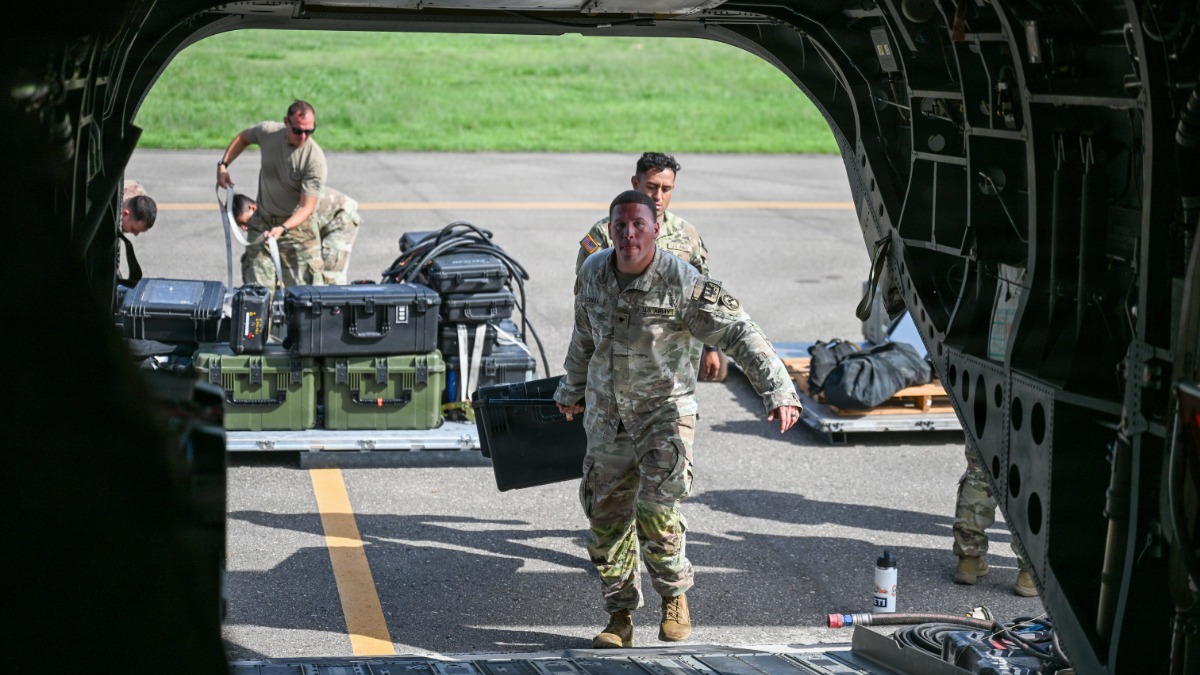
The State Department just dropped a $150 million lifeline on Venezuela after the country suffered two devastating earthquakes, marking one of the biggest U.S. disaster responses since the gutting of the United States Agency for International Development (USAID). Secretary of State Marco Rubio called it a “whole-of-government response” during a press stop in the Gulf, promising speed and effectiveness.
According to NPR, the package includes cash for faith-based groups like Samaritan’s Purse and Catholic Relief Services, plus two UN agencies – the World Food Programme and the Office for the Coordination of Humanitarian Affairs. On the ground, things are moving fast. Two search-and-rescue teams from Virginia and California are already deploying, with 150 people and 12 dogs between them. The Pentagon is also pitching in to help navigate damaged airport infrastructure and get critical supplies into the country.
This is a sharp turn from last year’s disaster response in Myanmar, where an earthquake killed over 3,500 people. Back then, the U.S. sent just $9 million and three damage assessors – no search-and-rescue team. China, meanwhile, stepped up with $137 million.
The U.S. is showing a stark difference in aid efforts towards Venezuela
Jeremy Konyndyk, president of Refugees International and former head of USAID’s disaster response under Obama, didn’t mince words about the contrast. “There was definitely a period last year when they had lost the capability to deploy a search and rescue team in the DOGE destruction of USAID,” he said. “It was very visible and very embarrassing.”
Since then, the State Department has quietly rehired some of USAID’s humanitarian staff and reinstated contracts with disaster response groups, including search-and-rescue teams. But Konyndyk says this Venezuela response is the real test. “The administration clearly wants to avoid a black eye of not deploying a robust immediate response, but whether they will sustain the kind of follow through that can save lives in the months that follow, I think that’s an open question.”
The stakes in Venezuela are high. Cesar Jimenez, a Venezuelan national managing the response for Project Hope, called the damage “very, very severe.” His team visited two healthcare facilities in La Guaira, near the epicenter of the second quake. “They’re totally collapsed,” he said. “We saw people laying in the ground with no beds, being assessed by health staff. We saw like 200 people in one tiny healthcare facility seeking help.”
Jimenez emphasized that this is a historic moment for Venezuela. No one saw this coming, and the country wasn’t prepared. The chaos after the quakes, the most powerful since 1900, has already put lives at risk. He’s pushing for measures to prevent further injuries in case of aftershocks, something USAID used to prioritize.
The destruction has thrown light on the need for better preparedness
After the earthquakes in Nepal in 2015 and Turkey and Syria in 2023, USAID teams advised local authorities on safe building codes and prepared response kits. Konyndyk put it bluntly: “The most lifesaving thing that can be done in an earthquake scenario is the work that is done beforehand, not the work that is done after live rescues.”
The $150 million pledge is a strong start, but the real work is just beginning. The State Department has brought back some of USAID’s old muscle, but it’s still playing catch-up. “I want to see deployment of emergency medical teams to stabilize the health system after an earthquake like this,” Konyndyk said.
“I would want to see investments in restoring water infrastructure and other basic infrastructure that’s been damaged.” That kind of long-term follow-through is what made USAID a gold standard in disaster response. The question now is whether the State Department can fill those shoes.
It’s a long road to recovery
For Venezuela, the immediate crisis is far from over. Jimenez and his team are doing everything they can, but the scale of the damage is overwhelming. “We are doing our best as Venezuelans to support our people,” he said. “This is a unique moment in our history, because we were not prepared for this.”
The U.S. response is a step in the right direction, but it’s just the first chapter in what could be a long recovery. If the State Department wants to rebuild its disaster response reputation, it will need to keep the momentum going long after the search-and-rescue teams pack up. The world is watching, and so far, the pressure is on.
(Featured image: U.S. Air Force photo by Staff Sgt. Ethan Sherwood)
Have a tip we should know? [email protected]
Follow The Mary Sue:
