


When Will Trade Publications Learn From Their Mistakes and Stop Doubling Down?
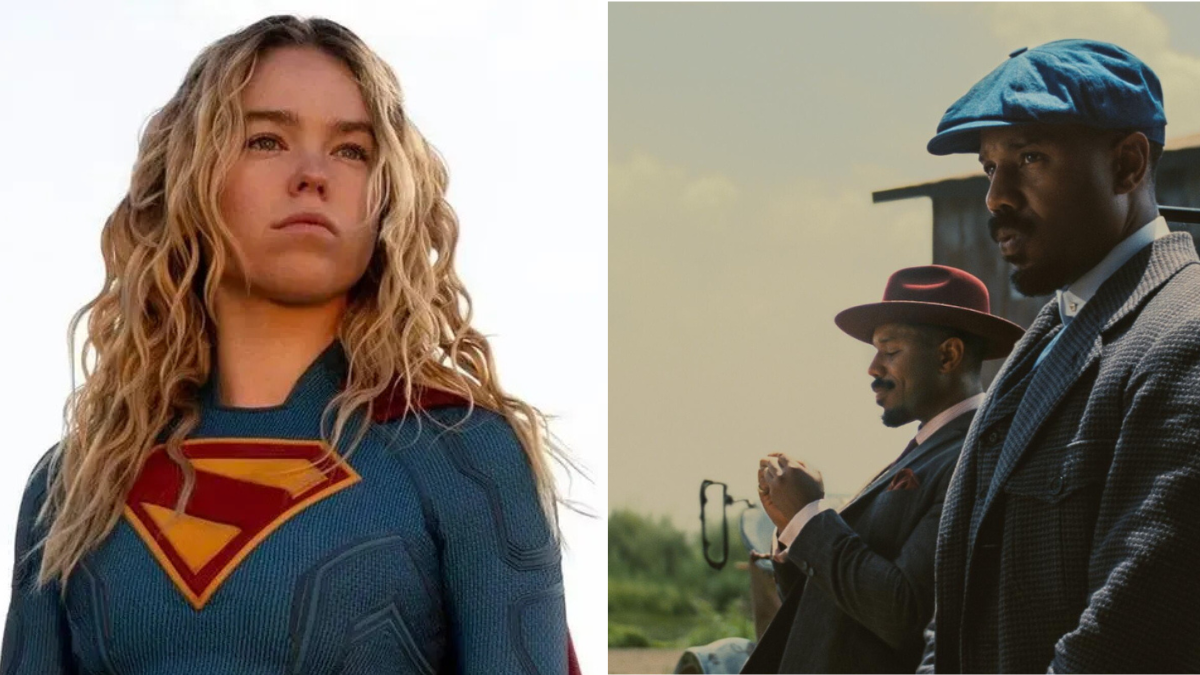
It’s been exhausting to talk about DC Studios’ Supergirl. The debut of the film and its performance at the box office have prompted a wave of discourse that hasn’t quite been seen amid the superhero fandom… and in a way, it’s impossible to untangle one outlet from that: Variety.
It is worth mentioning that, even before this week, Variety‘s angle of reporting on certain projects has been met with criticism. Most infamously, their coverage of Ryan Coogler’s Sinners, which often framed its box office and subsequent awards campaign in a diminishing way, was interpreted by some to be biased and racially loaded. And even with the DCU itself, the outlet was previously scrutinized for fueling the “woke” debate about last year’s Superman, and the titular character’s role as an immigrant allegory.
A similar sort of fueling seemed to be happening in their early reporting of Supergirl — first, with comments Alcock made about dealing with online trolls. Earlier this year, the actress spoke to Vanity Fair about her experience on the Game of Thrones spinoff House of the Dragon, and how it led her to the realization that “simply existing as a woman in that space is something that people comment on. We have become very comfortable having this weird ownership of women’s bodies.”
Certain men, particularly in the manosphere, immediately took issue with Alcock’s comments… and she was asked about that backlash again in an April profile with Variety, pointing out: “I didn’t even say ‘men’ — I said ‘people!’ And they got so angry. I was like, ‘You’re proving my point. You’re proving my point!’”
“I guess women know that this is just how it’s always been, unfortunately,” Alcock continued. “And [the backlash] is from a lot of people whose profiles have no photo, who are burner accounts. Or someone’s name and then ‘Dad of four, Christian,’ which is hilarious to me. But I mean, whose opinion do you really care about? If you’re pissing the right kind of people off, you’re doing OK.”
Unsurprisingly, some of the same men misinterpreted her “Christian dad of four” comment as an insult against an entire group, instead of an acknowledgement of the kinds of accounts (often bots) that can be found in these kinds of toxic Internet spaces. A few months of small “controversies” ensued from there: over Alcock’s appearance, over the “comic inaccuracy” of Supergirl’s ears being pierced (ignoring the fact that she could’ve gotten them pierced on Krypton or on a red sun planet), and more recently over Alcock’s comments about Supergirl being interpreted as a queer icon. After Variety asked Alcock about the latter at Supergirl‘s New York premiere, her newest comments quickly earned the chyron “SUPER-BISEXUAL” on Fox News, and a bizarre rant from host Jesse Watters about how he doesn’t trust bisexual women.
“Even the Devil Rested…”
And then there was Variety‘s official review of Supergirl, in which critic Owen Gleiberman referred to the movie as “so flat it’s super-horrendous” with “the worst script [he] can remember.” The review went viral in the ensuing days, not just for those snippets, but for the bizarre and obtuse complaining Gleiberman does in subseqent paragraphs. It was also heavily criticized for likening Alcock to “Kristy McNichol crossed with the Feral Kid from The Road Warrior in oversize Penny Lane sunglasses,” playing right into a comparison that certain right-wing circles had already been making for weeks.
But it didn’t stop with the review: throughout the weekend, Variety‘s social media accounts then continued to share quotes from their previous profile of Alcock, without providing the context of when those quotes were initially said and published. Some of the quotes in question — the fact that she had “never screen tested for anything” before Supergirl, and her not having seen other female-fronted superhero movies like Wonder Woman and Captain Marvel — also felt intentional, as if goading the reader to fill in the gaps with their own biases amid the discourse around the movie. On Monday, the outlet then published an opinion piece from another male writer, Marlow Stern, titled “Supergirl Stinks. Why Does Hollywood Keep Failing Female Superheroes?” As a number of quote-tweets of the article have succinctly put it: “even the Devil rested.”
It’s not just publishing a review from a critic who has developed a decades-long reputation for being contrarian. It’s not just editorializing, far beyond what is written about other superhero movies and most other blockbusters, in every single piece of factual reporting about the movie. It’s not even the fact that the majority of their coverage of the movie, outside of the aforementioned months-ago profile on Alcock, has been written by men.
You’re Proving Milly Alcock’s Point!
It’s doing all of those things without caring about the consequences of how they will be received, particularly by the “trolls” that Alcock was talking about months ago. It feels like an understatement to say that Supergirl‘s most vocal detractors — predominantly men, who either made up their minds before seeing the movie or haven’t even seen it at all — are galvanized by reporting that aligns with their existing feelings and biases. Emboldened by the fact that one of the biggest trade publications in the country is speaking their proverbial language, they can (and have) then make talking about this movie a miserable experience for everyone else. Twitter, in particular, has become a cesspool where anyone who liked the movie (or at very least showed it any grace) is met with name-calling, bullying, or other vile comments. In the eyes of some of these commenters, no one can positively like a movie that Variety says “stinks.”
Ironically enough, in a 2011 Entertainment Weekly article titled “Do critics pick out certain movies to bash?”, Gleiberman himself called out “criticism that emerges from a kind of vengeful groupthink mentality.” Specifically about Transformers: Revenge of the Fallen, he wrote, “the vicious, take-no-prisoners hatred that the film inspired — and, more than that, the astounding uniformity of it — struck me as being about something way beyond, or maybe outside of, the noise and bluster and slipshod storytelling of the movie itself. It was about the need to punish the movie for being the quintessential arrested-development Age of CGI blockbuster.”
Elsewhere in the article, Gleiberman argued: “What I’ve noticed — and I wonder if you have too — is that this ritual of movie-bashing, where a popcorn extravaganza (usually a major hit) is picked out, by a kind of media collective, and given an unholy brickbat whipping, has become a recurrent feature of the movie-commentary landscape, with the opinions inevitably magnified by the righteously indignant echo chamber of the Internet. The result is that you have a movie like Revenge of the Fallen, which 30 to 40 million people in America lined up to see, and presumably one or two of them enjoyed, but the mythology created around it is that it’s a piece of trash that everyone hated.”
Fifteen years later, there’s a lesson to learn here. If Gleiberman and Variety won’t learn it, at least some of the Internet is, while trying to shut out the noise and enjoy Supergirl.
(featured image: Warner Bros.)
Have a tip we should know? [email protected]
Follow The Mary Sue:
