


Stephen Miller Just Labeled Democratic Primary Wins a Cancer, Yet He Is Ignoring the Massive Internal Rift Tearing His Own Party Apart
Old playbook.
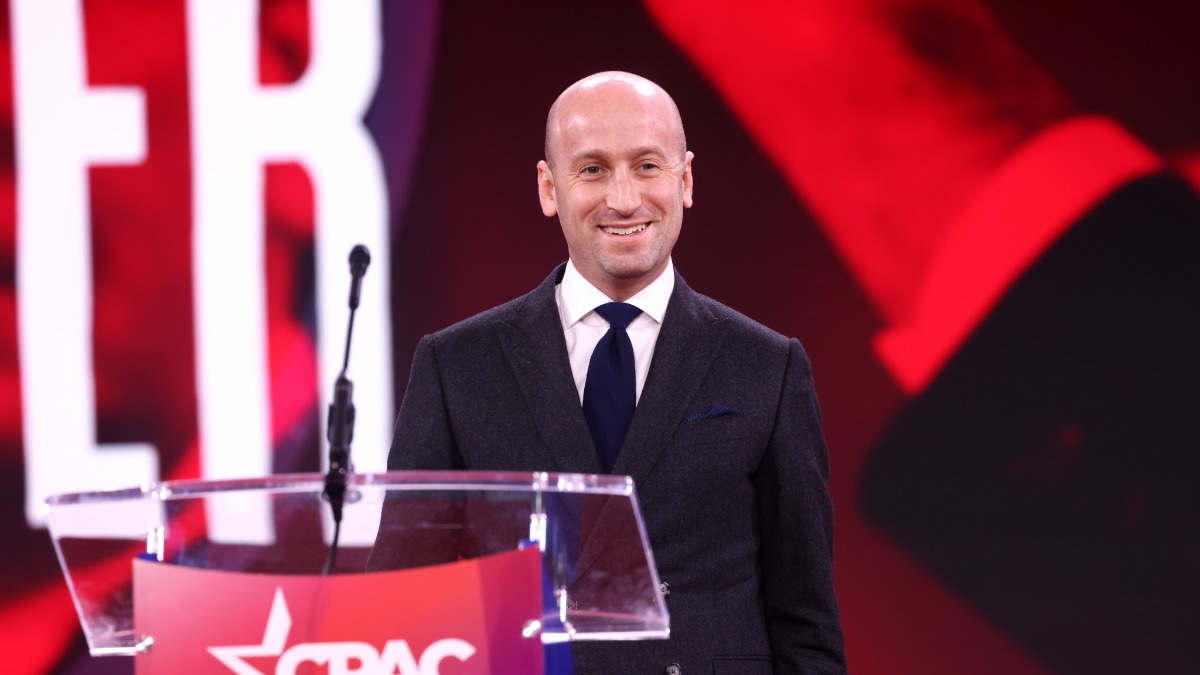
Stephen Miller just called progressive Democratic primary wins a “cancer” spreading through the party, but he’s too busy sounding the alarm to notice the rifts in his own home. Appearing on Hannity on June 23, the White House Deputy Chief of Staff for Policy painted a doomsday scenario where socialist candidates are taking over the Democratic Party. He warned that voters can no longer recognize the party their grandparents supported.
His rhetoric was fiery, but it’s hard to take seriously when his own side is struggling with infighting, policy clashes, and a base that’s increasingly at odds with itself. Miller framed the wins by Zohran Mamdani-backed candidates in New York as proof of a radical shift. “A vote for any Democrat, anywhere, for any office, is empowering a party that wants to strip this country to the bone, to take away our security, our defense, our way of life,” he said, per Fox News.
The candidates he singled out – Darializa Avila Chevalier, Claire Valdez, and Brad Lander – aren’t just outliers, either. Graham Platner, who beat a Democratic incumbent in Maine, will now face Republican Sen. Susan Collins in November. In Los Angeles, Nithya Raman is challenging Karen Bass for the mayor’s seat, while Texas progressive James Talarico is gearing up to take on Ken Paxton in a high-stakes Senate race.
Miller’s language was dramatic, to say the least
“Tonight brings really terrifying evidence of just… how far this cancer has spread and is spreading across and throughout the Democrat Party,” he said. He said every open Democratic primary is now a battleground for “the most socialist, the most communist, the most lunatic candidates,” who he says are uniformly against law enforcement, border security, and “every single tenet of traditional American values.”
It’s a sweeping generalization, but it’s also a playbook he’s used before – painting the opposition as an existential threat while positioning the President as the only bulwark against “left-wing insanity.” What’s ironic is that Miller’s own side is far from unified. While he’s busy warning about a Democratic Party overrun by socialists, his own rhetoric is exposing deep divisions within conservative ranks.
His recent posts on X about immigration were a masterclass in dog-whistle politics. According to The New Republic, he said that half of New York City residents speak a language other than English as their primary language, and a quarter lack English proficiency, framing it as some kind of cultural invasion. “Half of all college graduates in NYC are immigrants or from immigrant households,” he wrote in another post.
The backlash was swift
Critics were quick to point out that Miller’s own family history is tied to New York’s immigrant roots. His great-grandfather arrived at Ellis Island in 1903 as a Yiddish-speaking peddler. “The guy’s great-grandfather was a Yiddish-speaking peddler who arrived at Ellis Island in 1903, and somehow New York endured his presence,” journalist David Klion wrote. “No one kidnapped him off the street or sent him to a concentration camp in El Salvador.”
Others called out the hypocrisy of Miller’s anti-immigrant stance, noting that he’s made it clear he opposes immigration in any form. “Every day a Republican on here tells me we only oppose illegal immigrants, and every day on here Stephen Miller makes clear he hates all immigrants, legal or not,” journalist Zaid Jilani wrote. “Pay attention to your own leaders!”
Miller’s posts reveal a fundamental misunderstanding of why progressive candidates are gaining traction. It’s not about immigrants “embracing communism,” as he put it. It’s about voters, regardless of background, responding to economic pressures, rising costs of living, and a political system that feels increasingly out of touch.
Forcing people to speak English or scapegoating immigrants won’t change that. If anything, his rhetoric is pushing more voters toward progressive alternatives, not away from them.
The Republican base is fracturing over everything from election integrity to foreign policy
The bigger issue here is that Miller’s alarmism is a distraction from the real problems facing his own party. While he’s busy warning about a “cancer” in the Democratic Party, the Republican base is fracturing over everything from election integrity to foreign policy. His focus on progressive wins in New York and beyond is a way to rally the base, but it’s also a sign of how narrow the conservative movement’s messaging has become.
Instead of offering solutions to the issues driving voters toward progressives – like healthcare costs, housing affordability, and wage stagnation – he’s doubling down on fearmongering. That’s not to say progressive candidates don’t face their own challenges. Many of the races Miller highlighted are still uphill battles.
In Michigan, Abdul El-Sayed is one of three Democrats vying for the party’s Senate nomination, and the winner will face Republican Mike Rogers in November. In Texas, James Talarico’s race against Ken Paxton is shaping up to be one of the most contentious in the country. But framing these candidates as “lunatics” or “communists” ignores the fact that they’re responding to real voter concerns – concerns that Miller’s party has struggled to address.
Miller’s rhetoric also raises questions about White House’s policy agenda
If the administration is so focused on painting the opposition as radical, what does that mean for its own ability? Fearmongering might energize the base in the short term, but it’s not a sustainable strategy for winning over undecided voters or addressing the country’s most pressing issues. At some point, the administration will have to move beyond alarmist language and offer real solutions or risk being seen as out of touch.
For now, though, Miller seems content to keep sounding the alarm. His warnings about a Democratic Party overrun by socialists might play well with the base, but they’re also a reminder of how polarized the political landscape has become. The more he frames the opposition as an existential threat, the harder it becomes to find common ground. And in a country where voters are increasingly frustrated with both parties, that’s a risky strategy.
(Featured image: Gage Skidmore)
Have a tip we should know? [email protected]
Follow The Mary Sue:
