


Footballers Claim the World Cup Grass Feels Like Plastic, Raising Questions About the Safety of the Tournament’s Engineering
Turf trouble.
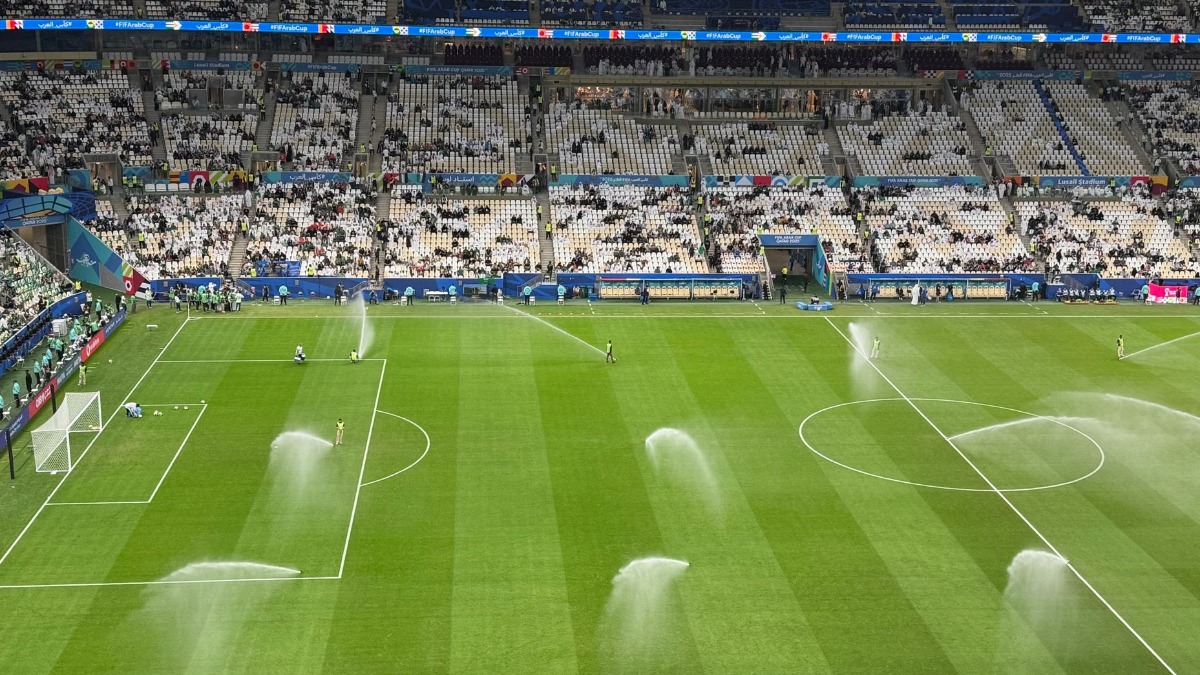
Footballers at the 2026 FIFA World Cup are sounding the alarm about the grass under their feet, calling it rigid, artificial, and downright weird. The tournament’s hybrid pitches, designed to withstand the abuse of elite play, are instead sparking complaints from players and coaches who say the surfaces feel more like plastic than natural turf, according to Reuters.
With the final set to take place on one of the most scrutinized fields in North America – the MetLife stadium, currently called ‘New York New Jersey Stadium’ – the debate over whether these high-tech pitches are safe, or even playable, is heating up. France midfielder Adrien Rabiot didn’t mince words after his team’s win over Senegal. “The pitch… I don’t even know if you can call it that,” he said. “It felt more like an artificial surface – quite hard and quite rigid.”
His coach, Didier Deschamps, was equally blunt, calling the New Jersey field “different” and hinting that the sub-surface might as well be cement. Players had to swap out their usual screw-in studs for flatter soles just to adapt, a sign that something isn’t right. Even the bounce of the ball felt off, throwing players’ timing out of sync.
The criticism isn’t just coming from the French camp
According to The Athletic, Brazil’s Vinicius Junior called the same pitch “difficult to play on,” blaming the heat and dry conditions for turning the grass into a slow, unpredictable surface. “We can’t build up a rhythm,” he said, adding that the problem would likely persist throughout the tournament. Social media lit up with similar complaints, with fans and pundits alike questioning why the most important stadium in the tournament looks patchy and discolored on TV.
FIFA, however, is standing by its pitches. The organization insisted that all 16 fields are in “excellent condition” from both a playability and safety standpoint.
“Variations in the appearance of some surfaces, whether on television or in person, do not necessarily reflect the quality, health, or playability of the pitch,” FIFA said. The governing body pointed to years of research and testing, arguing that the hybrid systems – where natural grass grows through a synthetic base for extra durability – are the future of elite football.
Not every pitch is drawing the same level of criticism
Australia’s Aiden O’Neill heaped praise on the Vancouver stadium after his team’s win, calling the surface “perfect” and noting how well the ball moved. The difference in reactions highlights just how varied these pitches are.
With stadiums spread across North America, from the high-altitude of Mexico City to the humidity of Toronto, each field has its own unique challenges. Some get sunlight, others don’t. Some face rain, others never see a drop. The result is a tournament where players aren’t just adapting to opponents – they’re adapting to entirely different playing surfaces every few days.
Mike Hahn, a football biomechanics researcher, explained why these inconsistencies can throw players off. “They have such a fine-tuned feel for what it should be,” he said. “If there’s a small difference in the compressive stiffness of the grass, they could feel that small difference enough that their legs are having to stiffen up.” Even minor changes in how the turf responds underfoot can force players to adjust their movements, potentially increasing the risk of injury.
The stakes are highest at MetLife Stadium where the final will be played
The pitch at the New York New Jersey Stadium has been a lightning rod for criticism since the tournament began, with players describing it as dry, hard, and unnatural. The grass was sourced from a farm in North Carolina after a harsh winter disrupted plans to use local turf, and it took 27 trucks to haul the massive rolls of sod to the stadium.
Beneath the surface, a complex system of irrigation and ventilation is supposed to keep the grass alive in New Jersey’s unpredictable weather. But even with around-the-clock care, the pitch has struggled to meet expectations. Workers have been seen tending to the field mid-match, stomping on the grass, raking it, and even reseeding patches in real time.
Between halves, sprinklers come on to combat the dryness, and crews scurry onto the pitch to pick up dead grass and smooth out rough spots. It’s a far cry from the seamless, pristine fields fans expect at a World Cup. FIFA insists these interventions are part of a carefully planned maintenance routine, with moisture levels and firmness tested before every game. Still, the visual evidence – patchy, discolored grass in front of the goals – tells a different tale.
The pressure on these pitches is only going to intensify
Hahn, the biomechanics expert, is watching closely to see if any of the hybrid surfaces fail under the strain of elite play. “You’re going full speed and making as sharp a cut as you can, and all of a sudden it fails,” he said. “It works great until it doesn’t.” With the final still weeks away, the battle between players’ studs and the engineered grass is far from over.
For now, teams are doing their best to adapt. France’s players adjusted their boots. Brazil’s Vinicius Junior accepted that the slow, dry pitches were the new normal. FIFA’s bet on durability and innovation might be paying off in some stadiums but the bigger question remains: if the world’s best players are struggling to trust the surfaces beneath their feet, is the experiment with hybrid pitches going too far?
(Featured image: Hany Nafady on Pexels)
Have a tip we should know? [email protected]
Follow The Mary Sue:
