


FIFA Is Facing a Mounting Health Crisis as Analysts Flag Dozens of World Cup Matches for Dangerous Heat Exposure
84 degrees Fahrenheit.
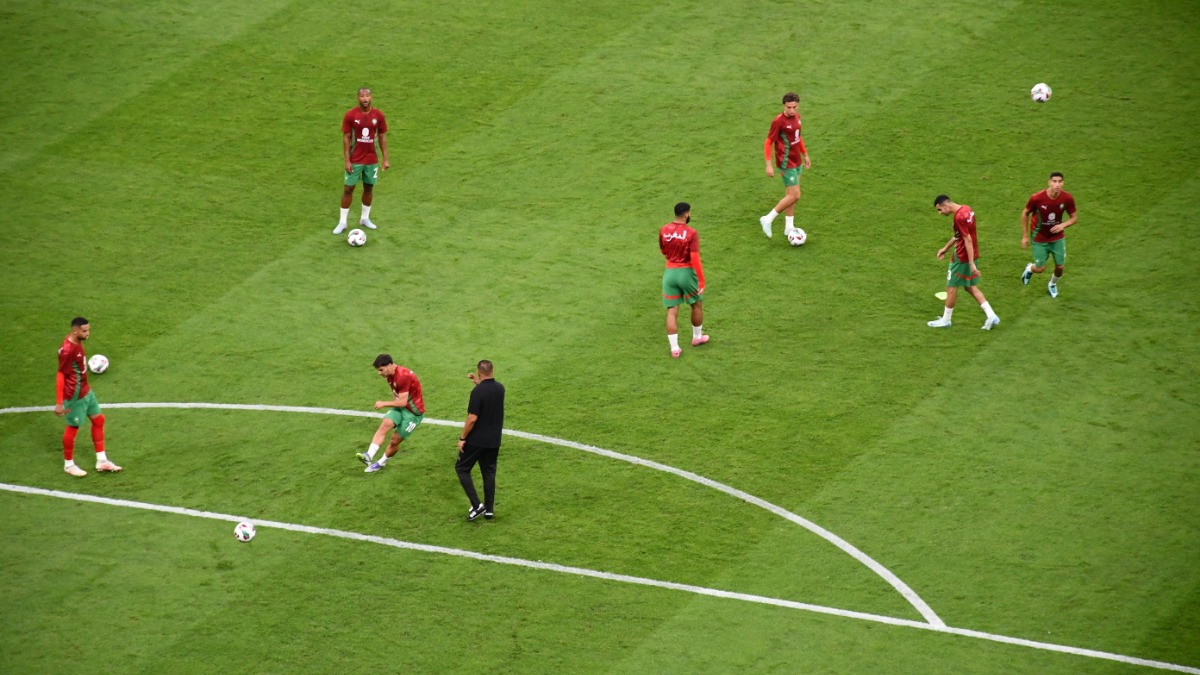
The FIFA 2026 World Cup is barreling toward a serious heat crisis, with more than a third of its matches flagged for dangerously hot and humid conditions. An NPR analysis of two decades of temperature data across the 16 North American host cities shows that 39 games, including the third-place playoff and the final, carry a high risk of heat illness for players, referees, fans, and workers.
The analysis, which cross-referenced match start times with historical weather patterns, used the wet bulb globe temperature (WBGT) metric to measure heat risk. WBGT accounts for humidity, shade, and solar radiation, making it a stronger predictor of heat stress than air temperature alone. Jennifer Vanos, a heat policy researcher at Arizona State University, says the danger is clear. “All hot weather is dangerous, but hot, humid weather tends to be more dangerous.”
NPR states that Miami, Houston, Dallas, and Atlanta are the hottest venues, with average game-day temperatures hovering around 84 degrees Fahrenheit. While those stadiums have air conditioning, others, like the open-roof venues in Philadelphia, New Jersey, and Kansas City, don’t, leaving attendees exposed to averages as high as 79 degrees. Miami’s stadium, the hottest without AC, will host the third-place match, putting players and fans in the crosshairs of extreme heat.
FIFA insists it’s taking precautions
A spokesperson told NPR the organization has scheduled most games for cooler evening hours, added extra water breaks, and installed sideline air conditioning for bench players. Spectators in the U.S. and Canada can bring sealed water bottles, and venues will deploy misting systems, shaded areas, and cooling buses when temperatures spike.
But FIFA hasn’t clarified what temperature threshold will trigger these measures, whether every stadium has misting systems, or if workers will have the same access to cooling as fans. The risks aren’t just theoretical. Two years ago, referee Humberto Panjoj collapsed from heat illness during a match in Kansas City, Kansas, and had to be hospitalized.
The same city will host a World Cup game between Tunisia and the Netherlands on June 25, 2026, exactly two years later. In Miami, a Uruguayan star player left a 2024 match at halftime, later telling The Athletic he suffered from dizziness and dehydration. And in 2017, Rachel Daly collapsed from heat exhaustion during a Houston game despite extra water breaks, later posting on X, “those conditions are not safe to play at your maximum.”
Evening games are far safer than afternoon ones
Donal Mullan, a climate scientist at Queen’s University Belfast, says heat risk drops significantly after 6 PM. FIFA has mostly avoided the worst midday slots, but the final on July 19 is a glaring exception.
Scheduled for 3 PM at an uncovered stadium outside New York City, it’s set to kick off during peak heat, with WBGT temperatures likely hitting 79 degrees. Mullan calls it a “recipe for disaster,” noting that the time was likely chosen to accommodate global TV audiences in Europe, Africa, and Asia.
It’s not just the players who are at risk. Fans and workers face heat illness even if they’re not running around. Vanos points to recent tragedies, like the 2023 death of a fan at a Taylor Swift concert in Brazil during a heat wave, and the 2024 Hajj pilgrimage in Saudi Arabia, where over 1,300 people died in extreme heat. Large events amplify the danger because crowds often don’t know where to find water, shade, or AC in unfamiliar cities.
The World Cup is expected to draw over 6 million ticket holders
FIFA has not said exactly how many match tickets it has sold but around 6 million tickets are said to be available. That’s a huge number. Considering this is a global sporting event that comes around once every four years, most fans don’t want to miss out on watching a match in a stadium.
As a result, thousands of workers have to put in overtime to ensure things go smoothly. Most of these workers will be situated outdoors. Kansas City alone is spending $59 million on police overtime and extra officers for the event.
Vanos warns that outdoor workers, especially those in the sun during peak heat, could face serious risks. While the Occupational Safety and Health Administration (OSHA) recommends water and shade breaks, some host states, like Florida, don’t have laws enforcing those protections.
FIFA’s precautions are a start, but with climate change making heat waves longer and more intense, the margin for error is shrinking. The last men’s World Cup was moved to winter because Qatar’s summer heat was deemed too dangerous. North America’s summers are catching up. If temperatures spike during the tournament, the consequences could be severe.
(Featured image: Reda benkhadra)
Have a tip we should know? [email protected]
Follow The Mary Sue:
