


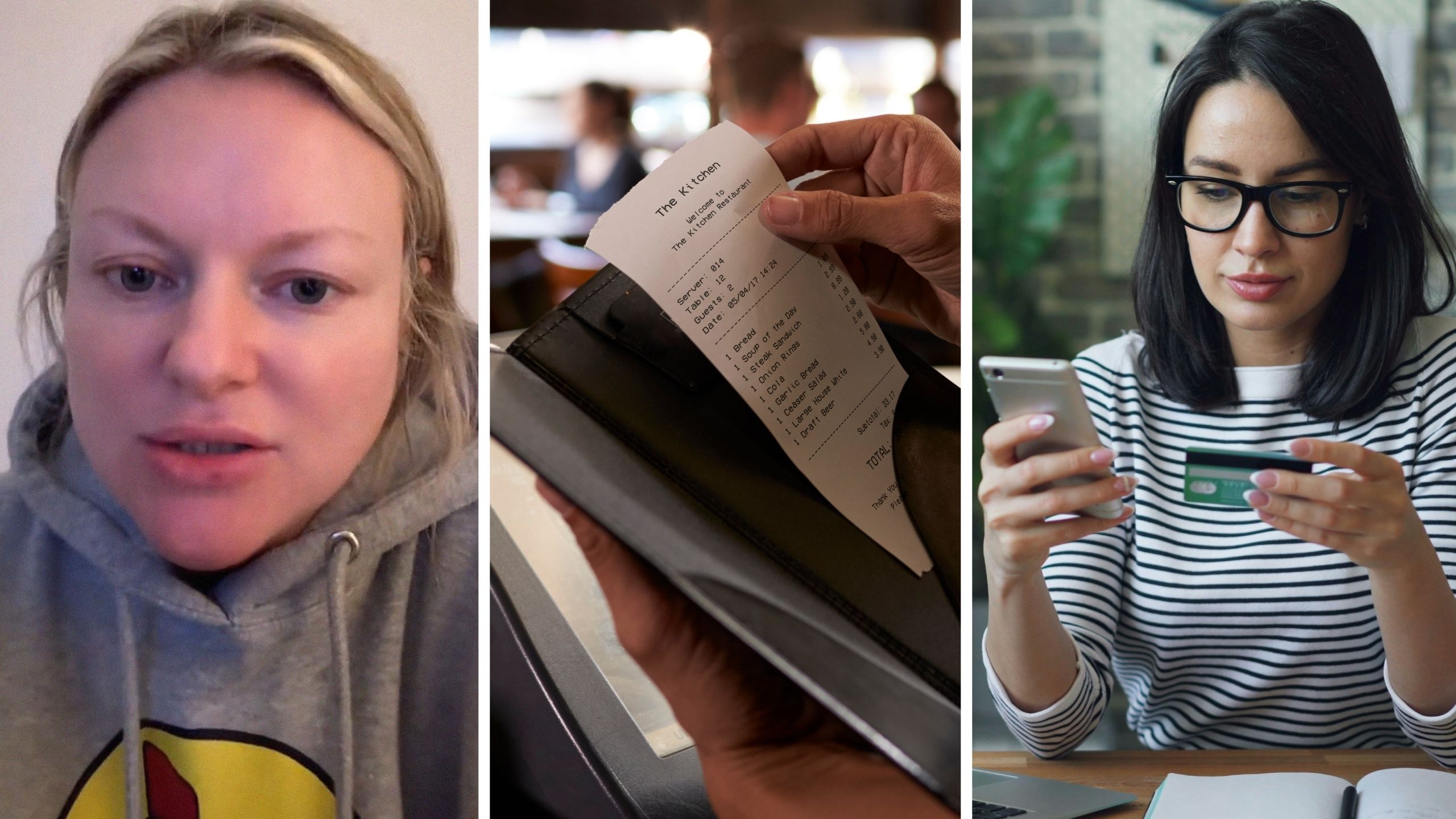
Server asks customer if she’s ready for the check. Then she says she already paid it online: ‘And I guess tip whatever’
Working in the service industry can have lucrative advantages, but it comes with the burden of chance. Servers have to roll the dice to see how any particular day is going to pan out—in terms of tips and in terms of customers.
But what happens when a table takes one step of the serving process entirely out of the equation by paying via an app? Well, that’s what happened at Florida Server Kate’s (@wellnesswellman) restaurant.
Kate told her audience in a video with more than 16,000 views that while working a dinner shift, a table paid with their phone via the restaurant’s website, which took her asking for a card out of the equation.
The content creator also didn’t even know her restaurant had implemented it. “ Apparently, it’s some new system that was, like, implemented … very recently. … It … kind of doesn’t have anything to do with us,” Kate said.
What’s the issue with the new system?
Kate issued an official complaint about the new system, namely, that it involved another company unnecessarily.
“This is just getting out of hand,” she said. “Not that many companies and people should be involved in your dining experience.”
She said in her video that in order for customers to use the app, they had to submit their credit card information to a third party. She also mentioned that there was a monetary reward system associated with the app’s usage.
For her, the explanation felt somewhat dystopian.
“Can we not just, like, go out to eat just … simple? … Everything has to require … 50,000 apps. All these people have to be involved. … You have to give your information to everybody. Is anyone … concerned like I am concerned?” she said.
She told her audience that the direction society as a whole was going in was not normal. “ None of this is sustainable,” she said.
She also tagged her video #inKind, pointing directly to the unnamed platform in question. InKind reportedly gives customers access to pay using their phone at over 8,000 restaurants. It offers its user base “bonus credits” for dining, alongside additional perks.
@wellnesswellman This is just getting out of hand, not that many companies and people should be involved in your dining experience #server #serverproblems #inkind ♬ original sound – KATE ?
Commenters echo the sentiment
In the comments section, viewers said they have the same concerns.
“It’s exhausting when every vendor demands your personal information just for you to make a purchase,” one viewer said.
Another commenter added, “Everything is moving toward not having human interaction,” with a crying emoji.
Servers, too, explained that electronic payment methods hurt their tips. One commenter who said they were a server at a Darden restaurant added, “Darden has done a version of this for a while it really [expletive] up my money every night. they get away with not tipping and not feeling guilt bc they can just walk away.” Famously, Darden owns LongHorn Steakhouse and Olive Garden, among other franchises.
Outside of website-affiliated payment methods, QR codes have also received scrutiny. While some businesses use alternative codes to increase accessibility, others prefer having a waitress, a real paper menu, and the option to ask for recommendations.
The Mary Sue reached out to Kate via TikTok direct message and InKind via email for comment.
Update:
In response to an inquiry from The Mary Sue, a representative from InKind explained how the payment system works.
“When a guest chooses to pay with inKind, they complete their payment through the app using their dining credit, any remaining balance, and gratuity,” they said. “Payment information is securely processed through trusted third-party payment processors, making the experience seamless for both the guest and the restaurant.”
They added that, “Like most commerce and rewards platforms, we collect the information necessary to process transactions and provide the service, including contact and payment information. We share only the information required with trusted payment and reservation partners to complete the dining experience. We do not sell personal customer data, and protecting user privacy is a core priority.”
The representative also explained how tipping works.
“One point we’d like to clarify is that 100% of every gratuity or service fee paid through the inKind app goes directly to an account controlled by the restaurant,” they said. “The tip is always charged separately from the rest of the bill, and inKind does not receive any portion of gratuity. Restaurants distribute those tips to their teams according to their own policies, just as they would with any other form of payment.”
Finally, the representative added that “For restaurants, inKind is much more than a payment platform. We provide equity-free funding, help restaurants attract new guests, and create loyalty by encouraging repeat visits, all without relying on traditional discounting. Our goal is to help restaurants grow by connecting capital, customer demand, technology, and data into one restaurant growth platform, rather than forcing operators to solve each challenge independently.”
Have a tip we should know? [email protected]
Follow The Mary Sue:
