


Democrats Are Forcing a Showdown With J.D. Vance Over His Private Situation Room Strategy Regarding the Epstein Files
Massive cover-up?
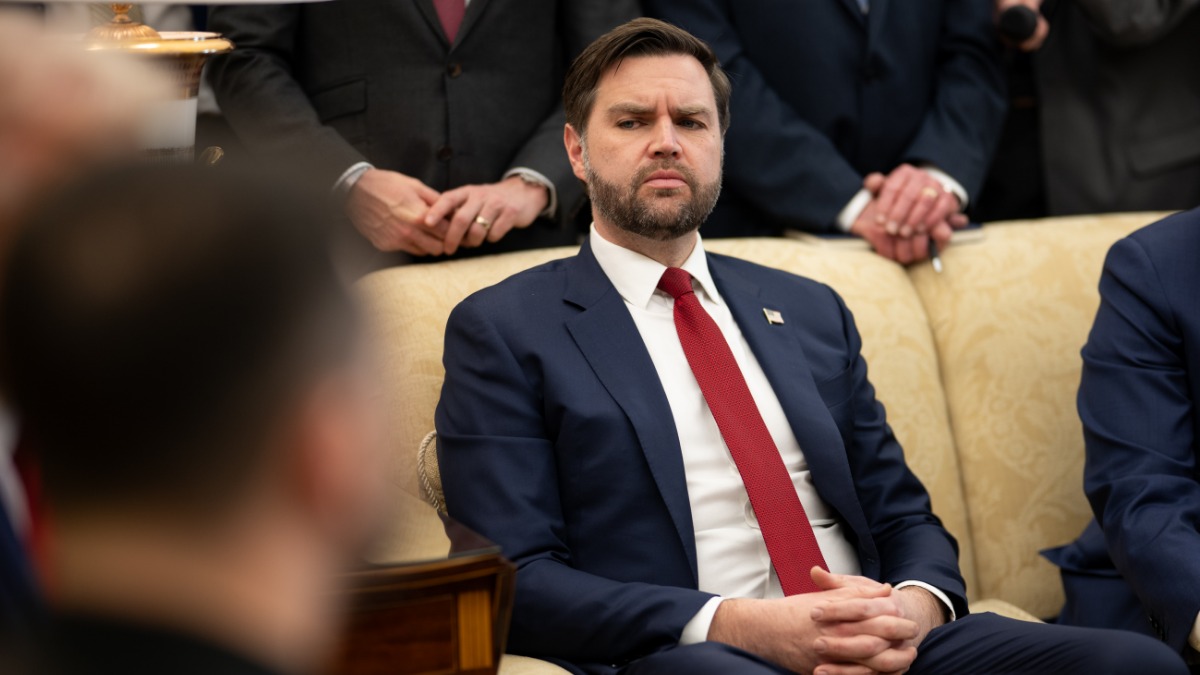
Democrats are forcing a showdown with J.D. Vance over his alleged role in handling the Epstein files, demanding he testify before the House Oversight Committee. The move comes after a New York Times report revealed Vance led a series of Situation Room meetings to manage the fallout from documents linking the administration to Jeffrey Epstein.
Representative Robert Garcia, who’s spearheading the effort, called the vice president’s involvement a “huge bombshell,” especially since the meetings reportedly focused on strategies to protect the president. The controversy centers on how the administration responded to the Epstein files, which became a major internal crisis.
According to The Guardian, Vance warned officials that releasing the documents could become a “huge problem” for the administration. The Situation Room meetings, which often excluded President Donald Trump, reportedly explored ways to control the narrative, including gradual releases of the files to minimize damage. Some officials, like White House chief of staff Susie Wiles, allegedly thought Vance was overreacting and had “bought into the conspiracy theories.”
Garcia didn’t hold back in his criticism
Rep. Garcia questioned why the Situation Room, typically reserved for national security matters, was being used to strategize over the Epstein files. He pointed out that Vance wasn’t just attending these meetings but leading them, even discussing how Ghislaine Maxwell could be used to exonerate the president. The idea of Maxwell, Epstein’s longtime associate, publicly defending the administration in an interview with Tucker Carlson was apparently floated as a potential move.
The Epstein files have been a political minefield for months. The controversy reignited after a 2025 Justice Department memo concluded there was no evidence of a so-called “client list,” a claim that angered many supporters. The subsequent release of millions of pages of documents under the Epstein Files Transparency Act only fueled more scrutiny.
The administration’s handling of the situation has been messy, with some officials reportedly more concerned about losing support from core voters than about transparency. The Times report even suggested that officials like former attorney general Pam Bondi “grossly underestimated” how much the base cared about the issue.
The fallout has been brutal for Republicans who pushed for full transparency
Marjorie Taylor Greene resigned in January after months of backlash from the president, while Nancy Mace lost her primary this week, blaming her support for releasing the files for her defeat.
Thomas Massie, who co-sponsored the Epstein Files Transparency Act with Democrat Ro Khanna, was ousted in his primary after Trump recruited a challenger to run against him. Massie didn’t mince words about the political cost, saying that Trump became “irrationally opposed” to transparency on the issue, more so than on other policy disagreements.
The administration’s response to the Epstein files has been chaotic from the start. Officials reportedly debated everything from full transparency to unconventional PR moves, like leveraging Maxwell’s potential testimony. The Wall Street Journal’s report in July, which claimed the president had sent Epstein a “bawdy” birthday message in 2003, only made things worse.
The president denied the letter’s legitimacy and filed a $10 billion lawsuit against the publishers, which was dismissed in March. His legal team refiled the suit last month, but the damage was already done.
Now, the House Oversight Committee is digging deeper
Investigators have already gathered testimony from people connected to Epstein, including his longtime executive assistant, Lesley Groff. They’ve also called on Alan Dershowitz, Epstein’s former attorney, to appear before the panel. The push for Vance’s testimony is the latest escalation in what’s become a full-blown political storm.
Vance’s alleged role in the Situation Room meetings is particularly damning because it suggests he was actively shaping the administration’s response. The fact that these meetings were held without the president present raises questions about who was really calling the shots.
Garcia’s demand for testimony isn’t just about accountability; it’s about uncovering how deep the cover-up might have gone. If Vance was warning officials about the potential fallout and leading the charge on media strategy, it paints a picture of an administration scrambling to control a narrative that was spiraling out of its control.
The Epstein files have become a symbol of the administration’s struggles with transparency and internal division. The fact that officials were more worried about their base than about political opponents speaks volumes about where their priorities lie. The Situation Room meetings, the infighting, and the desperate PR strategies all point to an administration caught off guard by the public’s appetite for information. And now, with Vance facing a congressional summons, the pressure is only going to intensify.
(Featured image: The White House)
Have a tip we should know? [email protected]
Follow The Mary Sue:
