


Third time wasn’t the charm for Manhattan prosecutors as Weinstein’s SA case collapses but the DA vows to keep fighting
Justice further delayed.
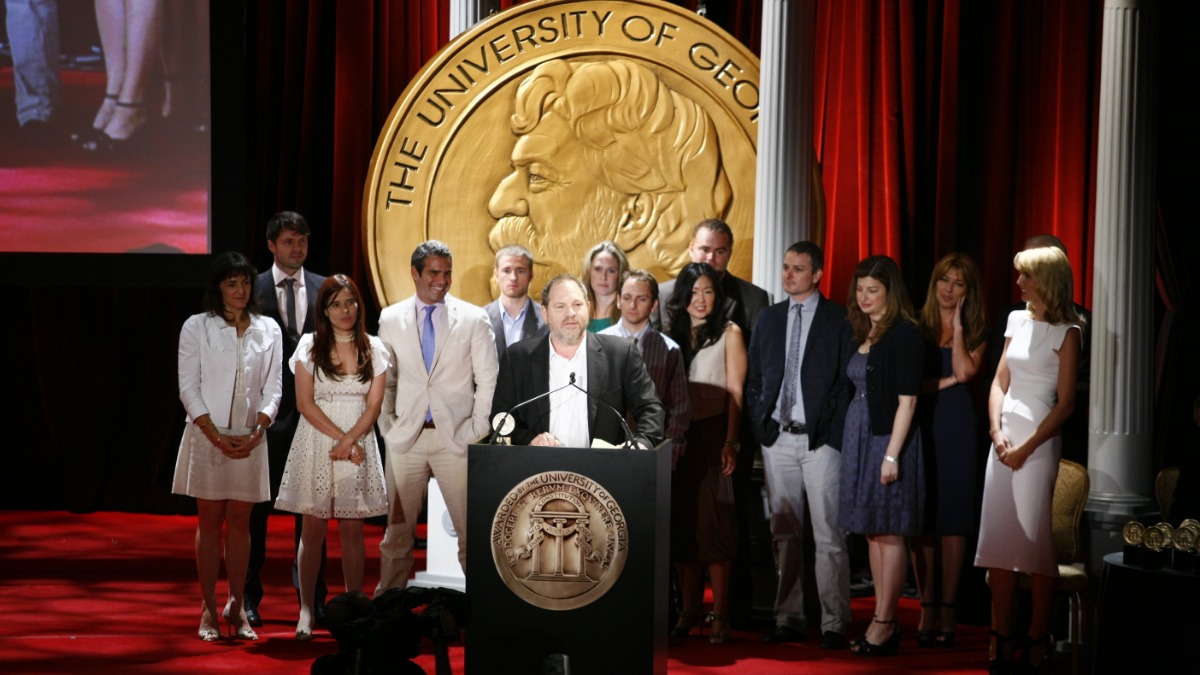
Harvey Weinstein’s latest New York rape trial just ended in a mistrial for the third time, leaving Manhattan prosecutors empty-handed but still vowing to keep fighting. Judge Curtis Farber declared the mistrial after the jury said it was deadlocked and couldn’t reach a unanimous verdict on whether Weinstein raped aspiring actress Jessica Mann in a hotel room more than a decade ago.
According to BBC, this is the second time a jury has failed to reach a decision on Mann’s accusation, and the third time prosecutors have tried to secure a conviction on these specific charges. Weinstein, now 74, remains jailed on other convictions, including a 16-year sentence in California for sexual assault. He showed no reaction as the mistrial was announced, sitting motionless in a wheelchair as court officers wheeled him out.
Outside the courtroom, one juror told reporters that nine of the twelve jurors wanted to acquit Weinstein, while three wanted to convict. That split was enough to force the judge’s hand, and Farber dismissed the jury, calling the deadlock “hopeless.”
The Manhattan District Attorney didn’t waste time addressing the outcome
DA Alvin Bragg said his office is “currently determining whether to try again in court.” He said, “We will consider our next steps in consultation with Ms. Mann, and in consideration of Harvey Weinstein’s pending sentencing in a separate sexual assault case,” Bragg said. “As always, we will continue to prosecute crimes of sexual violence – no matter who the defendant is – in a survivor-centered manner that uplifts their voices in the pursuit of justice.”
Weinstein’s legal team, however, sees the mistrial as proof that the case against him is more about public perception than evidence. His lawyers argued that the outcome shows “how deeply public perception and prejudice surrounding Harvey Weinstein have become embedded in society.” They went on to claim that “for some people, regardless of the evidence presented, saying ‘not guilty’ has become emotionally or socially impossible.”
The first trial, in 2020, resulted in a conviction on other charges, but that verdict was overturned in 2024 after an appeals court ruled that the judge had allowed testimony from women whose allegations weren’t part of the case. That decision effectively poisoned the jury pool, the court said.
Weinstein was then retried in 2025, but the jury deadlocked on Mann’s rape charge, leading to the second mistrial. This time around, the jury deliberated for three days before throwing in the towel.
The case has been a rollercoaster for Mann
Mann testified that she had some consensual encounters with Weinstein but that he forced her into unwanted sex in March 2013. Weinstein’s defense team argued that the encounter was consensual. After the second mistrial in 2025, she vowed, “I will never give up on myself and making sure my voice — and the truth — is heard.” She also pushed back against lying accusations, saying, “I would never lie about rape or use something so traumatic to hurt someone.”
The legal saga has been just as grueling for the other women involved. Miriam Haley, a former production assistant, testified that Weinstein sexually assaulted her in 2006. The jury in the 2025 retrial convicted Weinstein on that charge, but acquitted him on a similar count involving model Kaja Sokola. Sokola had testified that Weinstein forcibly performed oral sex on her in a Manhattan hotel in 2006, just before her 20th birthday.
Weinstein’s legal troubles extend far beyond New York. In 2022, he was convicted in Los Angeles on three counts of sexual assault, including forcible rape, and sentenced to 16 years in prison. That conviction is currently under appeal, with his legal team arguing that he was denied a fair trial because the judge excluded evidence that could have cast doubt on the accusers’ testimony.
They also claimed the judge shouldn’t have allowed the jury to hear about Weinstein’s overturned New York conviction, since it didn’t directly relate to the California case. Weinstein has consistently denied all allegations of nonconsensual sex, maintaining that any encounters were consensual.
The accusations first exploded into public view in October 2017
According to Us Weekly, reports from The New York Times and The New Yorker detailed decades of alleged sexual misconduct, harassment, and assault against Weinstein in 2017. More than 100 women have come forward with allegations against him, including Gwyneth Paltrow, Angelina Jolie, and Rosanna Arquette. The fallout was immediate and far-reaching.
Weinstein was fired from his own company, The Weinstein Company, and expelled from both the Academy of Motion Picture Arts and Sciences and the Television Academy. His career, once defined by his influence in Hollywood, collapsed overnight.
The #MeToo movement, which had already been gaining momentum, found its most high-profile case in Weinstein. His accusers’ willingness to come forward inspired countless others to share their own stories of abuse and harassment, leading to a reckoning across industries. But the legal battles have been anything but straightforward.
Weinstein’s initial conviction in New York was a landmark moment, but the overturning of that verdict in 2024 was a major setback for survivors and advocates. The decision to throw out the conviction hinged on the inclusion of testimony from women whose allegations weren’t part of the case, a ruling that critics argued could make it harder to prosecute sexual assault cases.
Weinstein’s health has also been a factor in the legal proceedings. In 2024, he was diagnosed with bone marrow cancer, and his declining health has been evident in court. During the latest trial, he was wheeled into the courtroom in a wheelchair. His legal team has argued that his health should be taken into consideration, but prosecutors have shown no signs of backing down.
(Featured images: Peabody Awards)
Have a tip we should know? [email protected]
Follow The Mary Sue:
