


Trump pauses ‘Project Freedom’ in the Strait of Hormuz but warns Iran the bombing will restart ‘at a much higher level’ if talks collapse
Another day of negotiations and violations.
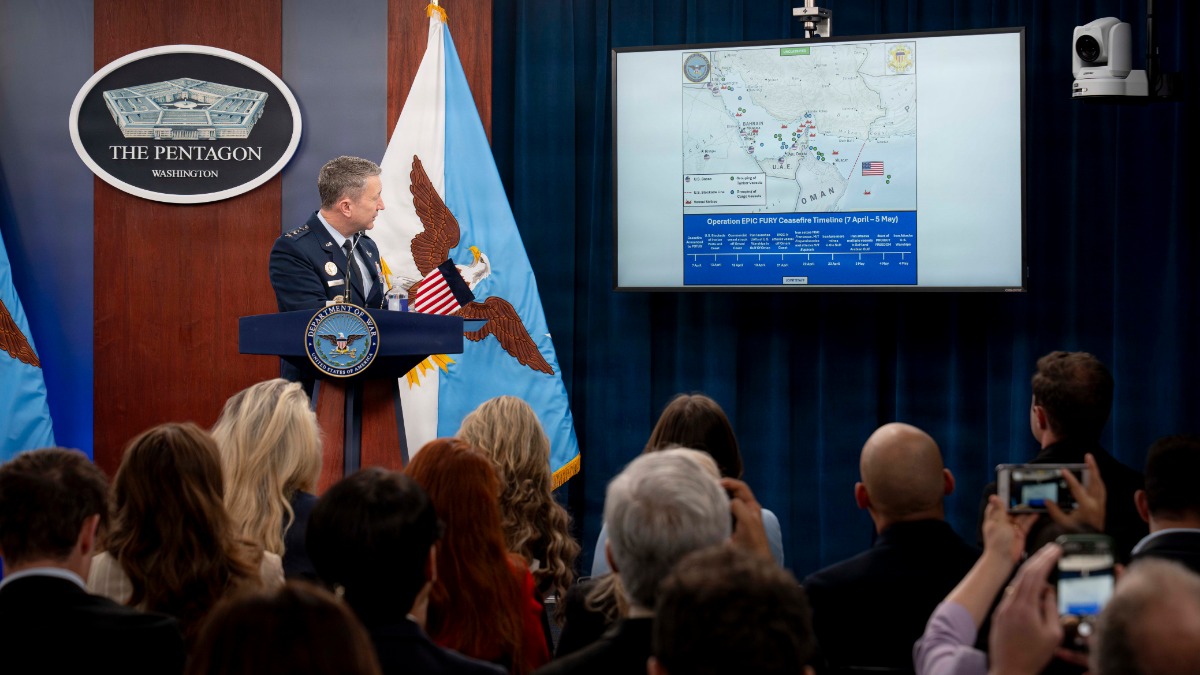
Project Freedom – the U.S. mission to guide commercial ships through the Strait of Hormuz – has been paused, but the warning from Donald Trump is clear: if negotiations with Iran collapse, the bombing will resume “at a much higher level.” The pause was announced on May 6, 2026, as a temporary measure to give negotiators space to finalize what Trump called a potential “complete and final agreement.”
On Truth Social, he framed the decision as a step toward ending the conflict, but only if Iran agrees to the terms on the table, according to Fox News. “Assuming Iran agrees to give what has been agreed to, which is, perhaps, a big assumption, the already legendary Epic Fury will be at an end, and the highly effective Blockade will allow the Hormuz Strait to be OPEN TO ALL, including Iran,” he wrote.
His new threat said, “If they don’t agree, the bombing starts, and it will be, sadly, at a much higher level and intensity than it was before.” War Secretary Pete Hegseth reinforced this message. On May 5, he said the U.S. was “locked and loaded” to defend its forces, ships, and aircraft without hesitation.
But even as talks continue, Iran hasn’t stopped retaliating
Since the ceasefire began on April 7, Iran has fired on commercial vessels nine times and targeted U.S. forces over 10 times, according to Chairman of the Joint Chiefs of Staff Gen. Dan Caine. These incidents have remained “below the threshold” of restarting major combat operations.The U.S. hasn’t defined what would cross that threshold. When asked what level of escalation would violate the ceasefire, Trump said, “You’ll find out.”
He added that Iran knows exactly what it can and can’t do. “They fired from little boats with peashooters… You know why? Because they don’t have any boats anymore. Their Navy is comprised of, they call them little boats, right? Boats and they’re fast. Yeah. They’re so fast that, that they had eight of them and they’re all gone, and they’re fast, but they’re not fast like a missile. A missile is slightly faster.”
American helicopters sank at least six Iranian fast-attack boats targeting commercial vessels. The latest skirmishes are a far cry from the early days of the conflict, when U.S. strikes hit targets across Iran. The initial ceasefire was supposed to include a gradual reopening of the Strait of Hormuz, but that hasn’t happened. Iran has kept the waterway restricted, maintaining its own blockade even after the agreement took effect.
The U.S. responded with Project Freedom, a short-lived effort to escort stranded vessels through the strait while imposing its own restrictions on Iranian shipping. Any ships entering or leaving Iranian ports risk being turned back. Iran, however, accused the U.S. of violating the ceasefire, arguing that American interference in the strait breaches the agreement.
The violence hasn’t been limited to shipping lanes either
The United Arab Emirates reported intercepting 12 ballistic missiles, three cruise missiles, and four drones launched from Iran on Monday alone. Emirati officials say hundreds of missiles and drones have been intercepted since the conflict began, with civilian casualties reported.
The Strait of Hormuz is critical to global energy supplies, handling roughly one-fifth of the world’s oil. But shipping companies remain hesitant to resume normal transit, even with U.S. escorts. Insurance risks are high, and analysts say the current security environment won’t restore regular traffic anytime soon.
The ceasefire started as a two-week deal to buy time for a permanent agreement, but negotiations have dragged on for nearly a month. Trump said Sunday he finds Iran’s latest proposal unsatisfactory. “They want to make a deal, I’m not satisfied with it. They have not yet paid a big enough price for what they have done to humanity, and the world, over the last 47 years.”
The pause in Project Freedom was framed as a mutual decision
Trump said it came at the request of Pakistan, an intermediary. Iranian state media, however, spun the move as a victory, claiming it showed Trump “retreated” after failing to reopen the waterway.
The U.S. has maintained its blockade of Iranian ports, and officials insist Project Freedom was always separate from the broader economic pressure campaign. The goal was to restore oil flows and stabilize the global economy by guiding stranded ships through the strait, but Iranian interference has made that difficult. If shipping firms and insurers remain wary during the pause, Trump’s claim of progress could quickly unravel.
The administration’s messaging has been mixed. According to BBC, Secretary of State Marco Rubio declared Operation Epic Fury, the initial U.S.-Israeli offensive in Iran, over, after achieving its objectives. But the same day, Trump announced the pause in Project Freedom, undercutting Rubio’s assurances that the mission would ensure freedom of navigation.
“We would prefer the path of peace. What the president would prefer is a deal,” Rubio told reporters. But he added that Iran hasn’t chosen that path yet, leaving the future uncertain. Secretary of War Hegseth echoed the cautious optimism, saying the ceasefire “certainly holds” but that the U.S. is watching closely.
The back-and-forth reflects a broader reluctance to return to all-out war. U.S. officials have signaled little appetite for resuming large-scale operations, which would further disrupt markets and drive up energy prices. Public opposition to the conflict has also grown, adding pressure to find a diplomatic solution. Trump has said he’s discussing the strait’s reopening with Japan and expects to raise the issue with Chinese President Xi Jinping during an upcoming visit.
(Featured image: Benjamin D Applebaum)
Have a tip we should know? [email protected]
Follow The Mary Sue:
