


Woman with a rare disorder goes to the hospital. Then she sees a ChatGPT search history on her paperwork: ‘We’re cooked’
Second life
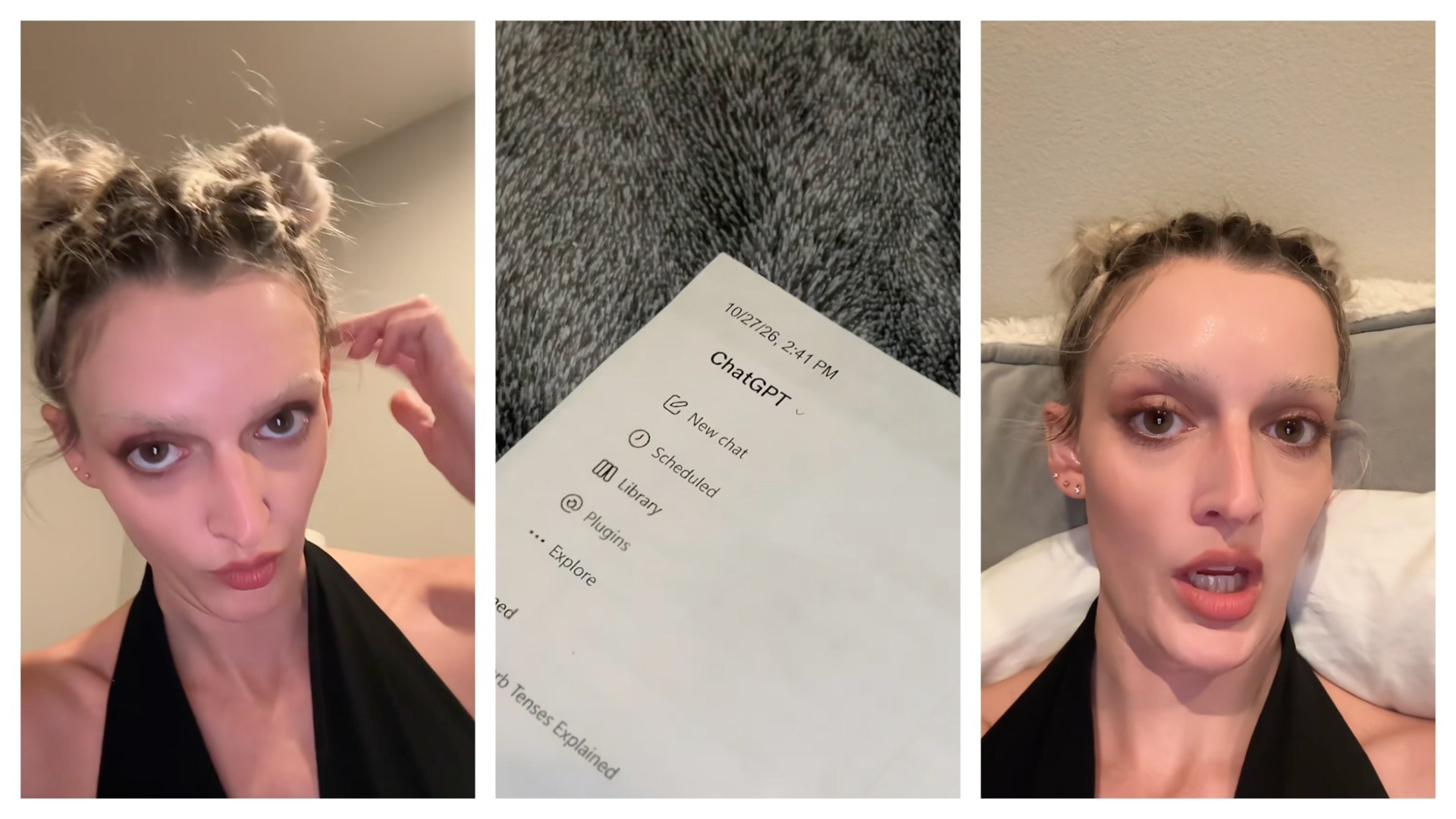
A woman alleges that the hospital she consulted for her health condition provided her with an “at-home treatment plan” that was written entirely by ChatGPT. Tara Rule (tara_rule) made this revelation in a TikTok video.
“I think we’re cooked,” Rule said, pointing the camera at the paper in her hand. She also noted that the page listed the person’s (presumably her doctor’s) previous searches. Some of them were: “Emergency Consultation Format,” “Medical Spanish Interpreter,” “Aftercare Instruction Request,” and “Verb to Go Conjunction.”
Rule questioned the hospital’s medical ethics, noting that her complex medical condition needed more attention than a simple ChatGPT prompt. She mentioned she has a “rare genetic disorder” and “comorbid conditions” that not only make “typical treatment plans” futile but can also be “incredibly dangerous” and “lethal.”
ChatGPT became the hospital’s unofficial medical assistant
While the debate over the benefits and drawbacks of artificial intelligence can wait, Rule’s case is one of the few in which AI probably shouldn’t have been used to obtain information. As Rule mentioned in her video, she would rather have received the necessary information from a medical professional with more than 10 years of education and training than from what she actually received.
This isn’t to say that ChatGPT or AI can’t be helpful in these situations. But perhaps a line should be drawn between using AI as a helpful resource and relying on it to make medical decisions, especially in light of Rule’s case.
A time spent living in constant fear
In 2023, Mirror UK published a story about Rule and the suffering she endured after a major misdiagnosis. According to the article, Rule’s doctor told her she had brain cancer and six months to live. “They told me to get a brain biopsy, but their guess based on the size and location of what would later be identified as a lesion was that I had about six months to a year to live,” Rule told Mirror UK.
Rule said she traveled to Europe after learning about her diagnosis. However, she noted that six months had passed, and she was still alive.
The article said Rule underwent several other tests, including a genetic test by a specialist that revealed she had Ehlers-Danlos Syndrome, which the Mayo Clinic describes as a group of inherited conditions affecting the body’s connective tissues. Rule was 31 by then; according to Mirror UK, she had first sought medical help at age 16.
Rule said her body had suffered severe side effects from treatments she had undergone throughout her life but did not need. “I am slowly recovering from a systemic autoimmune condition that came about as a result of years of incorrect treatments due to misdiagnosis. I have been in physical therapy for many years to regain function such as walking, writing, using the restroom, and other functions that were lost due to encephalitis – a reaction that resulted from being prescribed treatment for multiple sclerosis, a condition I did not have,” Rule said.
Patients like Rule, who have rare disorders, already face major challenges navigating the healthcare system. Some, like Rule, spend years searching for a diagnosis. Amidst all this hassle, they shouldn’t also have to worry about a chatbot without adequate medical expertise generating the instructions they receive.
Have a tip we should know? [email protected]
Follow The Mary Sue:
