


Woman orders a local takeaway and hears her door knock 10 minutes later. Then the driver allegedly asks to ‘go upstairs and chill together’
The restaurant should’ve done something…
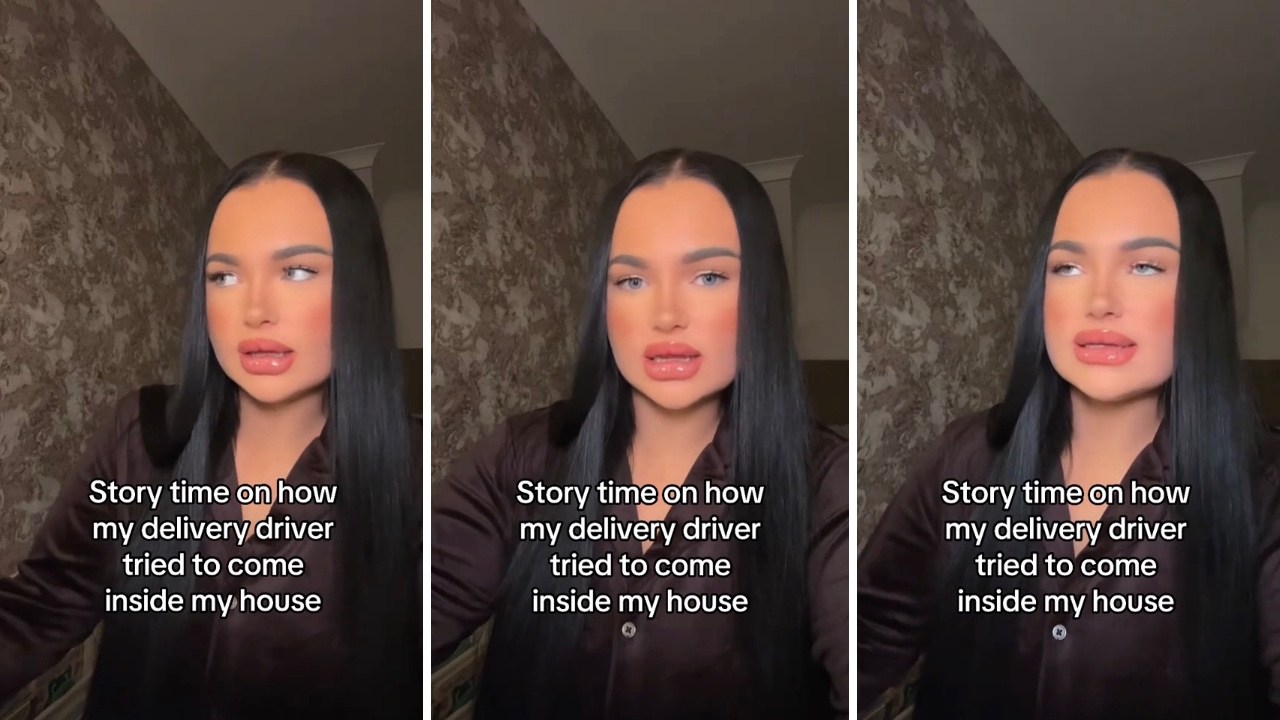
A woman says a delivery driver arrived at her home about 10 minutes after she placed a phone order at a local restaurant. He then repeatedly asked to come inside while she was home alone with her young son. She says the driver left after she warned him that her in-laws were walking up the street toward the house.
Content creator Liyana (@liyanaaa.x) shared the experience in a TikTok video that has drawn thousands of views. She explained that the incident occurred three to four months ago after she phoned in a cash order to a neighborhood takeaway she frequently uses. According to her, the deliveries typically took between 45 minutes and an hour. But that day, a knock sounded at her door within 10 minutes.
Liyana said she opened the door holding her baby to find a delivery man waiting with her meal. According to Liyana, the driver immediately made remarks suggesting he recognized her order. But things took a turn for worse when he allegedly began pressuring her to let him upstairs.
Liyana received an unusually fast delivery, which turned into a doorstep confrontation
Recounting the evening in her video, Liyana noted that she had not provided her name over the phone when arranging the cash delivery. “When I heard a knock at the door, I was like, ‘That can’t be my food… It takes ages to come and I’ve only just ordered it,’” she recalled.
But when Liyana checked the door, it was her food delivery. “I was like, ‘Hmm, okay, thanks.’ And he was like, ‘Yeah, I knew it was you, that’s why I came straight away.’” Liyana revealed that she was alone with her infant at her home, while her mother-in-law and brother-in-law were away at the local mosque.
At the door, Liyana stood holding her child while the driver allegedly asked whether she would invite him inside. “I was like, ‘What are you talking about? Like, no, just give me my food and like get off,’” Liyana recalled. But the driver insisted and said, “put the baby down, we’ll go upstairs, we’ll chill together.”
Liyana couldn’t wrap her head around what was happening, “I’m thinking, is this guy like delusional? Like he must be on something, ‘cause no one in their right mind would do that like to someone they didn’t know.” So, she quickly handed over cash and stepped slightly outside the door to keep the driver from pushing past her while he counted out her change.
Moments later, she reportedly spotted her brother-in-law and mother-in-law returning down the road. “I said to him, ‘That’s my in-laws. You need to go.’ When I told him that my in-laws were like there, he literally got off so fast.” Too unsettled to eat the meal, Liyana asked her brother-in-law to call the restaurant to identify the courier. However, the staff allegedly claimed they were unable to take any action.
There’s an accountability gap in independent food delivery and app-based orders
Liyana’s account highlights the potential accountability gaps associated with independently managed cash-on-delivery arrangements compared with app-based logistics. Third-party delivery networks like DoorDash maintain digital records that include courier identification details, GPS location, communication timestamps, and customer-support interactions. These records can provide an auditable trail when delivery disputes or security incidents arise.
In contrast, smaller restaurants manage orders through direct phone calls and their own delivery personnel. It often lacks an integrated tracking system, according to ACM. Consequently, the level of traceability and accountability in direct restaurant deliveries depend heavily on the individual establishment’s record-keeping and courier-management procedures.
Criminological research published by Reynald on residential safety identifies visible social guardianship as a potential deterrent to crime. Family members, neighbors, and nearby residents can act as informal guardians when they are able to observe suspicious conduct and willing to intervene or seek assistance.
For people receiving food deliveries alone, practical precautions include requesting contactless drop-offs, specifying a safe delivery location, tracking the order, and avoiding the need to open the door unnecessarily (via SJPD). Police home-security guidance also recommends keeping exterior doors secured and verifying visitors before granting access.
Thankfully, Liyana and her child escaped any harm. However, the encounter has left her hesitant to answer knocks at her own front door.
Have a tip we should know? [email protected]
Follow The Mary Sue:
