Hakeem Jeffries secures nomination to become the first Black speaker of the House. Then he addresses the 11 Democrats who refused to support him
‘Fight MAGA extremism, not each other.’
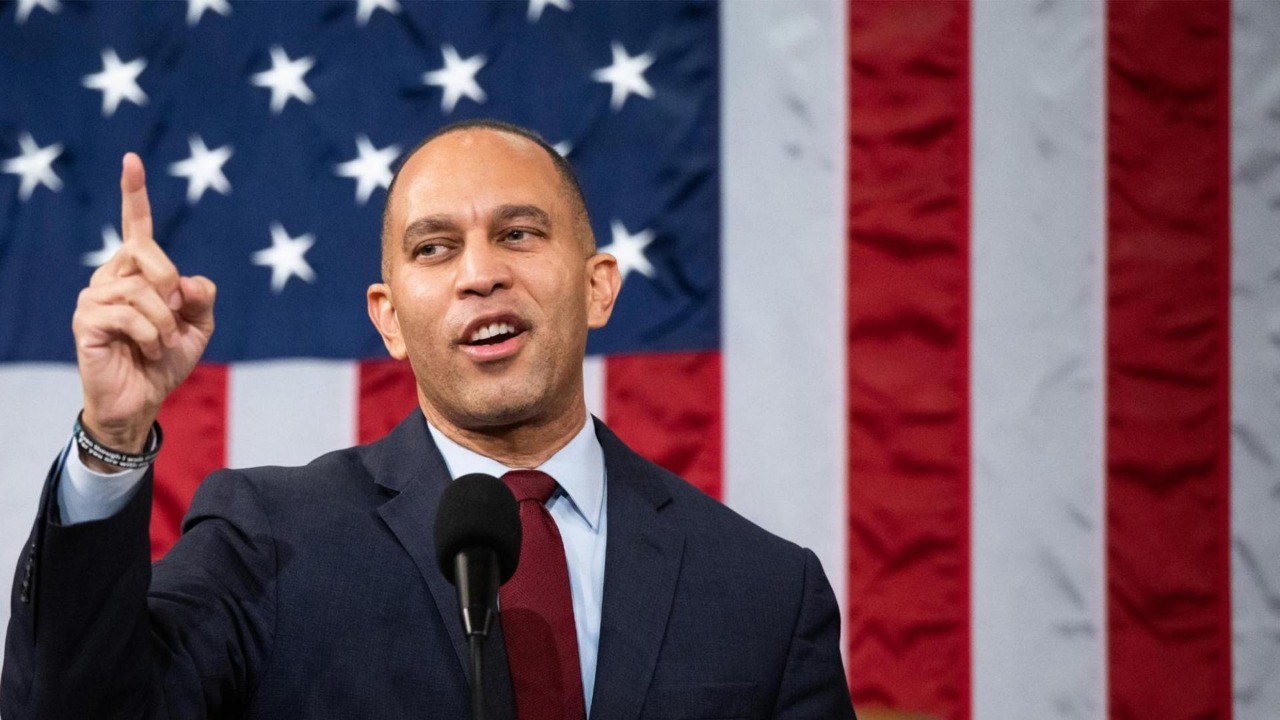
Rep. Hakeem Jeffries secured the Democratic nomination for speaker of the House on Wednesday, November 18, 2026. According to NBC News, this victory puts him on a clear path to become the first Black lawmaker to hold the speaker’s gavel. The nomination arrived following a closed-door, secret-ballot vote where he received 251 votes in his favor. There were 11 votes cast against him. The vote serves as a major signal of his influence within the party.
Jeffries, 56, guided House Democrats to their largest majority in 35 years. The final floor vote for the speakership is scheduled for January 3. Jeffries opted for a recorded vote rather than an acclamation, saying this gave his members a chance to voice their positions clearly. He noted that the caucus followed a similar process when it returned Nancy Pelosi to the speaker’s office after the 2018 midterm elections. Despite the internal disagreement, no challenger stepped forward to run against Jeffries.
The Brooklyn native with a background as an attorney and a state lawmaker has spent recent months campaigning across the country to bolster the party. Projections indicate that Democrats will hold 259 seats. This gives Jeffries a comfortable cushion. He can afford roughly 40 defections on January 3 and still secure the position. This stands in contrast to the narrow majority held by Kevin McCarthy in 2023, who needed 15 ballots to win the gavel.
After the vote, Jeffries addressed the small group of dissenters
He emphasized that the primary goal is to remain united. “The results of today’s election speak for themselves. We’re going to work hard throughout every corner of the caucus to deliver for the American people,” Jeffries said. He specifically framed the mission of his party moving forward. “Our job is to fight MAGA extremism, not each other – to fight MAGA extremism and to get big things done for the American people. And that is what we are going to accomplish together, beginning on Jan. 3rd.”
Seven of the 11 Democrats who voted against him released a joint statement. These members included Reps.-elect Darializa Avila Chevalier, Adam Hamawy, Frederick Haynes, Melat Kiros, Donavan McKinney, Chris Rabb, and Claire Valdez. They explained that their vote reflected a need for more progress on specific legislative goals.
“Whether on Medicare for All, stopping ICE terror, getting money out of politics, or ending the genocide in Gaza, our constituents sent us to Congress with a mandate on these issues,” the group wrote. They noted that they have engaged in good-faith conversations with Jeffries. “While we have seen meaningful progress, there is still work to be done to ensure that the direction our party takes this coming Congress reflects what our constituents are demanding of leadership,” they added.
Rep.-elect Frederick D. Haynes III, among those who intended to vote no, was unable to attend the meeting due to sudden illness. His office clarified that he missed the vote narrowly but maintains his stance. He expressed a desire to continue working with the leader on his stated policy priorities.
Jeffries brushed off the tension
He expressed pride in the diversity of his caucus and suggested that differing perspectives are part of the process. “It’s an honor to be serving with a majority of 260 members from all across the country, people who have different perspectives, and we embrace that,” he stated, per Fox News. He added, “But we’re going to work together to find the highest common denominator in order to make life better for the American people. That’s our commitment.”
The nomination process featured five colleagues who formally nominated Jeffries. These included Teresa Leger Fernández, Derek Tran, Mark Pocan, Rep.-elect Rebecca Bennett, and former Majority Whip Jim Clyburn. Clyburn, a veteran of the Civil Rights Movement, described the event as a surreal moment.
Other leadership roles were filled alongside the speaker nomination. Katherine Clark was elected majority leader, making her the first woman to hold that position in either chamber. Pete Aguilar was elected majority whip, becoming the first Hispanic American to reach that level of leadership. Ted Lieu was elected caucus chairman, marking a historic first for an Asian American in that role. Joe Neguse was elected assistant speaker.
The only contested race was for vice chair of the Democratic Caucus. Rep. Lauren Underwood secured a victory over Rep. Sara Jacobs. Jeffries, a protégé of Pelosi, previously served as caucus chairman before becoming minority leader after the 2022 midterms. He spent Tuesday meeting with various factions. These included the Congressional Progressive Caucus and moderate groups like the New Democrat Coalition and the Blue Dogs.
Looking ahead to the next session, Jeffries signaled a strong focus on the economy. “The people of this country are demanding bold, dramatic, and transformational change. The status quo is unacceptable,” he said.
Have a tip we should know? [email protected]
Follow The Mary Sue: