


Woman buys 12-ounce Diet Pepsi cans from Costco, then notices something strange as viewers start investigating: ‘They’re duping us?’
Trust gaps.
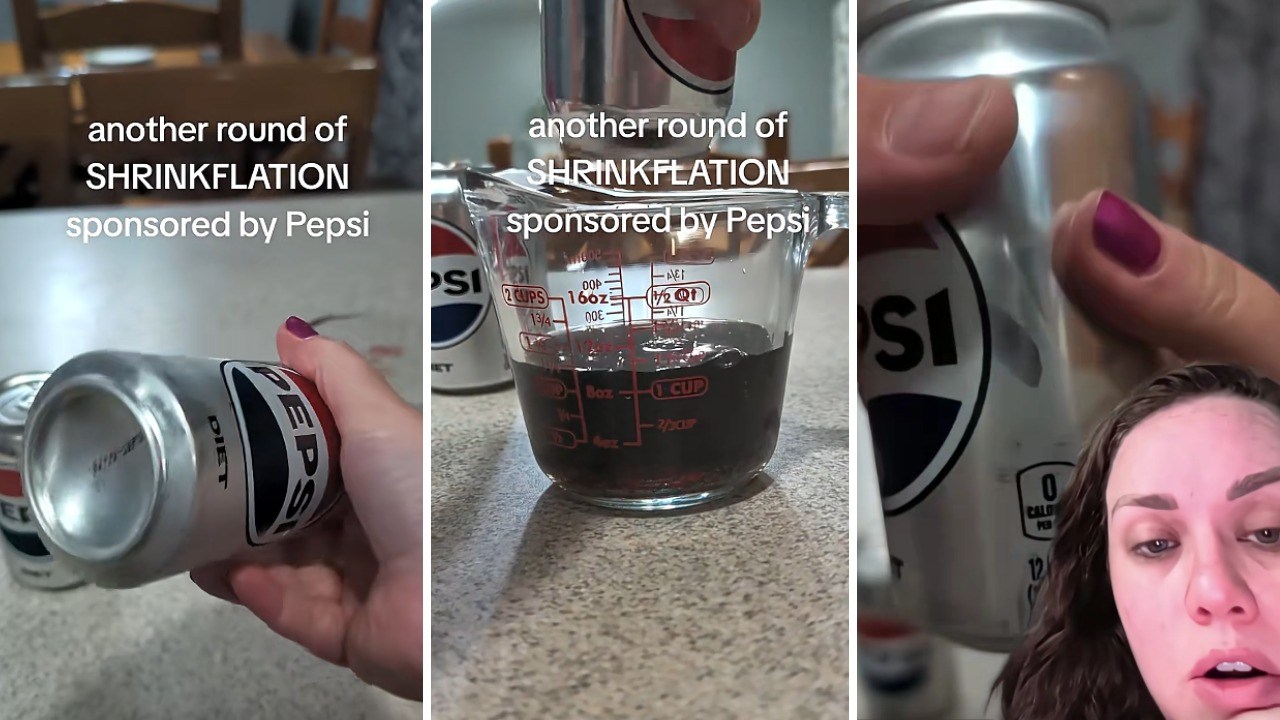
It’s a scenario many of us fear when grabbing a bulk pack at the store: you get home, excited for a refreshing drink, only to realize your purchase isn’t what it claims to be. Briannnnne, @brianne.jordan on TikTok, known for sharing her everyday consumer experiences, recently found herself in the middle of a viral storm after filming a 12-pack of Diet Pepsi she bought at Costco.
In her initial video, which garnered 377.1K views, Jordan and her husband pointed out that several cans felt suspiciously light. They proceeded to open two of them, pouring the contents into a measuring cup to reveal that each can yielded only five or six ounces instead of the advertised 12. The couple’s frustration was palpable, as they noted that 24 ounces of soda was actually closer to 10 ounces.
Jordan didn’t hold back in her original caption, asking, “uhhhh … @Pepsi what the hell is this?? @CostcoWholsale did you know that they’re duping us?” She even included on-screen text branding the situation as “another round of SHRINKFLATION sponsored by Pepsi.” This resonated with a massive audience already tired of paying more for less.
Jordan’s video served as a lightning rod for the collective annoyance over shrinkflation
The online reaction was swift and intense. While many viewers initially jumped on the bandwagon to condemn the brands, the conversation quickly pivoted toward skepticism. Commenters began analyzing the footage, noting the complete lack of carbonation in the liquid. This led to accusations that Jordan might have staged the video, doctored the footage, or even punctured the cans to drain them for clicks.
Jordan then returned with a follow-up video to address the backlash. She remained firm that the footage was unedited and straight from her camera roll, even providing metadata to prove the capture time of 11:28 p.m. on September 13, 2026. While she denied tampering with the cans, she did concede that the issue was likely a manufacturing error rather than a deliberate case of shrinkflation.
She updated her caption to reflect this, writing, “I think comments are right that it was a manufacturing error and they forgot to put the soda in and this was just syrup (we did NOT tamper with these cans in any way) STILL. Do better with your quality control Pepsi.”
This incident isn’t happening in a vacuum
As shoppers grapple with inflation and rising grocery costs, companies are increasingly shifting their strategies. According to Inc., soft-drink giants like Coca-Cola and Pepsi are leaning heavily into smaller sizes, often referred to as price-pack architecture. Coca-Cola, for example, has seen significant success with its 7.5-ounce mini cans, which allow the company to offer a lower price point at the register.
While this strategy helps consumers who are feeling the squeeze of economic pressure, it often results in a higher price per ounce. Executives are keenly aware of the strain on household budgets. During an appearance at Deutsche Bank’s dbAccess Global Consumer Conference, Coca-Cola CFO John Murphy noted that consumers in the $50,000 to $60,000 income range are particularly struggling.
As he put it, “The math is pretty obvious. It doesn’t work… they just don’t have the purchasing power.” This economic reality makes the “right-sized” trend – where companies expand mini-can offerings – a crucial tool for maintaining sales.
PepsiCo is also testing new formats, including a 13-ounce soda bottle and smaller Gatorade options, to reach shoppers with tighter budgets. As Mike Del Pozzo, the president of PepsiCo’s U.S. beverages business, explained at the Wall Street Journal’s Global Food Forum, a 20-ounce bottle might cost $3, whereas a mini can could be closer to $1.50.
The question of proper quality control still remains
The irony, of course, is that while these companies use smaller formats to keep us buying, incidents like Jordan’s demonstrate that the actual quality control of these products is under the microscope like never before. Other users chimed in with their own experiences, proving this isn’t just a one-off event.
One commenter, Livelaughtrauma, shared, “I’ve literally had a 12 pack with at least one completely empty can. Why would people not believe this?” Another user, Brambleberrycottage, noted, “I have had this happen with store brand soda and Red Bulls as well. OFTEN. It isn’t even a one off any more.”
Whether it is a factory error or a result of aggressive cost-cutting, the trust gap is widening. Jordan’s experience serves as a perfect snapshot of modern retail skepticism, where every consumer is essentially acting as an informal quality-control inspector. For now, neither Pepsi nor Costco has issued a public response.
However, the viral nature of this incident proves that in an era where every can can become content, brands can no longer rely on silence to navigate these consumer frustrations. Shoppers are watching, measuring, and sharing their findings with the world.
Have a tip we should know? [email protected]
Follow The Mary Sue:
