


What Rainbow Bridge Raina Reveals About Modern Grief
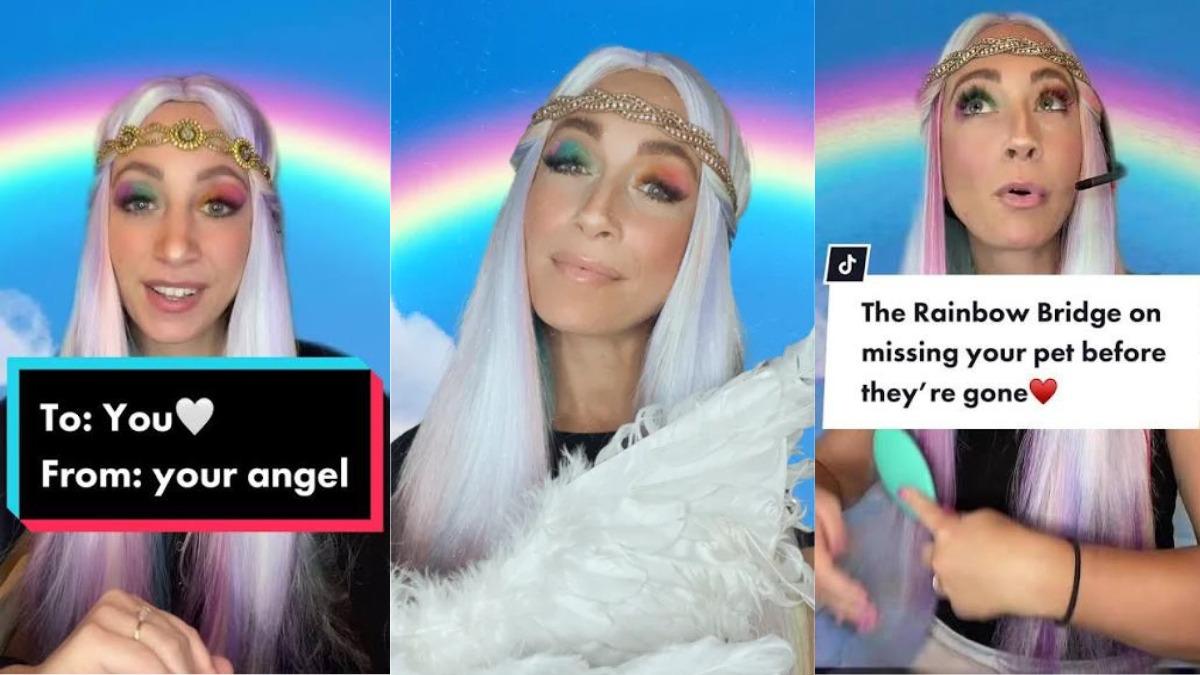
Grief is difficult. As humans, an emotion as heavy as grief can manifest in many different ways. When someone has lost a companion, family member, or someone close to them, society has accepted that it is ok to allow that person all the space and comfort they need. Yet, when someone loses a pet, their feelings are often minimized. Many grieving pet owners hear phrases like “it was just a dog” or feel pressure to move on quickly. For many, pets are more than just trusted protectors; they are true family members who share a close bond with their person.
As social media becomes an increasingly important part of day-to-day life, pet owners are turning to online platforms to share their grief. Creators like Rainbow Bridge Raina have developed a safe space for those mourning the loss of a furry friend. Rainbow Bridge Raina is a character created by Jackie Pajan, whose memorial videos have become a source of comfort for millions. Pajan began creating the videos during the 2020 pandemic after the loss of her soul dog, Riley. Pajan’s persona, Raina, is helping change the way people grieve by giving space to those going through pet loss and advocating for support and acceptance. To Rainbow Bridge Raina, pet loss is not something to ignore; it is very real, and her followers have praised her for being so warm and accepting.
Who Is Rainbow Bridge Raina?
In 2020, content creator Jackie Pajan was hit with a loss many have experienced, but few talk about. Her “soul dog,” a term coined by internet culture, Riley passed, and the grief she felt was overwhelming and inconsolable. In response to her intense emotions, she began creating content as Rainbow Bridge Raina to help herself and others cope with the loss of a pet. She took to platforms like TikTok and Instagram, making videos that offer comfort and closure to grieving pet parents. The videos she makes include segments that share sentiments about accepting the grieving process and tell viewers they are not alone.


Several of her videos also provide insight into what our pets might be doing on the other side of the bridge. Sharing stories about play dates and healed seniors running around and full of energy. She also makes content that is easily digestible by children and adults alike. She doesn’t sugarcoat grief, and yet, her messages have a way of hitting you right in the heart. She validates feelings and grief in a society where pet loss is often overlooked.
When Pajan is not in character, she shares her experience with pet loss and stories of Riley. Pajan also recuses senior dogs and provides online pet loss support groups. Since her digital platforms have taken off, she has been able to create customized videos for grieving pet families and will soon publish a children’s book.
Why Pet Grief Hits So Hard
According to the American Veterinary Medical Association, over 56 million people own at least one dog and over 40 million own at least one cat. With so many people having pets at home, it is no wonder creators like Rainbow Bridge Raina have amassed huge followings. The way people treat and look at pets has changed significantly. Even after World War II, when families began moving to the suburbs, pets were still seen as “pets” rather than as members of the family. In modern society, where people are coupling later in life and having children even later, pets have quickly become first companions for many.
Millennials and Gen Zers often delay traditional milestones and instead have deepening bonds with companion animals. The term “pet parent”, though first used by Purina in 1989, skyrocketed in the 2010s with many young adults referring to themselves as “fur mom/dad” and their pets as their “furry children.” The deep association with the words “parents” and “children” may be a reflection of the bond between an animal and their owner.
As these close bonds with pets are built, they become deeply ingrained in our lives. They become a companion that provides us with unconditional love, caring, and excitement. When a pet owner comes home, their animal is likely the first to greet them. Because pets are unable to tell us how they feel, we often personify their facial expressions and behaviors, projecting our feelings onto them. We give pets human personality traits and mannerisms. All of this invested time and emotion creates a deep connection between the person and their pet.
The more emotionally invested we are in something or someone, the deeper the connection and the greater the loss. Pets are also part of our routines; when a pet dies, our schedules are interrupted, and we may feel lost or out of sorts. While we are grieving this loss, society often doesn’t recognize this experience as worthy of mourning. Pet loss becomes a disenfranchised grief that is not validated and often ignored.
Social Media Has Become the New Mourning Space
As pet loss grievers look for a safe space to feel, many are turning to online platforms and social media. Historically, the processes of grieving include a funeral, religious ceremony, or other forum, but with pet loss, those are not necessarily accepted forms of grief. People are searching social media for others in similar situations, looking for validation and comfort.
Pet loss can feel lonely, so platforms like TikTok, Facebook, and Instagram can provide comfort by allowing people to connect through shared experiences. Creators like Rainbow Bridge Raina provide a space where feelings can be expressed freely and without judgment. Users can remain anonymous and openly discuss their emotions without fear of ridicule or belittling. Online memorial posts, tribute videos, and comment sections create spaces for collective mourning.
And it’s not just Rainbow Bridge Raina creating grief content. Many creators have taken to social media to share their own experiences with loss. Creators like The Dead Dad Club have taken an often uncomfortable topic and made it relatable. Ghosted by Grief is another creator who holds space to discuss uncomfortable topics while adding a twist of humor. The benefit these digital spaces create is that they are available 24/7. Nights are often the most difficult time during the grieving process, so being able to go online and connect with others at 3 AM is comforting. Shared grief creates a community and validates feelings.
The downside to digital grief communities is that consumption can be overwhelming. Knowing when to stop scrolling is important. Creating a healthy balance for healing without constant reminders of loss is vital. Once the algorithms pick up on emotionally driven content, it can be difficult to remove. And online grief communities can be incredibly healing, but they don’t replace real-world support systems.
What Rainbow Bridge Raina Reveals About the Future of Grief
While there are many benefits to online grieving communities, it is important to remember that healing can also come from leaning on those in your life. Social media expands public mourning and acceptance, which is great for those experiencing pet loss or other often-overlooked losses. Finding a balance in modern grief between real-life connections and online platforms will be important as reliance on technology progresses.
Creators like Rainbow Bridge Raina are helping reshape conversations around loss and remembrance. Pet loss is gaining broader cultural recognition as a legitimate form of bereavement. Whether through a funeral, a support group, or a TikTok memorial, people want their love and loss to be seen. The popularity of Rainbow Bridge Raina suggests that in an increasingly online world, social media has become one of the places where witnessing now happens. For many grieving pet owners, that validation can make all the difference.
The popularity of Rainbow Bridge Raina reflects a broader cultural shift in how people experience grief online, particularly for losses that have historically been overlooked or misunderstood.
(featured image: Rainbow Bridge Raina on TikTok)
Have a tip we should know? [email protected]
Follow The Mary Sue:
