


Wayward SpaceX Rocket Is on a Collision Course With the Moon, and It’s About to Hit at 5,400 Miles per Hour
The rocket's upper stage will strike near Einstein Crater, creating a fresh lunar crater scientists are eager to study.
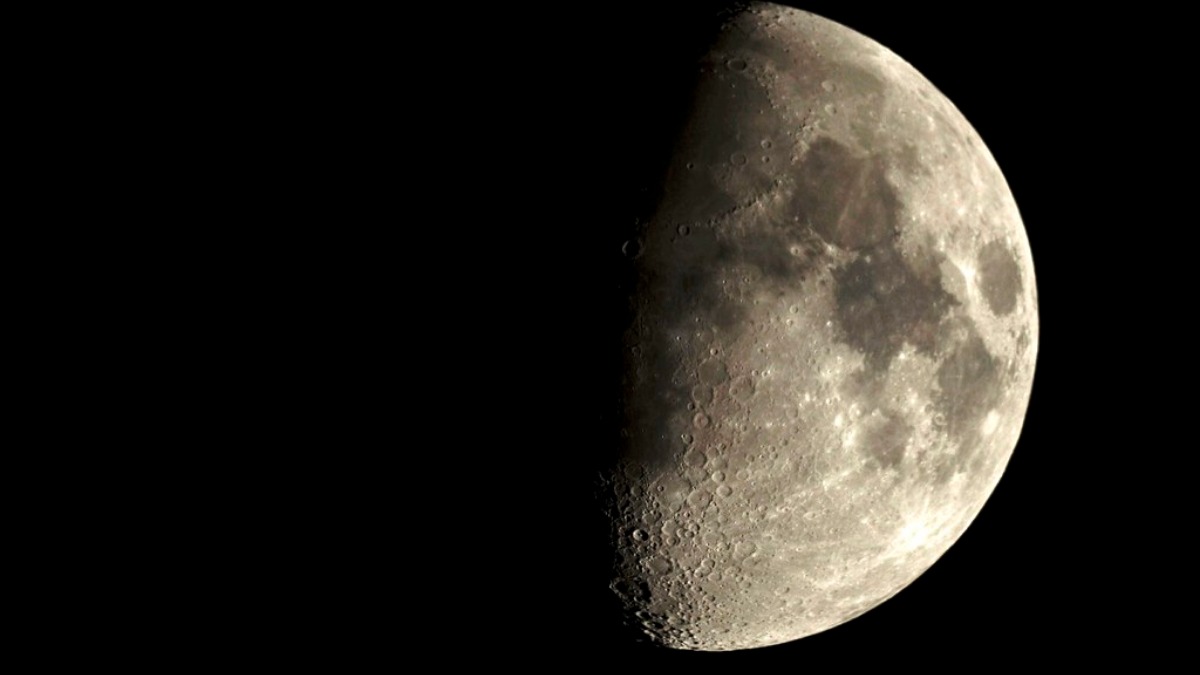
One SpaceX rocket is headed towards a collision with the moon. And people on the ground are expecting some serious fireworks next week. The Guardian reports that the SpaceX rocket is slated to make contact with the lunar body on Wednesday. In their piece, they also explain that the high-profile collision will produce a new crater, along with a cloud of dust and rubble.
This would just be the rocket’s upper stage, not the entire vehicle. But folks planetside are excited to see the spectacle and record whatever they can learn from that plume of debris. A space tracking expert named Bill Gray spoke to The Guardian about the impending crash. He’s predicting the SpaceX rocket will slam into the moon at 5,400 miles per hour.
For those hoping to catch the action near Einstein Crater, the United States, Canada, and South America are forecast to have the best views. However, witnessing the crash is going to require an alarm clock for people on the ground. The SpaceX impact won’t happen until the early morning hours on Wednesday in the United States.
SpaceX Rocket On Crash Course For The Moon
This crash would be the second “dead rocket” to hit the moon accidentally. Back in 2022, a Chinese rocket segment made contact with the orbiting body and left multiple craters. According to The Guardian’s reporting, the SpaceX impact could have been avoided if the upper stage had been thrust into the sun’s orbit. But, instead, the segment of the spacecraft will collide with the moon at around seven times the speed of sound.
Los Alamos National Laboratory worker Benjamin Fernando says that professional skywatchers and amateurs alike should check out the collision if they can. He told The Guardian, “Gravity on the moon is low, and there is no wind to blow the dust away. Part of the reason for our interest in this event is to figure out how much of a hazard debris impacts pose to future astronauts.”
While you won’t be able to see the flash of the crash with a backyard telescope, there will be other stuff to observe. Namely, the debris field, which scientists say will be visible for more than a ten-minute window. If you’re going to check out the moon collision, you won’t be alone either. NASA has its Lunar Reconnaissance Orbiter grabbing shots of the scene before impact and after. South Korea will also deploy its Danuri lunar orbiter for the same purpose.
(Photo Credit: Image by JanetR3, CC BY 2.0)
Have a tip we should know? [email protected]
Follow The Mary Sue:
