


Van Cleef dupe backfires at Maryland man at Halloween bash as savage partygoer mistakes it for obscure budget-bin trinket: ‘Thought I misheard her’
If it looks good, it looks good, no?
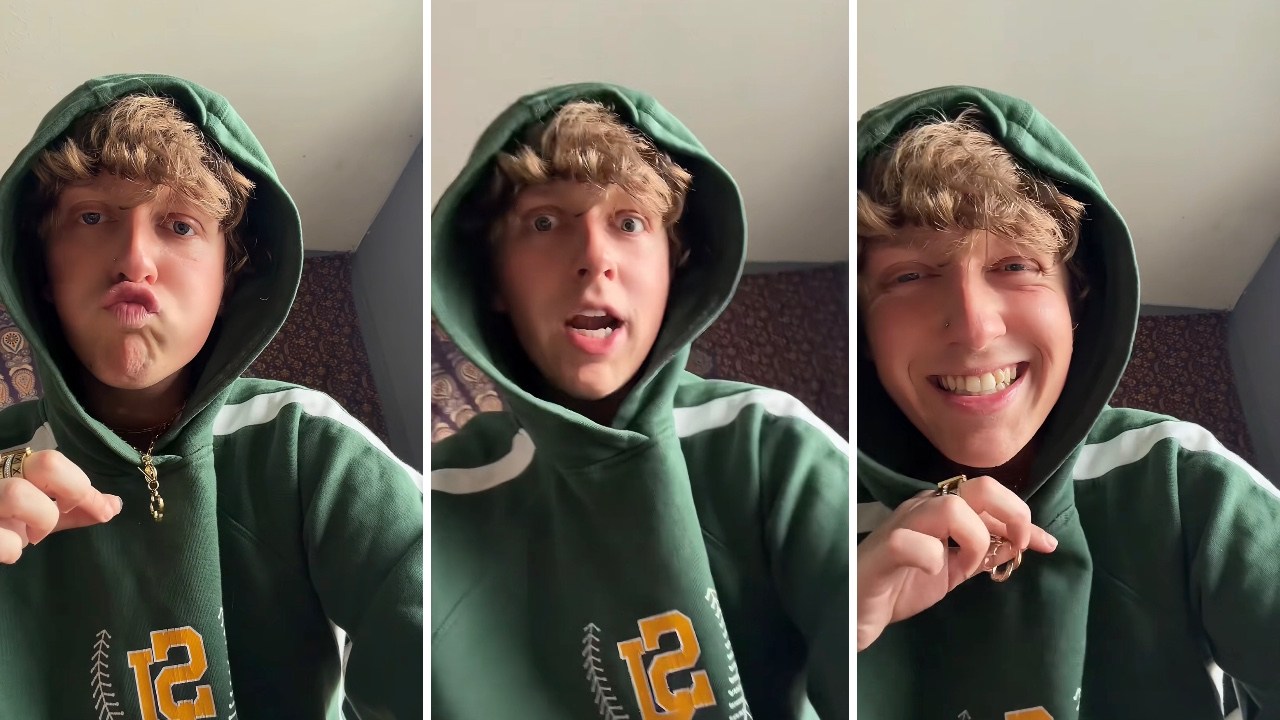
A Maryland man says he has sworn off buying luxury jewelry dupe after an unfamiliar partygoer reportedly mistook his designer-style necklace for a Girl Scouts accessory. The guest praised the piece during a casual conversation, only to reveal she believed it was branded youth-scout merchandise.
TikTok creator Dylan Peroutka (@undermybungalow) recounted the exchange in a video that has accumulated hundreds of thousands of views. While attending a residential Halloween party, Peroutka said he wore an inexpensive Amazon necklace styled after Van Cleef & Arpels’ signature Alhambra clover design.
During a bedroom conversation with a coworker and another partygoer, the stranger reportedly complimented the jewelry. Assuming his bargain accessory had passed for luxury goods, Peroutka leaned into the remark until the woman asked about his connection to the scouting organization, prompting his coworker to collapse in laughter while he tucked the necklace out of sight.
A Van Cleef dupe necklace drew an unexpected comparison in the middle of a party
Recounting the night, Peroutka explained that he purchased the necklace online to elevate his outfit for the event. “I soft-launched this yesterday for the first time. Did I get it on Amazon for $2.50 and a paperclip? Yes, I did. In this economy, yes I did,” Peroutka said.
Then, while chatting in a smaller group at the party, an unfamiliar girl reportedly took notice of Peroutka’s clover pendant. “She’s like, ‘I love your jewelry, I love it,’ and I was like, ‘Oh, thank you so much,’” he recalled. However, the girl allegedly doubled down, saying, “I didn’t even know you could buy those.” But Peroutka simply thought that he “punked” her into believing it’s a real Van Cleef.
However, the conversation shifted abruptly when the girl clarified what she was admiring. “I didn’t know you could buy those, like you have the Girl Scout necklace on,” she allegedly told Peroutka. “I thought I misheard her. I thought the Tito’s was talking to me. I said, ‘Wait, what? Girl Scout? I don’t got snickerdoodles in my pocket, what are you talking about?’” Peroutka thought to himself.
When the woman reportedly confirmed she recognized the pendant as the official trefoil insignia, Peroutka’s coworker fell to the floor laughing. Mortified, Peroutka then explained that the piece was a Van Cleef dupe. However, he said he tucked it beneath his shirt for the rest of the night, and joked that he would check Amazon’s return window.
The social psychology of imitation goods and status signaling
Peroutka’s experience highlights the delicate social dynamics underpinning luxury signalling. Consumer behaviour research shows that luxury goods are often used to communicate social status, taste, and personal identity.
A study published in the Journal of Marketing found that consumers with limited purchasing power but strong status motivations may use conspicuous counterfeit luxury products to emulate wealthier groups.
However, the effectiveness of visual status signalling depends partly on shared cultural knowledge. Research published in the Journal of Consumer Research demonstrates that subtle luxury markers are not universally recognizable.
A visual motif intended to communicate exclusivity may fail to convey its intended status to observers who lack familiarity with the original reference point. They might instead get interpreted as an ordinary decorative pattern or an unrelated symbol.
Furthermore, a review published in the Journal of Consumer Psychology identifies embarrassment as a self-conscious emotion that can arise when someone fails to maintain a desired public image. When an item intended to communicate prestige is instead perceived as an inexpensive novelty, it may lead to embarrassment, like it happened with Peroutka.
So, buying affordable dupes to luxury items can protect your wallet. But, at the same time, wearing recognizable silhouettes in public always leaves room for creative interpretation. While Peroutka ended his evening hiding his clover pendant under his collar, the comedic blunder serves as a lighthearted reminder that confidence matters far more than designer labels.
Have a tip we should know? [email protected]
Follow The Mary Sue:
