


Two Cotswolds wedding venue workers picked up 5 metal objects to clear mud. Then they saw fins and realized they were live WWII mortars
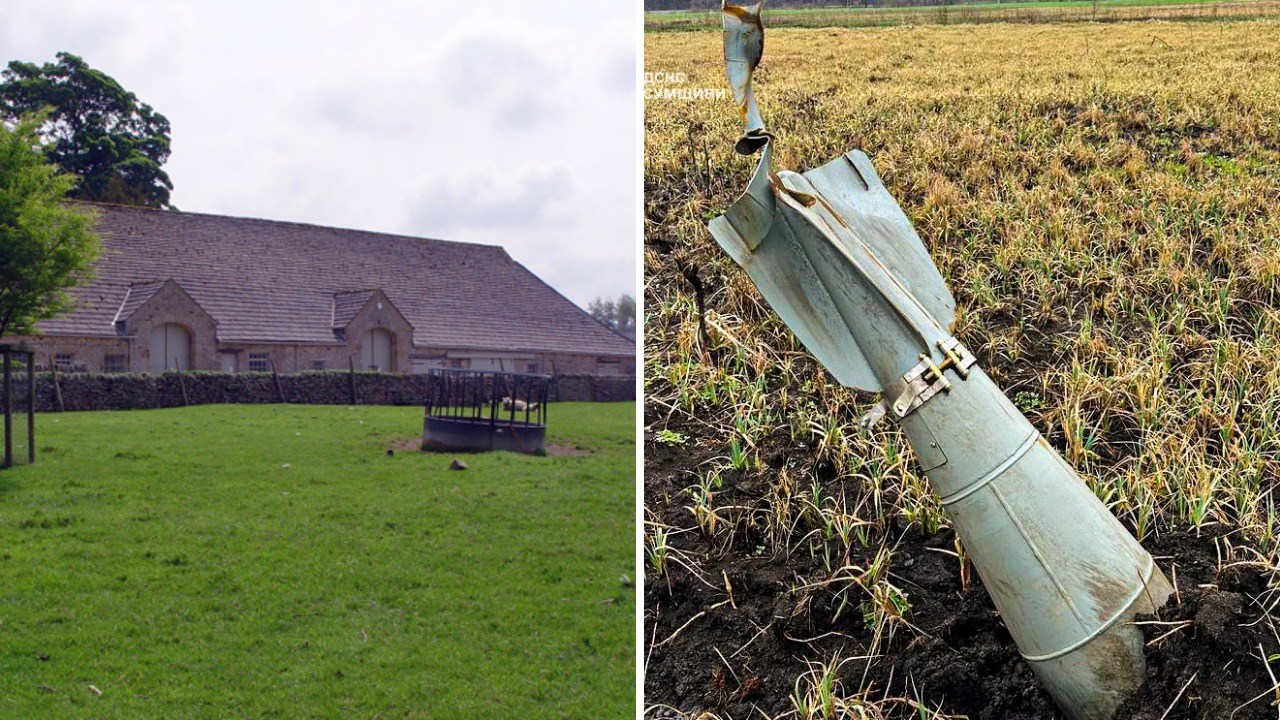
Wartime explosives still surface decades after the fighting ended, and one American World War II bomb even exploded at a Japanese airport. A wedding venue in the Cotswolds region of England faced an unexpected shutdown on Monday, when construction workers accidentally dug up what appeared to be World War II bombs.
The Great Tythe Barn became the center of a police response after the discovery was reported that morning, according to the Wilts and Gloucestershire Standard. Head gardener Kevin Roberts and subcontractor John Blundell were reportedly digging a trench for a solar field.
The pair mistook the items for old plumbing and had handled them before realizing their mistake. “We thought at first they were just broken bits of either gas main or old water main,” Blundell said. “Once we picked them up and cleared the mud off them, we found out they resembled old World War II mortars.” Old explosives can also go unrecognized above ground, including a paperweight containing a live explosive that a Texas man kept on his desk for years.
The two men dropped everything and called police once they saw what they had dug up
The routine job turned into an emergency within minutes. “We were digging a trench to put our solar field in, and within a couple of minutes, we uncovered five mortars, which we believed were live,” Roberts said. Because they believed the items were live, they “put everything down, got back and phoned the police,” Blundell said.
Gloucestershire Police set up a 200-meter cordon around the World War II bombs in Long Newnton near Tetbury while waiting for experts. “Emergency services are at the scene, and nearby residents and businesses have been evacuated as a precaution so that personnel from the Explosive Ordnance Disposal (EOD) can assess the items,” police said at the time.
As the venue had hosted a weekend wedding, staff and guests were still on the property and had to leave. The venue, which features a restored 17th-century barn, posted on Instagram that its site was closed after “a discovery of some historical artifacts.” It later said it contacted police straight away after finding the suspected World War II bombs.
Once the EOD team arrived, an Army spokesperson told the outlet that the items were German in origin. Experts then destroyed the World War II bombs in a controlled detonation before police lifted the cordon. However, the Ministry of Defense reportedly identified the haul as seven 1kg German incendiaries, two more than the workers first described.
These small German fire bombs once fell on Britain by the million
The 1kg incendiary, known as the B1E, was a 350mm magnesium alloy tube with a thermite filling, according to the Australian War Memorial. Its thin metal tail fins appear to match the flight fins Blundell said the men spotted. However, a small charge in the nose ignited the filling, which burned hot enough to melt steel.
More than a million of these World War II bombs fell on Britain between 1940 and 1944, often dropped in containers holding up to 620, per UXO consultancy Brimstone. As they weighed so little, many likely stayed just below the surface for decades. The firm says it remains one of the most commonly found unexploded Luftwaffe bombs in the UK. Decades of age do not necessarily make wartime explosives safe, as the discovery of six live WWII grenades among estate-sale purchases demonstrated.
Have a tip we should know? [email protected]
Follow The Mary Sue:
