


Trump approves firing squad execution for Fort Hood shooter Nidal Hasan 17 years later
The next move belongs to the army.
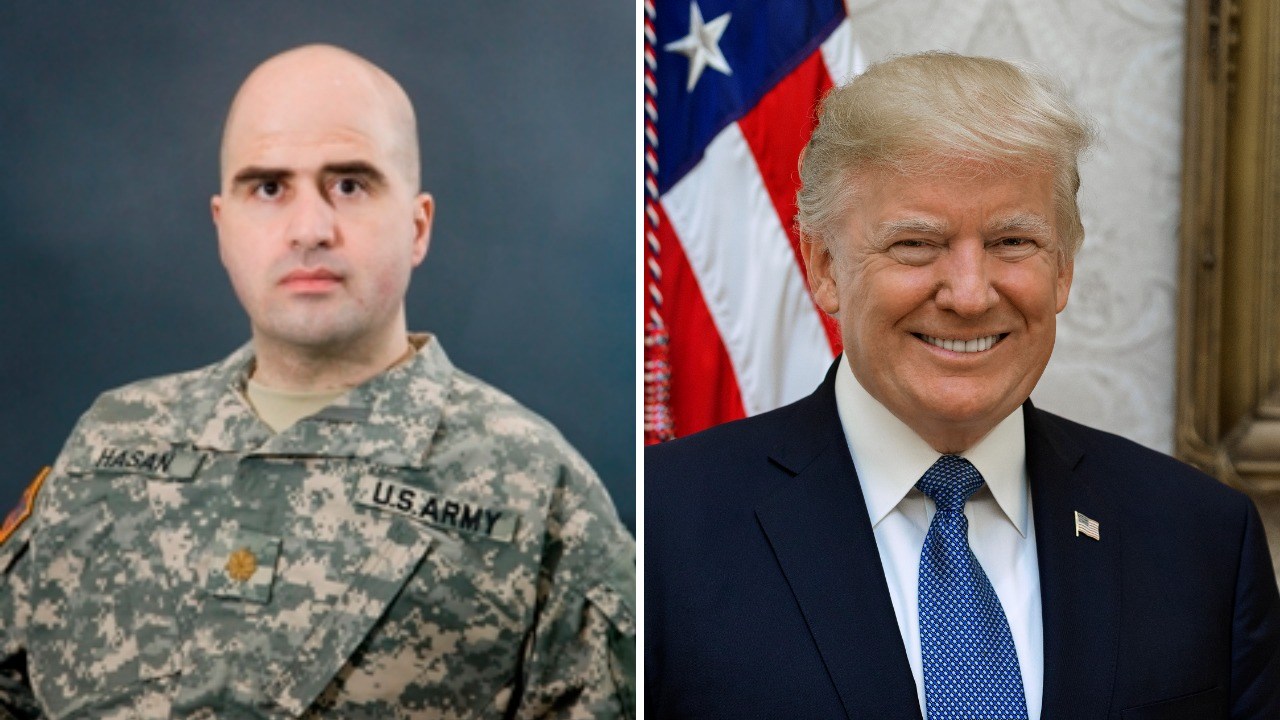
President Donald Trump has approved the execution of former Army psychiatrist Nidal Hasan by a U.S. Army firing squad, nearly 17 years after Hasan killed 13 people and wounded 32 others in the 2009 Fort Hood shooting in Texas. According to Al Jazeera, the Pentagon announced the decision Monday, after Defense Secretary Pete Hegseth recommended the firing squad as the method of execution.
Pentagon spokesperson Sean Parnell announced the decision in a post on X, writing that Hegseth “has recommended — and President Donald J. Trump has approved — death by U.S. Army firing squad” for Hasan.
Hasan was sentenced to death by a military jury in 2013 after being convicted of 45 counts of premeditated murder and attempted premeditated murder. He admitted during his court-martial that he carried out the Nov. 5, 2009, attack at Fort Hood, where soldiers were preparing for deployment, and was later sent to military death row at Fort Leavenworth, Kansas.
The execution is still not immediate
Trump’s approval clears a major procedural step, but Hasan does not have an execution date yet. The Secretary of the Army is responsible for determining when and where the execution will take place, while Hasan can continue pursuing legal challenges.
If carried out, Hasan’s execution would be the first U.S. military execution since 1961, when Army Pvt. John Bennett was executed by hanging at Fort Leavenworth. It would also mark the first known U.S. military firing-squad execution in decades. The last known military firing squad execution took place in 1945, when Army Pvt. Eddie Slovik was executed by musketry during World War II.
The decision also comes months after the Trump administration moved to expand the methods available for carrying out federal death sentences. In April, the Justice Department announced plans allowing federal officials to consider firing squads, electrocution and lethal gas alongside lethal injection.
The case goes back years
Hasan, a U.S.-born Army psychiatrist, opened fire inside a medical facility at Fort Hood in November 2009. The attack killed 13 people, including 12 active-duty soldiers and a retired serviceman, and wounded 32 others. Hasan was shot by a responding police officer and was left partially paralyzed.
At his court-martial, Hasan represented himself and did little to contest the evidence against him. He said he had acted to prevent U.S. soldiers from deploying to Afghanistan and killing fellow Muslims, and told the court that he had “switched sides.” A military jury convicted him in August 2013 and sentenced him to death.
The Trump administration’s decision now brings Hasan’s case back into the spotlight more than a decade after his conviction. It also puts a historically rare form of capital punishment at the center of a military execution that, if carried out, would be the first of its kind in more than 80 years.
The decision also comes as questions about execution methods are resurfacing elsewhere in the U.S. Tennessee recently suspended executions for the rest of the year after death-row prisoner Christa Pike survived two doses of lethal drugs, putting renewed scrutiny on the mechanics of capital punishment. For now, the next step belongs to the Army, which must determine the date and location while Hasan’s remaining legal options continue.
Have a tip we should know? [email protected]
Follow The Mary Sue:
