


T-Pain Reveals the Brutal Industry Reality That Forced Him To Sell His Life’s Work for a Massive Payday
“I know exactly what I want.”
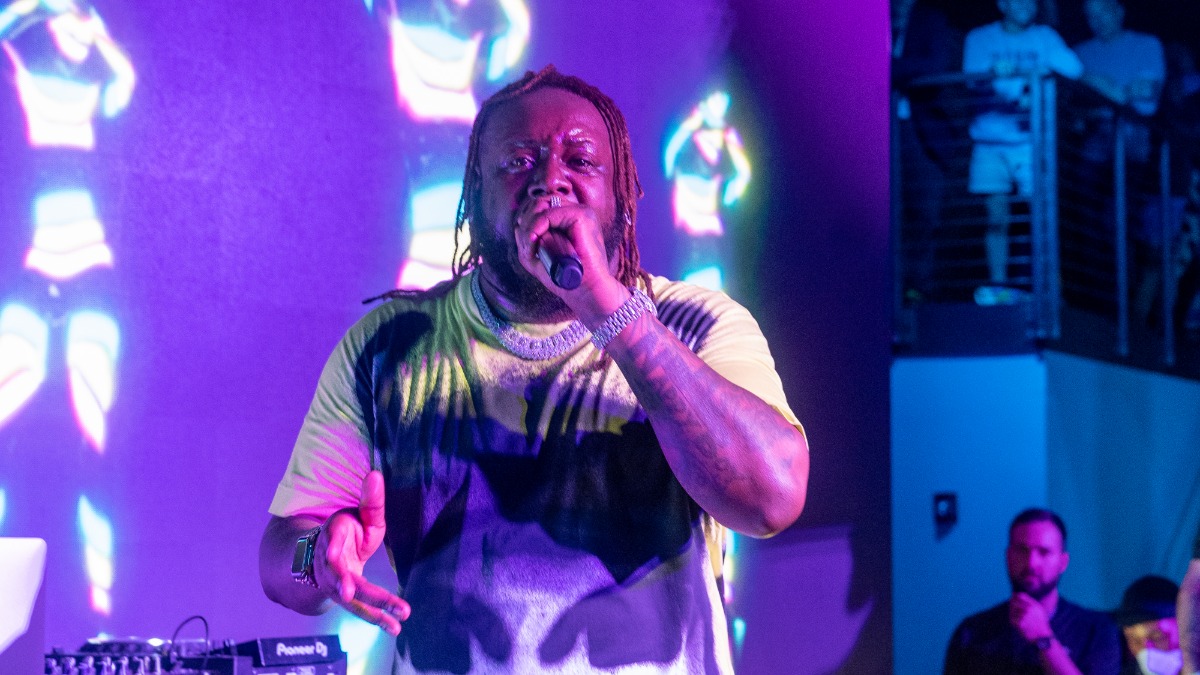
T-Pain just dropped some hard truths about why he sold his entire music catalog for a rumored $100 million, and it’s a brutal wake-up call for anyone who thinks the music industry is still playing fair. According to PEOPLE, during a recent Twitch stream, the Grammy-winning artist didn’t hold back about the financial gut-punch streaming has dealt to musicians, and why he refused to gamble his kids’ futures on an industry that keeps moving the goalposts.
The deal itself went down in February 2025, when T-Pain sold his publishing catalog and select master rights to HarbourView Equity Partners. At the time, he said, “I’m excited for this next chapter and to partner with HarbourView Equity as they help preserve the legacy of my music.” But now, he’s pulling back the curtain on the real reason behind the sale, and it’s not pretty. The music industry, he says, never gave artists a choice about how their work would be valued in the streaming era.
“Let me tell you something,” T-Pain said, his frustration palpable. “When streaming started, nobody told us, or nobody came to any artist and said, ‘Hey, we’re about to put your s— on streaming platforms. How much do you want your music to cost?’ Suddenly, out of nowhere and without anybody’s consent, all of our music went from a dollar a song to 0.003 cents per play. Nobody asked us s—.”
T-Pain isn’t just venting about the numbers
He’s pointing out a fundamental betrayal: the industry unilaterally decided how much his life’s work was worth, without so much as a conversation. “My catalog is worth less and less and less and less without any kind of consent from me,” he said. “Without anybody asking me if that’s what I want to charge for my music.”
For an artist who’s spent over two decades building a career watching the value of his work erode in real time must have been infuriating. Epiphany, released in 2007, hit No. 1 on the Billboard 200 and featured hits like “Buy U a Drank (Shawty Snappin’)” and “Bartender.” Those songs became cultural touchstones. And yet, the industry’s shift to streaming meant that even timeless tracks were now generating pennies instead of dollars.
T-Pain’s decision to sell wasn’t just about the money, though. It was about control. With three kids – daughter Lyriq and sons Muziq and Kaydnz – he wasn’t willing to leave their financial security up to an industry that had already shown it couldn’t be trusted. “Out of all this s— that I’ve told y’all that’s happened to me in this f—in’ industry, you think I’mma leave my kids’ life and their future in the hands of the music industry?” he asked. “You got me f—ed up. I’ve got to figure something out.”
That “something” was a $100 million payday, a number he says was enough to secure his family’s future without relying on the unpredictable whims of streaming revenue. “I know exactly what I want. I know exactly how much I want right now.” He added, “I know exactly what I would need to live out the rest of my life, and if I get that and I’m satisfied with that and I’m content, I’m not looking for more.”
It’s more than streaming
T-Pain has been vocal about the fake camaraderie in the music business, calling out so-called “brothers” who turned their backs on him when it mattered. According to Yahoo, during an interview with Shannon Sharpe on Club Shay Shay, he didn’t hold back about his falling out with DJ Khaled, despite the producer repeatedly calling him a brother.
“When people tell you how much you mean to them, don’t grab onto that,” he warned. “When people tell you how much they can mean to you in return, that’s the s— you gravitate towards.”
He went on to say, “Anytime you need me, I’m here for you. Anytime you need me. But nah, bro. It’s that brother s—, nobody is your brother. I’ve had DJ Khaled and everybody done told me, ‘I’m your brother.’ Do not believe that s—.” It’s a painful reminder that in an industry built on relationships, loyalty is often just a performance.
T-Pain’s deal with HarbourView Equity wasn’t just a financial transaction; it was a statement. By selling his catalog, he took back control of his legacy, ensuring that his family would be protected no matter what the industry threw at them next.
HarbourView’s CEO, Sherrese Clarke, seemed to understand the significance of the moment, saying at the time, “His visionary artistry and innovative spirit have left an indelible mark on modern music, and we can’t wait to collaborate and amplify his incredible legacy even further.”
The sale was never about legacy
It was about survival. “I’m not leaving my kids’ future in the hands of the music industry at f—in’ all,” he said. And when the industry can devalue your life’s work overnight without so much as a heads-up, taking a massive payday to secure your family’s future starts to look like the only smart move left.
The streaming era has been hailed as a democratization of music, but T-Pain’s story exposes the ugly truth: it’s also a race to the bottom for artists. While platforms rake in billions, the people who actually create the music are left fighting over scraps. And if even a superstar like T-Pain feels forced to sell his catalog just to sleep at night, what does that say about the future of music?
For now, T-Pain seems at peace with his decision. “I don’t plan on stopping anytime soon.” But he’s also not naive. The industry has burned him before, and he’s not about to let it burn his kids too. If that means walking away from the very thing that made him a household name, so be it.
(Featured image: Daniel Benavides)
Have a tip we should know? [email protected]
Follow The Mary Sue:
