


South Carolina woman finds Black baby doll on store shelf. Then she realizes what the store allegedly placed beside it: ‘Definitely intentional’
Was it intentional or a misunderstanding?
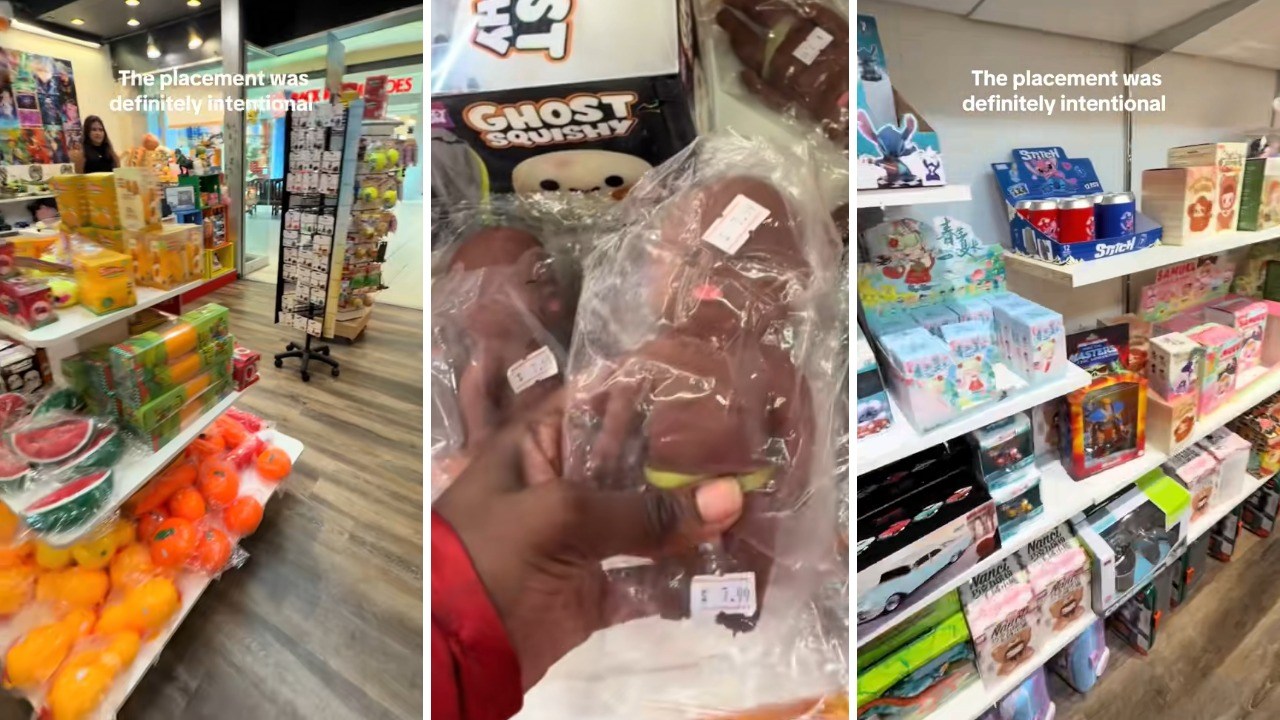
Shopping for items in a store should never feel like a racial attack, but one South Carolina woman suggested that even the placement of products can send a troubling message. Erica W. (@tasteofmelanin) shared her recent experience browsing through a toy store at Northwoods Mall in North Charleston, only to be left questioning the store’s intent after seeing a display of Black baby dolls.
“Ya’ll cannot tell me that this was not intentional,” Erica told viewers in a video on TikTok. In the video, Erica showed viewers several of the dolls allegedly being sold next to a handful of watermelon squishy toys, and claimed that there were “no other color dolls” found in the rest of the store. “It’s just the Black baby doll next to the watermelon,” Erica said. She added on-screen, “The placement was definitely intentional.”
Erica also claimed that the store’s employee began monitoring her and her family closely when they entered the store, adding that the employee went from “relaxed” to alert. “I should have known then that it was something off because she, literally, would not sit down,” Erica said. However, her video did not capture her interacting with the employee, aside from a brief glimpse showing her standing and watching the family. The family ultimately ended up not making a purchase at the store.
Watermelon was turned into a symbol of Black poverty
The reason for the employee standing, however, may be due to company policies requiring staff to be attentive to the store and customers. According to The Guardian, U.S. employers have long required employees, especially servers, cashiers, and retail workers, to stand for extended periods as part of their job, dubbed the “no sit down policy.” Fast Company reported that managers believe such a policy equates to productivity and flexibility, and more often than not, chairs are removed to prevent employees from using them.
On the other hand, watermelon was once a symbol of self-sufficiency among African Americans, originally representing independence and freedom. When African Americans were emancipated following the Civil War, they grew and sold watermelons, according to the National Museum of African American History and Culture.
Southern people, however, turned the watermelon into a symbol of poverty for African Americans. In a way to shame them for being “unclean,” “lazy,” “child-like,” and unfit for being a citizen, demeaning images and jokes were promoted through advertisers, newspapers, and postcards. Some of these images included depictions of African Americans fighting over watermelons or sitting in the streets to eat the fruit. The stereotype eventually became widespread through minstrel shows and has persisted ever since, along with other racist caricatures and imagery.
It remains unclear whether the store intentionally placed the watermelon toy beside the dark-skinned doll or was aware of the message it sent. Still, the incident highlights the lasting impact of racial stereotypes.
Have a tip we should know? [email protected]
Follow The Mary Sue:
