


Sean Duffy wants $50 billion for air traffic control after Friday’s nationwide ground stop, but Democrats say $9 billion is still sitting unspent
The Democrats want receipts.
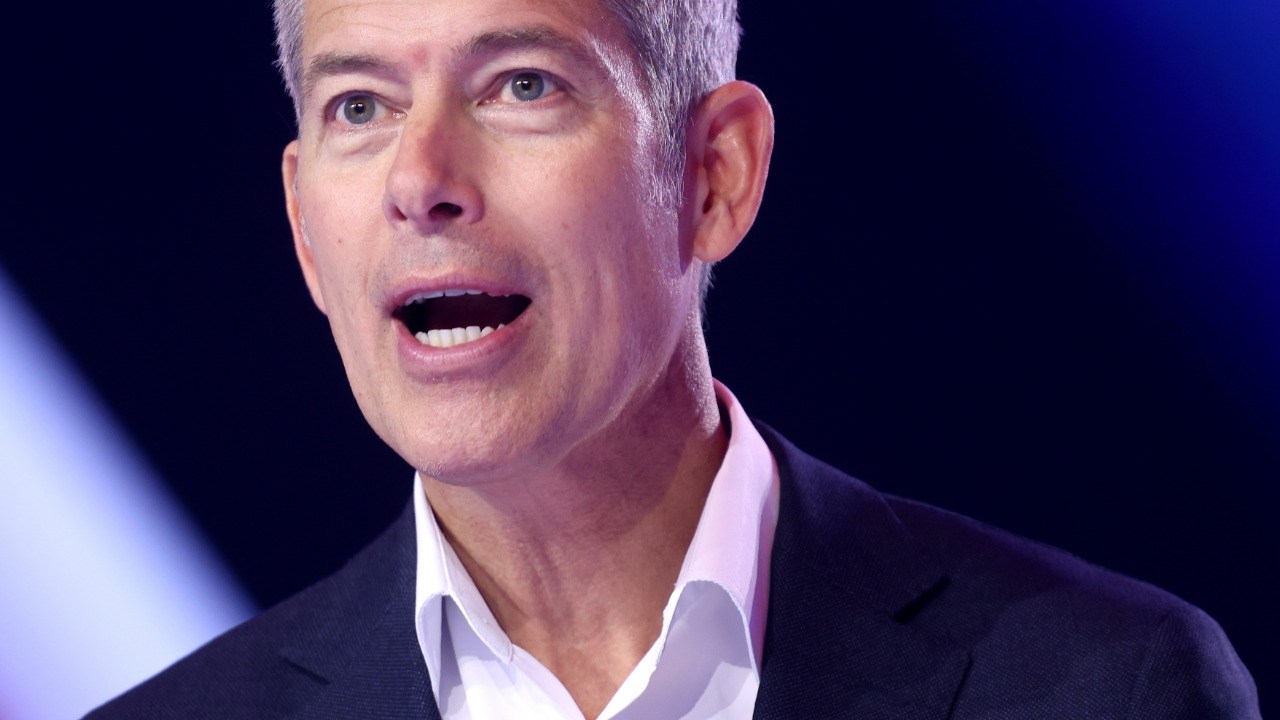
Transportation Secretary Sean Duffy is asking Congress for $50 billion to modernize America’s air traffic control system and upgrade aviation infrastructure after a technical failure forced the Federal Aviation Administration (FAA) to issue a nationwide ground stop Friday. But the request is already facing questions from Democrats, who say the government has yet to spend roughly $9 billion previously allocated for aviation upgrades.
The funding dispute comes after the FAA experienced widespread instability in its communications and radar systems on November 13, forcing airports across the country to halt departures. The agency said the disruption began around 3:30 p.m. ET and lifted the ground stop at approximately 8:15 p.m., after determining that its systems had stabilized.
In a released statement, FAA revealed that excessive data flooding disrupted its legacy telecommunications network, affecting 17 of the country’s 22 air route traffic control centers. The agency identified potential sources at a radar site in Amarillo, Texas, and a radio communications facility in El Dorado, Arkansas, where contractor L3Harris had been deploying a new router. The incident prompted renewed calls to replace aging aviation infrastructure, but the administration’s proposed price tag has become a separate point of contention.
Duffy’s $50 billion request comes with a moving price tag
Duffy initially sought $30.1 billion in additional funding alongside White House budget director Russ Vought in a November 12 request to Congress. A day later, following the nationwide ground stop, he raised the figure to $50 billion, arguing that the country needed a comprehensive overhaul rather than piecemeal repairs.
Speaking at a November 14 press conference, Duffy said he wanted Congress to make the investment immediately and promised to submit a detailed funding request with President Donald Trump. Trump, meanwhile, blamed the Biden administration for setbacks in the FAA’s modernization efforts following the outage.
The secretary has argued that the $12.5 billion Congress previously allocated for modernization does not cover everything the FAA needs. While that funding supports upgrades to radar equipment, radios, towers and other infrastructure, Duffy says the agency also needs money for a new telecommunications architecture and software to manage aircraft separation across the national airspace.
“I don’t have any money given by Congress to build a new software system to manage the airspace,” Duffy said during an appearance on CBS’ Face the Nation.
On November 17, Duffy and other administration officials formally outlined their $50.1 billion request in a letter to congressional appropriations leaders. The proposal allocates $10.1 billion for air traffic control modernization, including new automation systems, controller workstations and telecommunications infrastructure.
The remaining $40 billion would go toward airport infrastructure and broader facility improvements. This includes $10 billion for airport infrastructure grants, $10 billion to modernize or replace aging terminals, $10 billion to construct up to five consolidated air route traffic control centers, and another $10 billion to build, replace or improve up to 140 air traffic control towers.
Lawmakers aren’t convinced another $50 billion is necessary
Democratic lawmakers are questioning why the administration needs another $50 billion when billions in previously approved aviation funding remain unspent. Rep. Rosa DeLauro of Connecticut, the top Democrat on the House Appropriations Committee, and Rep. James Clyburn of South Carolina, the committee’s ranking member for transportation spending, said approximately $9 billion remains unspent out of $14.4 billion Congress appropriated for air traffic control upgrades since July 2025, according to Roll Call.
The figure includes $12.5 billion from the Republican-backed budget reconciliation package and another $1.9 billion from a bipartisan fiscal 2026 transportation spending law.
DeLauro and Clyburn also pointed to more than $5 billion in reconciliation funding that the Office of Management and Budget has placed on hold until October 1, 2027. “Recent events are not the result of a lack of funding or support from this Congress,” Clyburn said in a statement.
Duffy, however, maintains that the existing money has already been assigned to specific projects and will be committed by the end of 2028 or early 2029. He has also argued that congressional restrictions prevent the Transportation Department from moving funds between different modernization priorities.
Senate Majority Leader John Thune and North Carolina Sen. Thom Tillis have also questioned the administration’s $50 billion request. Calling for more details about the proposed spending.
Meanwhile, Democrats have proposed using some of the billions in immigration enforcement funding that remain unspent rather than approving another large appropriation. Sen. Brian Schatz of Hawaii argued that the government could redirect part of that money toward aviation upgrades without requiring additional taxpayer spending.
The funding dispute is also unfolding against the backdrop of a September Government Accountability Office report warning that the FAA’s modernization program lacked sufficient planning and risked cost uncertainty and operational disruptions. The report warned that gaps in the FAA’s cost estimates and project planning could lead to delays, higher costs, and further disruptions, potentially extending the agency’s reliance on outdated equipment.
Have a tip we should know? [email protected]
Follow The Mary Sue:
