


Recruiter reveals the real reason companies ‘hate’ hiring Gen Z employees: ‘It’s not because they’re lazy’
Gen Z aren't accepting toxic environments.
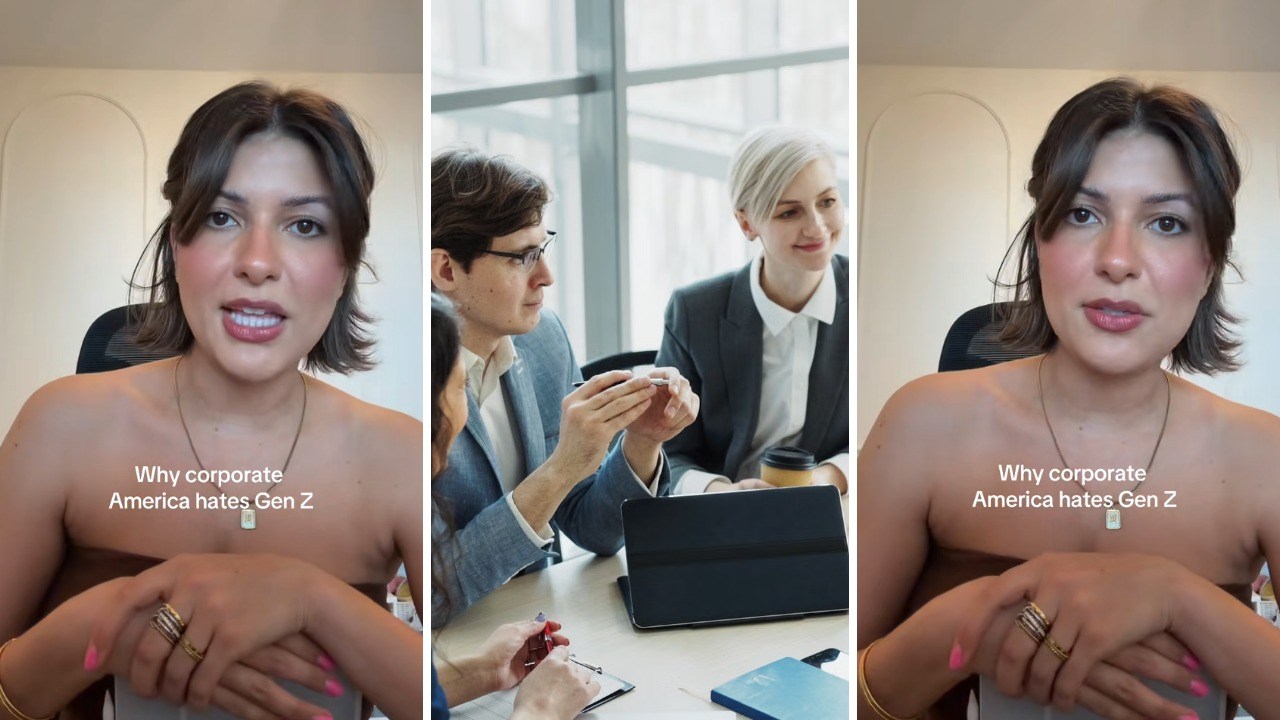
As Gen Z continues to enter the workforce, older generations have voiced criticism of their work habits and attitudes—with the most common argument being that they are lazy. However, one recruiter claims that this isn’t the real reason why employers are reluctant to hire Gen Z.
“Why corporate America hates Gen Z,” Emily the Recruiter (@emily.the.recruiter), who frequently shares videos about workplace culture, wrote on-screen in a video that has since garnered hundreds of thousands of views. According to Emily, older generations often describe Gen Z employees as “lazy” and unwilling to work, making them hard to work with and a less favored choice for employment.
Emily, however, argued that the true reason behind the hate is that Gen Z workers are not as easy to exploit, which the older generation may misconstrue as insubordination. “The only reason these companies hate Gen Z at work is because Gen Z is harder to manipulate. That’s really it,” the recruiter said. “It’s not ‘cause they’re lazy; it’s not ‘cause they don’t wanna work. It’s literally just because they see through your bulls***.”
Recruiter says companies can’t control younger employees
Emily, who described herself as a millennial, defended the young workers and their work ethic, saying, “They work just as hard,” as evidenced by how some are even working three jobs. She also criticized companies, accusing them of being “just mad” that they allegedly can’t manipulate younger employees the way they may have with previous generations.
Many agreed with Emily’s observation, noting that salary plays a major role in how much work they are willing to take on. “Literally if you pay me for 40 hours I’m working 40 works [sic] I’m not doing above and beyond without above and beyond pay,” one commenter wrote.
Others, on the other hand, argued that it is also because the younger generation prioritizes their mental health and how it ties to their job. A commenter said, “As a Gen Z, I don’t care about the money I care about my mental health. I’m putting my two weeks notice tomorrow and that’s me being nice tbh.”
Gen Z prioritizes their well-being
According to Forbes, Gen Z, who were born between 1997 and 2012, are redefining workplace norms. The younger generation is said to be more aware of their mental health and place greater emphasis on their well-being, with studies showing that 77% believe that a good balance between their professional and personal lives and having boundaries define a successful career. In fact, 55% of Gen Z have been diagnosed or are currently receiving treatment for a mental health condition, according to McKinsey & Company.
60% of Gen Z also say that work-life balance, which includes employers giving higher priority to results instead of maintaining rigid structures, is what keeps them satisfied at work. This also means that they appreciate leaders who care about their health and take an empathetic approach, rather than having them focus on traditional hierarchical roles.
Younger employees have also become more purpose-driven, with 86% of them wanting to see that their work is making a positive societal impact, which becomes a major factor when they assess companies. They want to work for employers who share similar beliefs and missions in broader societal concepts.
It may not be that Gen Z is difficult to work with, but rather that companies need to adapt to the changes brought by a generation whose formative years were shaped by technology, the COVID-19 pandemic, and evolving societal norms. Fostering a more human-centric work environment could benefit both employees and the organization as a whole.
Have a tip we should know? [email protected]
Follow The Mary Sue:
