


Police Officer Pulls Over a Driver With Tourette Syndrome. Then They Show Everyone the Right Way To Respond: ‘Thank You So Much for Being Nice’
The impact of empathy.
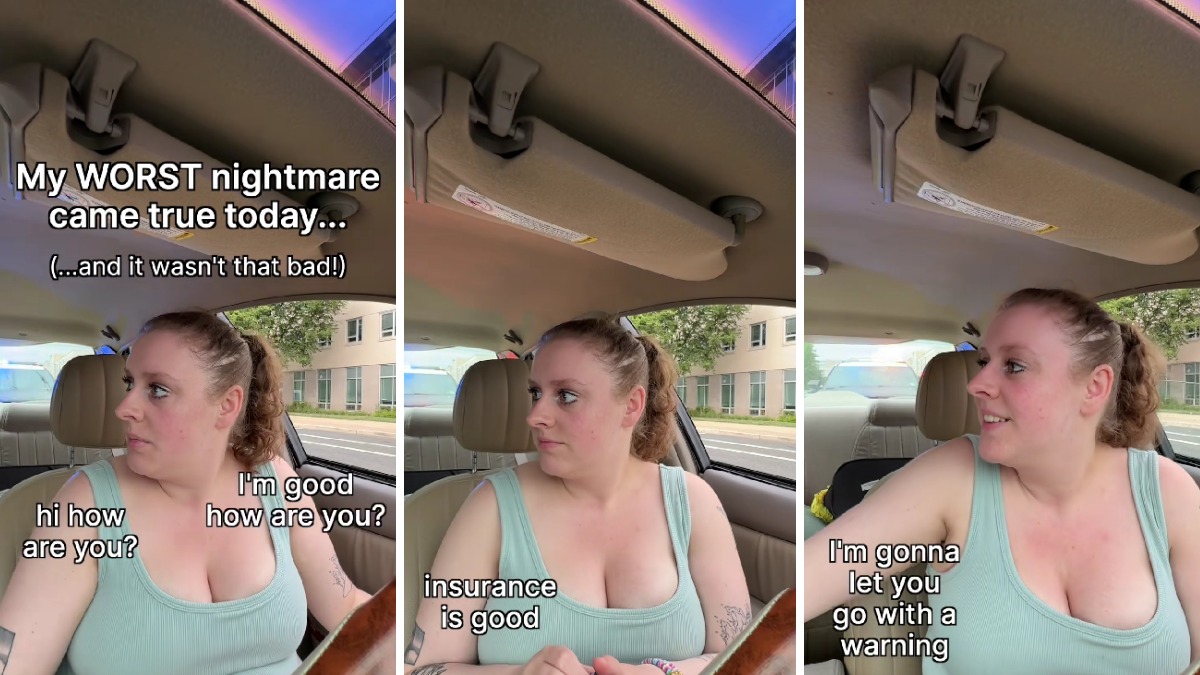
A routine traffic stop just became one of the most powerful examples of how law enforcement should handle interactions with people who have Tourette syndrome. TikTok creator and pop musician Maya Wagner, known online as @mayawagnermusic, posted a video in August 2026 documenting her experience being pulled over.
Instead of escalating into a tense or misunderstood situation, the officer responded with calm professionalism and empathy, turning what Wagner called her “worst nightmare” into a moment of genuine connection. The clip has since gone viral, racking up nearly one million likes and sparking widespread conversation about disability awareness, de-escalation, and the importance of education.
Wagner, who has nearly 19,100 followers, regularly shares content about her life with Tourette syndrome. Her videos often focus on original pop music, music analysis, and personal experiences with tics, aiming to educate viewers and reduce stigma. In this case, she captured a best-case scenario that many people with neurological conditions rarely see when dealing with authority figures.
Empathy always goes a long way
As she recounts in the videos, she immediately disclosed her condition to the officer, who responded with a simple but meaningful, “Thank you for letting me know.” The officer checked her documents, issued a warning about a stop sign, and sent her on her way with a polite, “Enjoy your day.”
What makes this interaction stand out isn’t just the officer’s professionalism but how she handled Wagner’s tics, including at least two instances of an involuntary obscene gesture directed at her. Instead of reacting with suspicion or alarm, the officer acknowledged it with a reassuring, “It’s okay,” and continued treating Wagner with respect. Wagner even thanked her for being so nice, a moment that has resonated deeply with viewers.
The transcript of the interaction, shared in the videos, captures the officer’s patience and kindness word-for-word. “F—,” Wagner tics as the officer approaches. “Hi, how are you?” the officer responds, unfazed. “I’m good, how are you. Have your license, registration, insurance?” When Wagner explains she has Tourette syndrome, the officer doesn’t miss a beat: “Thank you for letting me know.”
The response to the videos has been overwhelming
Thousands of comments flooded in, many from people with Tourette syndrome or other neurological conditions who shared their own anxieties about interacting with law enforcement. One viewer wrote, “That is really scary! I’m so glad you got an officer like her! Please consider sending an email to the department to let them know that you appreciate her professionalism.”
Another asked, “Does stress elevate tics?” – a question that highlights how little many people understand about the condition. Others joked about the absurdity of the situation, with one commenter saying, “She just unlocked the cheat code,” while another asked, half-seriously, “Look, I never ever, ever want to pretend or mock anyone’s issue, like ever. Why do I lowkey want to say I have Tourette’s if I ever get pulled over. Can I have permission?”
The videos arrive at a time when conversations about policing, disability rights, and mental health awareness are more visible than ever. In an era where many encounters between neurodivergent individuals and authority figures are filmed and scrutinized, Wagner’s footage offers a rare positive model. It’s a reminder that small acts of understanding can make a huge difference, especially for people battling misunderstood conditions.
Tourette syndrome, for example, is frequently reduced to stereotypes about swearing or constant tics, but the reality is far more complex. Tics can range from subtle movements to loud vocalizations. They’re often exacerbated by stress, anxiety, or even the need to stay quiet – like in a library or during a traffic stop.
For many people with Tourette’s, interactions with law enforcement can be particularly fraught
According to the BBC, Seren Jaye, a 22-year-old campaigner with the condition, has spoken openly about how her tics have led to misunderstandings in the past. In one instance, she ticked, “I have drugs in my bag!” while passing a police car – even though she wasn’t carrying a bag. The officers, fortunately, were amused rather than alarmed, but not everyone is so lucky.
Jaye has described how silence or the need to be quiet can make her tics worse, to the point where she avoids places like libraries altogether. “I can’t go into a library,” she says. “Even if I’m having a day when my vocal tics aren’t even that bad, going into a library will make them 10 times worse.”
The condition itself is often invisible beyond the tics, but it can take a significant physical and emotional toll. Aidy Smith, a global ambassador for the Tourette Association of America, has described it as an “iceberg” condition. The tics are just the visible part, while beneath the surface, many people with Tourette syndrome also deal with insomnia, depression, anxiety, or other neurodivergent conditions like ADHD and OCD.
Smith has spoken about how his tics cause physical pain, like clenching his stomach and inhaling air, leaving him constantly bloated and in discomfort. John Davidson, the campaigner behind the film I Swear, has similarly described the physical strain of tics, including muscle strains, sore joints, and frequent headaches.
DJ Versatile, a Black woman with Tourette syndrome, has spoken about the complexities of the condition, especially when tics involve offensive language. “You have a right to be offended,” she said, “but also there needs to be a level of understanding deeper than the surface level of Tourette’s as an involuntary disability.” Her words underscore the importance of education and empathy, both of which were on full display in Wagner’s traffic stop.
(Featured images: Maya Wagner @mayawagnermusic on TikTok)
Have a tip we should know? [email protected]
Follow The Mary Sue:
