


How Meccha Chameleon Reinvents Hide-and-Seek for Modern Multiplayer Games
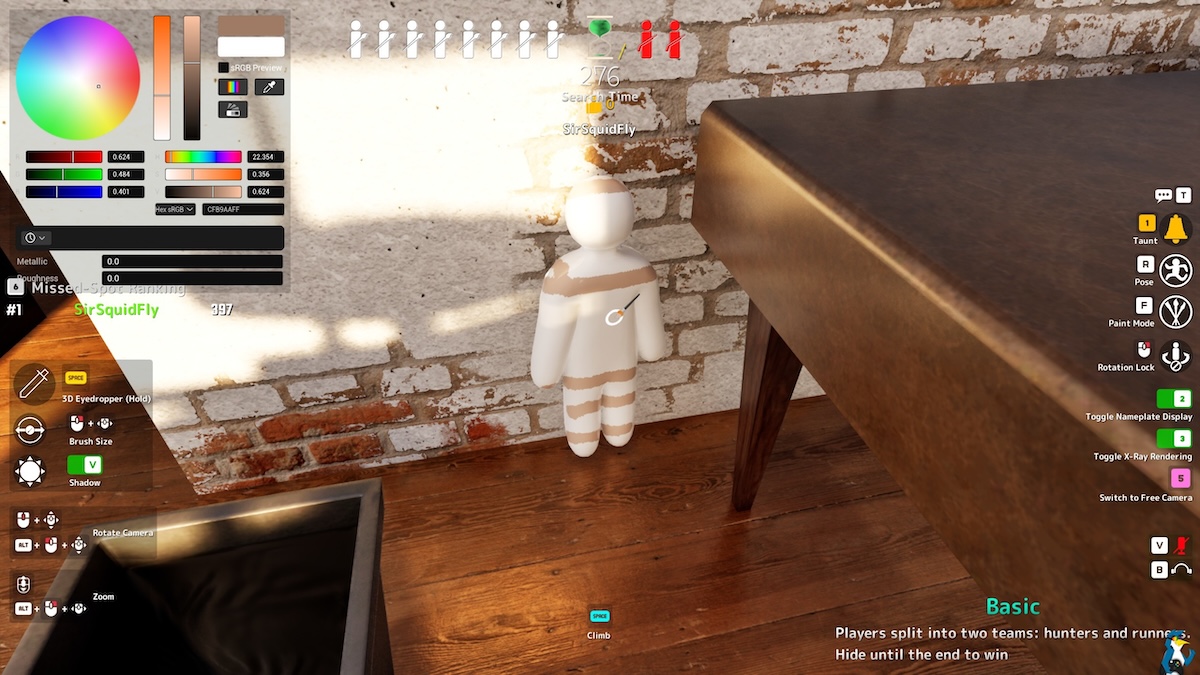
Multiplayer hide-and-seek games aren’t exactly a new idea. Over the years, countless titles have borrowed the childhood game and added their own spin, whether that’s transforming players into everyday objects or creating elaborate maps filled with hiding places. But one of Steam’s biggest surprise hits this year proves that sometimes all it takes is a single clever mechanic to make an old concept feel brand new.
Meccha Chameleon has quickly become one of the platform’s breakout indie successes, climbing Steam’s sales charts while attracting hundreds of thousands of concurrent players. The game’s popularity has also spread across Twitch and YouTube, where major creators have filled streams and highlight reels with frantic escapes, near-perfect disguises, and hilarious moments of Seekers walking directly past hidden players.
The reason the game has become so entertaining to watch is the same reason it feels fresh to play.
A Familiar Game Gets a Creative Twist
Like traditional hide-and-seek games, Meccha Chameleon divides players into Hider and Seeker teams. The objective sounds simple enough: Hiders survive until the timer expires, while Seekers must locate every hidden player before time runs out.
Instead of turning players into props like many similar multiplayer games, however, Meccha Chameleon gives Hiders complete control over their own camouflage.
Every match begins with players as plain white characters. Before the Seekers begin searching, Hiders spray-paint themselves to match the surrounding environment, carefully recreating the colors of nearby walls, furniture, decorations, and other objects. Success depends less on memorizing hiding spots and more on observation, creativity, and attention to detail.
A convincing disguise also requires good positioning. Even perfectly matched colors won’t save someone standing in the middle of an empty hallway. Players have to think about angles, lighting, and how naturally they blend into each environment, creating a level of strategy that changes with every map.
That simple mechanic transforms camouflage from an automatic ability into an active skill. Every round becomes its own puzzle as players search for the best location, recreate its colors, and hope they disappear into the scenery before the hunt begins.
Why Streamers Can’t Stop Playing Meccha Chameleon
The painting mechanic also creates exactly the kind of unpredictable moments that thrive on livestreams.
One player might spend the countdown carefully matching the colors of a painting before freezing in place as a Seeker walks inches away. Another might panic after getting spotted, frantically repainting themselves while sprinting into another room filled with furniture and decorations. Others have found surprisingly convincing hiding spots by blending into famous paintings, walls, or seemingly ordinary background objects.
Those unscripted moments have made Meccha Chameleon a natural fit for Twitch and YouTube, where suspense and comedy often come from players improvising under pressure. Viewers never quite know whether a disguise is brilliant or completely ridiculous until the Seeker walks by – or stops to take a second look.
The game’s accessibility has also helped fuel its momentum. With straightforward rules, short matches, and an instantly recognizable premise, audiences can understand what’s happening within seconds, making it easy for streamers to jump in with friends and create entertaining content.
In an era when many multiplayer games compete by adding increasingly complex progression systems and mechanics, Meccha Chameleon succeeds by doing the opposite. It takes a game everyone already understands and introduces one deceptively simple idea that changes how every round unfolds.
Plenty of multiplayer games ask players to memorize maps or master complex abilities. Meccha Chameleon asks them to stop, look around, and figure out how to disappear into the background. That small change has turned a familiar childhood game into one of Steam’s biggest breakout hits.
(featured image: Steam)
Have a tip we should know? [email protected]
Follow The Mary Sue:
