


Marco Rubio pulls the plug on Iranian delegation visits, claiming they overstayed their welcome as high-stakes negotiations stalled
Iran has denied being asked to leave.
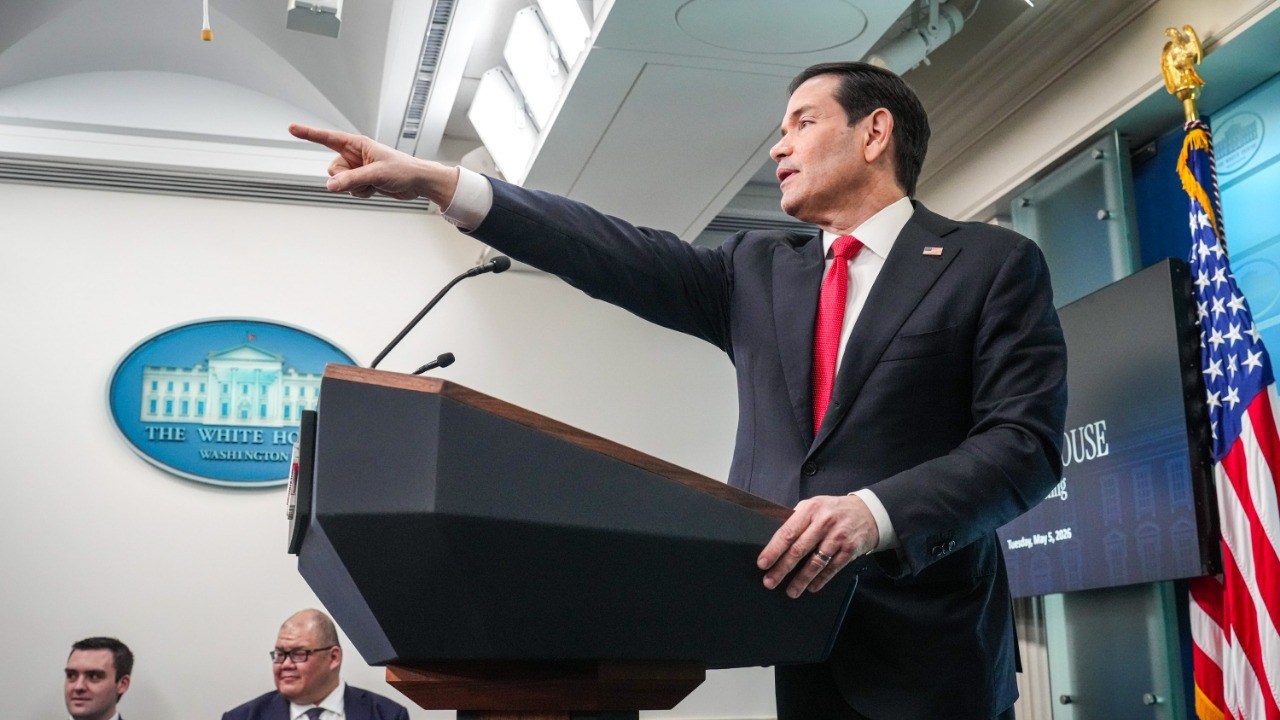
Secretary of State Marco Rubio ordered the Iranian foreign minister and his delegation to leave New York earlier than planned this week. This move comes as high-stakes negotiations regarding the Strait of Hormuz and Iran’s nuclear program have stalled. According to the Associated Press, the decision follows a weekend of meetings that failed to produce any significant progress. Rubio said the Iranian officials had overstayed their welcome once the U.N. General Assembly sessions concluded.
The Trump administration had initially granted visas to the Iranian delegation under severe restrictions. While President Masoud Pezeshkian departed New York shortly after his speech at the United Nations, Foreign Minister Abbas Araghchi stayed behind. He intended to engage in indirect talks with the United States to address the ongoing conflict. These discussions involved Qatari mediators acting as intermediaries between Washington and Tehran.
The primary goal of these talks was to revive a seven-day confidence-building proposal. This plan aimed to reopen the Strait of Hormuz and build upon a June framework that had briefly paused hostilities. Despite these efforts, the two sides remained divided over the specific sequencing of concessions. Key issues included the reopening of the vital waterway, nuclear steps for Iran, and the level of economic relief the United States would provide.
Trump has rejected the latest Iranian proposal
According to Fox News, President Donald Trump characterized the offer to reopen the strait as “not good enough. Nearly,” over the weekend. Furthermore, the administration explicitly denied reports suggesting that the United States had offered sanctions relief or the release of frozen Iranian funds to secure a deal.
The Iranian U.N. delegation disputed the official account provided by the United States. In a post on its official X account, the delegation claimed they were not forced out. They stated, “The Iranian delegation left New York on Monday evening, in accordance with the schedule that had also been communicated to the U.S. Department of State in advance on September 17.” The statement further alleged that the State Department was “propagating baseless and worthless news.”
Regardless of the conflicting accounts, Araghchi and his team left New York very early Tuesday. This incident marks an unusually sharp diplomatic rebuke during a period when mediators are desperately trying to keep communication channels open. The lack of a breakthrough is currently impacting global energy markets. Traders are weighing the risks of the stalled talks against a recovery in regional oil supplies.
Brent crude settled above $103 a barrel on Wednesday, while U.S. crude closed above $90. These prices reflect the ongoing pressure caused by the diplomatic stalemate. American consumers are experiencing these costs at the pump, where the national average for regular gasoline hit about $4.43 a gallon on Wednesday. This is a significant increase from the roughly $3.15 average observed a year earlier. Diesel prices remain high, above $6.4 a gallon.
The Strait of Hormuz is the focal point of these economic concerns
Before the conflict, roughly one-fifth of global crude oil and liquefied natural gas supplies moved through the critical waterway. Even partial disruptions in this region drive global energy prices upward.
Trump has signaled that the administration’s approach to Iran could become more aggressive in the coming months. He indicated that it is “possible” he will increase military strikes in the Middle East following the midterms in November. When asked about a potential escalation, he noted that the United States has spent the last six months rebuilding its military arsenal. He stated, “We have a lot of weapons. You know, we’ve been stocking up for the last six months.”
During a recent interview with Time, the president was pressed on whether he might consider annihilating Iran. He responded by using the word “possible” once again. While he declined to discuss specific potential targets, his rhetoric suggests that the diplomatic track is increasingly strained.
During his speech to the United Nations General Assembly last week, Trump reiterated his commitment to preventing Iran from obtaining nuclear weapons. The current situation remains tense, with both the diplomatic and military options remaining on the table.
The administration’s decision to cut the delegation’s visit short highlights the frustration within the State Department regarding the lack of movement on key issues. For now, the world watches as negotiations remain in a state of flux with no clear resolution in sight.
Have a tip we should know? [email protected]
Follow The Mary Sue:
