Jared Kushner calls Vladimir Putin ‘grandmaster of politics’ on podcast. Now, officials want him gone: ‘Pure Kremlin propaganda’
Peace, but with caveats.
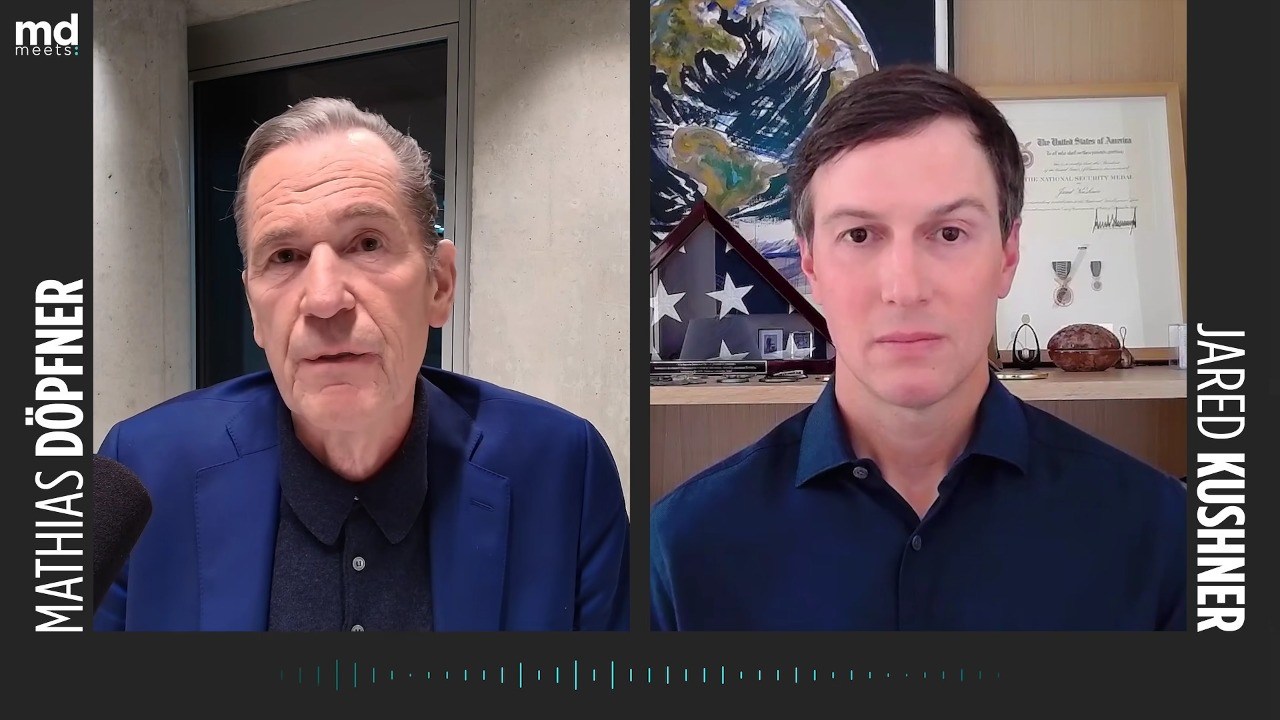
Jared Kushner is facing intense backlash from international officials after calling Russian leader Vladimir Putin a ‘grandmaster of politics’ during a recent interview. The comments, which aired Wednesday, November 25, 2026, on the MD Meets podcast hosted by Axel Springer CEO Mathias Dopfner, have triggered calls for Kushner to be removed from his role as a peace envoy. Lawmakers in Kyiv, and across Europe are slamming the remarks as dangerous and out of touch with the reality of the ongoing conflict.
According to POLITICO, the interview offered a rare look into how Kushner views his current diplomatic work. He claimed that Putin has shown restraint by choosing not to use nuclear weapons. He also framed the war as a proxy conflict where Europe is funding and arming Ukraine against Russia. These statements have not sat well with those who view the invasion as an unprovoked act of aggression.
Oleksandr Merezhko, who chairs the Ukrainian parliament’s foreign affairs committee, did not hold back in his criticism. He argued that Kushner and his fellow peace envoy, Steve Witkoff, should be replaced immediately. Merezhko stated that the pair seem to view the conflict through the eyes of Putin himself rather than as neutral negotiators. He warned that this perspective is extremely dangerous for both Ukraine and the national interests of the United States.
Other officials are equally concerned about the direction of these diplomatic efforts
Halyna Yanchenko, another lawmaker from the Servant of the People party, said that Kushner is essentially acting as an advocate for Russia. She described his framing of the proxy war as a complete misrepresentation of reality that denies Ukraine its status as an independent actor. She believes that talk of warmer relations is a myth that Putin is trying to sell to the American team.
The anger is not limited to Kyiv. European leaders are also voicing their disapproval of the current U.S. approach. Roderich Kiesewetter, a veteran German lawmaker, suggested that Washington is no longer acting as an honest broker. He claimed that under President Donald Trump, the United States is firmly on the side of Russia. Kushner is also Trump’s son-in-law.
Marie-Agnes Strack-Zimmermann, who chairs the European Parliament’s security and defense committee, went even further. She labeled Kushner’s comments as pure Kremlin propaganda and suggested that the White House seems more interested in sitting on Putin’s lap than working toward a just peace.
Kushner has defended his diplomatic process by suggesting that the focus should be on long-term durability rather than fairness. He stated that he believes people will eventually become more flexible on where to draw territorial lines if they see a pathway to peace.
According to CNN, he also noted that he has met with Putin a number of times, including a recent trip to the Kremlin, and described the Russian leader as a historic figure with a deep understanding of the issues. Kushner claimed that Putin takes notes during their meetings and transmits information very specifically.
The friction comes at a sensitive time for the relationship between the United States and Ukraine
President Volodymyr Zelenskyy has been pushing for the delivery of Patriot interceptor missiles and has expressed concerns about the direction of peace talks. Zelenskyy previously noted that U.S. negotiators had raised the possibility of Ukraine withdrawing from the Donbas region in exchange for NATO membership. While Ukraine has long resisted ceding land, the idea of a comprehensive security package remains a point of discussion.
Kushner maintains that a security guarantee from America is essential for the future safety of Ukraine. He argued that if the war can end with Ukraine remaining sovereign, secure, and prosperous, it would represent a victory for both the country and Europe. He also warned that without a formal settlement, there is a real risk of the conflict escalating massively.
Kushner suggested that once a post-war relationship is defined, the issue of territory will become much easier to resolve. The background of this situation involves complex international dynamics regarding sovereignty and territorial integrity. International law generally prohibits the acquisition of territory by force, and the United Nations Charter emphasizes the sovereign equality of all member states.
Many European nations view any concession of land as a dangerous precedent that could invite further aggression. The role of a neutral mediator in such a conflict is traditionally defined by a commitment to international norms and the protection of the victim of aggression. When these norms are perceived to be ignored, it often leads to a breakdown in trust between allies.
Have a tip we should know? [email protected]
Follow The Mary Sue: