


‘I could go on’: Stephen King just listed presidents who got shot but Congress still can’t pass a gun law
Nothing ever changes.
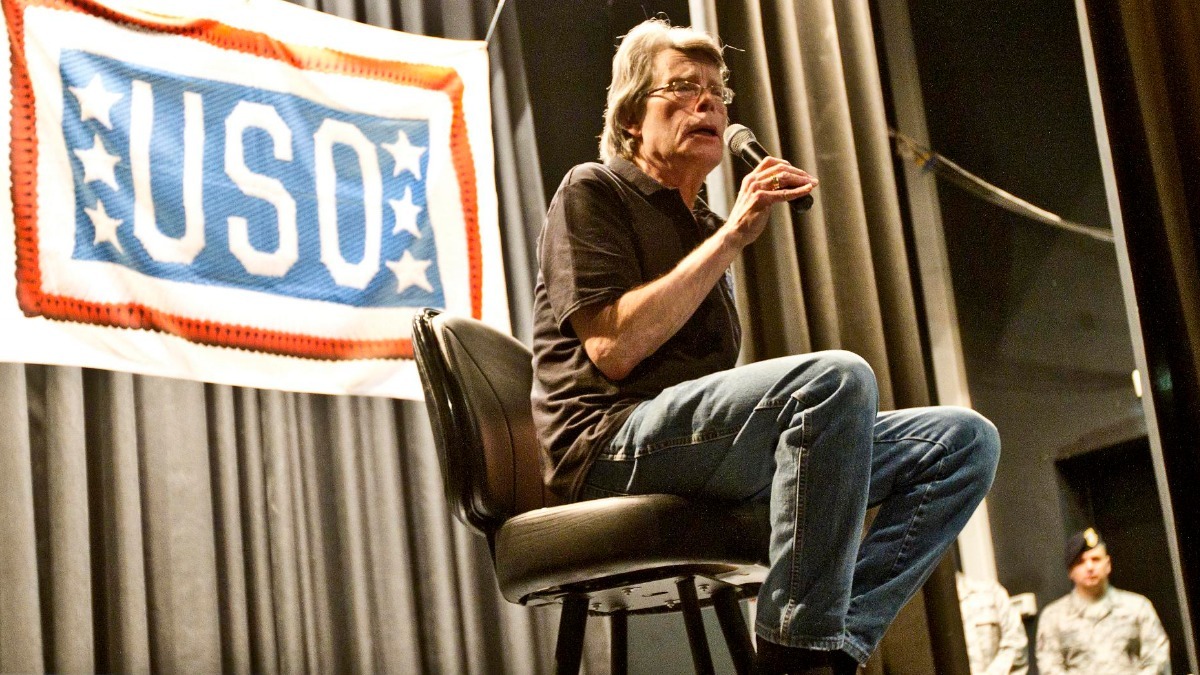
The White House Correspondents’ Dinner shooting has reignited the gun control debate after Stephen King is speaking up. On April 26, 2026, the horror author posted on X, listing presidents and public figures who’ve been shot – Reagan, Ford, JFK, RFK, MLK – and arguing that “the crazies are non-partisan. They’re just nuts.” His post was a direct response to viral claims that Democrats never face assassination attempts.
This narrative was pushed by conservative commentator Javier Negre just one day after the shooting. Negre’s post, which racked up nearly 29 million views and over 34,000 likes, asked, “How many times did Barack Hussein have an assassination attempt? How many times did Joe Biden have an assassination attempt? How many times did Kamala Harris have an assassination attempt? How many times did Hillary Clinton have an assassination attempt?”
The answer, he claimed, was zero, framing Democrats as “the party of violence in America.” King’s reply dismantled that argument by pointing to historical violence against leaders from both parties. If anything, the list proved that political shootings aren’t confined to one side. Despite all this, Congress still can’t pass meaningful gun laws.
The timing of King’s post couldn’t have been more relevant
The WHCD shooting is just the latest in a string of high-profile incidents, including multiple attempts on President Trump’s life in 2024 and 2025. Despite this, federal gun restrictions like expanded background checks, red-flag laws, and bans on high-capacity magazines remain stalled in Congress. King’s frustration is understandable.
If the near-assassination of a former president and a sitting president’s close call at a major event aren’t enough to spur action, what will be? The backlash to the WHCD shooting has followed a familiar script. According to Politico, Republicans wasted no time blaming Democrats for “dangerous and inflammatory rhetoric,” with Trump himself claiming that “the hate speech of the Democrats … is very dangerous.”
The RNC amplified the narrative, accusing progressive candidates of fueling political violence. In Michigan, they targeted Abdul El Sayed, while in Maine, they dug up decade-old Reddit posts from Democratic candidate Graham Platner to suggest he endorsed violence. North Carolina’s Roy Cooper was criticized for not condemning the attack quickly enough after previously calling Trump a threat to democracy.
This isn’t new. After the 2024 attempts on Trump’s life, Republicans pivoted from calls for unity to accusations that Democrats had incited violence by portraying him as a danger to democracy. The pattern repeated after last year’s killing of conservative activist Charlie Kirk, when top GOP figures blamed the “radical left.”
Yet, there’s no evidence linking Democratic rhetoric to any of these attacks. The suspect in the WHCD shooting reportedly criticized Trump administration policies in writings to family members, but Republicans have already framed the incident as proof of left-wing extremism.
Democrats, meanwhile, have condemned political violence across the board
House Minority Leader Hakeem Jeffries put it simply on Fox News Sunday: “Violence is never the answer, whether it’s targeted at the right, the left, or the center.” They’ve also renewed calls to pass a stalled Department of Homeland Security funding bill, though it excludes immigration enforcement – a non-starter for Republicans.
The disconnect is glaring. While both sides pay lip service to unity, the GOP’s immediate response to the WHCD shooting was to weaponize it for political gain, rather than address the root issue: America’s gun violence epidemic.
King’s post cuts through the noise. The problem isn’t which party’s leaders get shot but that any leaders get shot. Reagan, a Republican, survived an assassination attempt. So did Ford, another Republican. JFK and RFK, both Democrats, were killed. MLK, a civil rights icon, was assassinated. The list goes on, and yet, Congress remains paralyzed.
If the near-death of a president isn’t enough to break the gridlock, what is? The answer, unfortunately, seems to be nothing. At least, not until lawmakers decide that preventing the next shooting is more important than scoring political points.
The WHCD incident is a stark reminder of how quickly political violence can escalate
The suspect, Cole Tomas Allen, armed with guns and knives, reportedly targeted “folks that work in the administration, likely including the president,” according to Acting Attorney General Todd Blanche. Yet, instead of focusing on solutions, the immediate reaction from Republicans was to blame Democrats for “normalizing” violence. It’s a tired playbook, one that ignores the fact that political violence isn’t a partisan issue but an American one.
The argument is simple: If leaders from both parties have been victims, why can’t Congress agree on basic gun safety measures? The answer lies in the polarization that’s come to define American politics. Every mass shooting, every assassination attempt, every near-miss at a high-profile event becomes a battleground for partisan bickering. Meanwhile, the body count rises, and the laws stay the same.
The WHCD shooting should have been a wake-up call. Instead, it’s just another data point in a cycle of violence and inaction. Long-time Trump administration critic King’s post isn’t just a history lesson; it’s a challenge. If Congress can’t pass gun laws after presidents, civil rights leaders, and activists have been shot, what will it take?
(Featured image: The USO)
Have a tip we should know? [email protected]
Follow The Mary Sue:
