


Husband Asked for a DNA Test. She Asked Why She Should Have To Take One, and the Argument Exploded: ‘Putting This Back on Me?’
The deflection game.
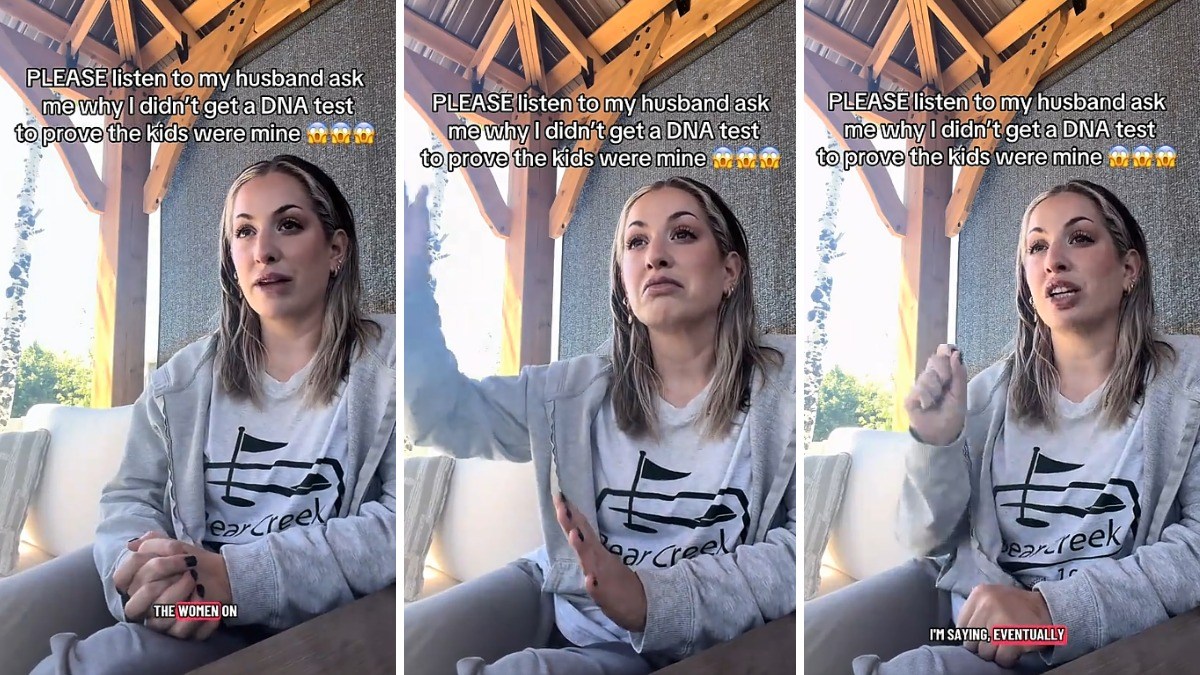
A scripted TikTok skit has blown up after showing a husband demanding his wife take a DNA test to “prove” she’s the mother of their kids, right after she asked him to get a paternity test. The video, posted by creator Aiyleen under the handle @lonelylovergirl55, has racked up 1.8 million views, 126,000 likes, and 17,500 shares, sparking debates about double standards, deflection, and the performative nature of “cheaterbuster” content on the platform.
The skit opens with the wife calmly telling her husband to get a paternity test if he wants confirmation they are his children. His response? A full-blown role reversal, insisting she should be the one tested to confirm she’s actually the mother. The argument spirals into accusations, with the husband deflecting every attempt at accountability.
The wife fires back “You’re deflecting and putting this back on me?” It’s a classic microdrama setup: a provocative hook, rapid-fire dialogue, and a final sting that leaves viewers ready to comment, duet, and debate.
Aiyleen’s content thrives on relatability and moral clarity
Her skits dramatize infidelity, gaslighting, and power dynamics in relationships. The “cheaterbuster” niche is built on compressed, high-stakes confrontations that mirror real-life frustrations, making them instantly engaging. This video taps into enduring themes of mistrust in relationships, weaponization of DNA tests, and gendered expectations that women must constantly prove their legitimacy while men dodge accountability.
The formula is perfect for TikTok. Scripted skits consistently outperform unscripted content because they deliver satisfying payoffs and repeatable formats. For creators, scripts offer control over narrative arc, timing, and clarity, making editing more precise and keeping viewers hooked until the very end. For audiences, they provide a safe space to vent, find community, and even laugh at the absurdity of it all.
The comments section is a mix of frustration, humor, and solidarity. Many viewers are done with “Chaz,” the recurring offender in Aiyleen’s skits. One commenter joked, “I don’t know him, but I want a divorce,” while another asked, “How do I file for someone else’s divorce?”
Others leaned into the absurdity, with one saying, “Intelligence keeps chasing me, but I am faster,” and another quipping, “All of my flabbers have been gasted.” Some even brought politics into the mix, writing, “Dudes out here making Trump look like a genius.”
But not all reactions were jokes
Some viewers offered genuine reassurance, like one who wrote, “Having this recorded is going to come in very handy. Any time the slightest bit of doubt or weaknesses creeps in, you are going to be able to watch here and think, ‘Nah, I’m good.’” It’s a reminder that these skits are also a form of catharsis for people who’ve experienced similar betrayals. This kind of deflection Chaz uses is a common tactic in real-life arguments, and Aiyleen’s skit exposes it perfectly.
The larger TikTok trend of “cheaterbuster” content makes for a good study. Cosmopolitan reports that many of these videos function as scripted ads for AI “cheater finder” apps. Companies like CheaterBuster and TruthSeek turn viewers’ fascination with strangers’ heartbreak into a promotional tool, using dramatized skits to sell their services.
These apps claim to uncover infidelity by scanning dating profiles or hidden social media activity, but their effectiveness is questionable. Reviews warn that the results are often inaccurate, with one user writing, “The pic search is a great idea, but the AI needs to be developed more. It returns a whole slew of people that look nothing like the pic at all.”
Another reviewer of TruthSeek said, “On TikTok this is advertised as a ‘cheater finder,’ however… it won’t look up your exact person… all the information they make you pay for you can just find on Google.” Despite the mixed reviews, these apps continue to thrive because they tap into our innate desire for drama and vindication.
‘People love salacious content’
Relationship psychologist Karen Stewart explains, “People love salacious content. There’s a reason the Jerry Springer Show and Maury are some of the most popular television shows in history. We like watching train wrecks; we know we should not look, but we can’t help ourselves.”
The “cheating exposés” genre satisfies our curiosity while also offering a sense of community. When viewers condemn the cheater publicly, they bond with the victim, reinforcing values of trust and loyalty.
But there’s a darker side. Many cheaterbuster skit ads violate TikTok’s guidelines, which require clear disclosure when promoting a product or service. The platform’s policy states, “This ensures that you’re transparent about the type of content you’re posting and helps build and maintain trust between the TikTok community and advertisers.” Yet, few of these videos include a clear ad label, leaving viewers unaware they’re being sold a product.
The sheer volume of these ads has led to fatigue, with some users saying they’d rather see normal ads than another fake cheating exposé. One viewer wrote, “It’s genuinely every 8 videos for me, I’d rather see normal ads [at this point].” Others suggest ways to combat the influx, like filtering out the names of the promoted apps or blocking accounts that advertise them.
It’s easy to call out such apps for exploiting human pain
What’s harder is ignoring our own role in sustaining the culture that allows them to thrive. These companies observed what their target audience responds to and created a format that reliably captures attention. The more we engage, the more these videos proliferate, blurring the line between entertainment and exploitation.
At its core, the popularity of these videos raises questions about consumption habits. Are we invading people’s privacy, even when they willingly share their stories? Or are we just looking for a way to process our own experiences through the lens of others? Maybe the rise of these scripted ads is the wake-up call we need to reconsider how we engage with this kind of content.
(Featured images: AIYLEEN @lonelylovergirl55 on TikTok)
Have a tip we should know? [email protected]
Follow The Mary Sue:
