Hundreds gather outside the US embassy in London to support Palestine Action. Then the police move in to make a mass arrest
Assault on free speech?
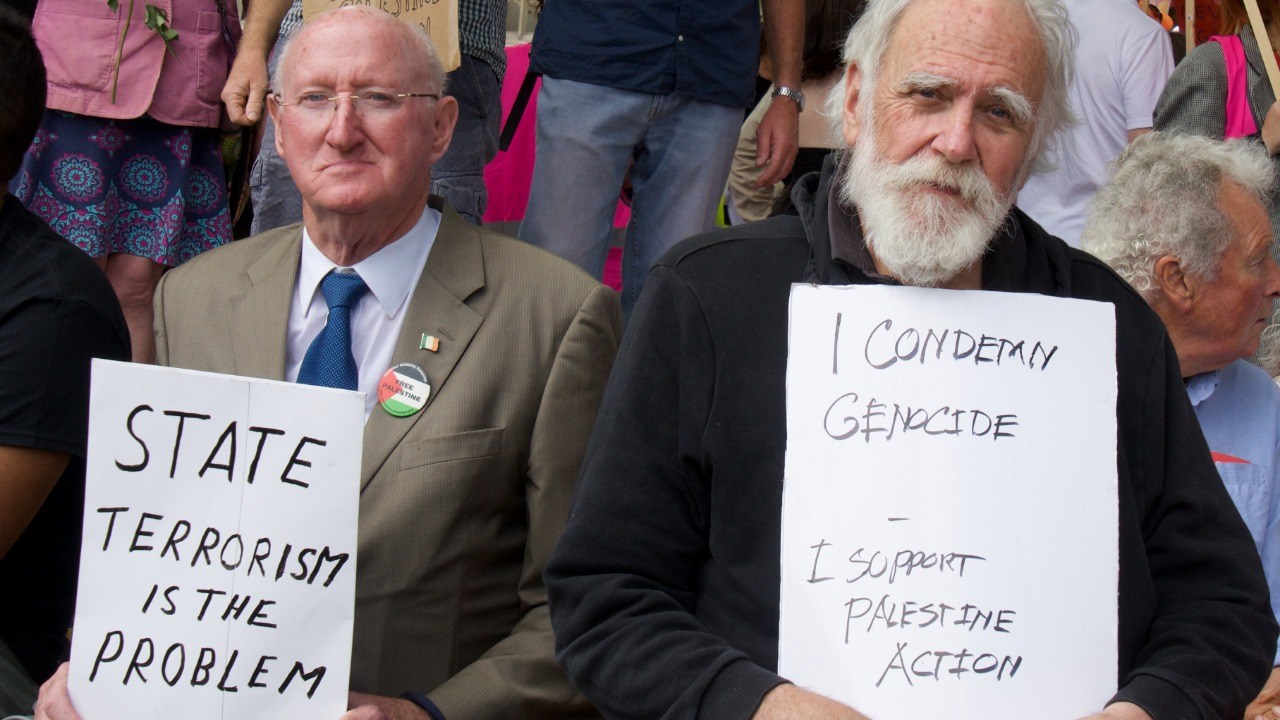
Police took 325 people into custody outside the U.S. embassy in London on Saturday, October 31, 2026. This large operation occurred during a demonstration focused on the banned group Palestine Action. According to The Guardian, the Metropolitan Police confirmed these numbers on Sunday. They noted that 320 of those individuals were detained for allegedly expressing support for a proscribed organisation under the Terrorism Act.
The activity at Nine Elms in London drew hundreds of participants, many of whom carried signs with specific slogans. Common messages on these placards included phrases such as: “I oppose genocide, I support Palestine Action.” The situation intensified as officers moved in to process the crowd. The police carried out arrests well into the evening, moving participants toward vans for transport.
Some attendees remained defiant, with observers noting that officers had to physically carry certain demonstrators who refused to walk on their own. During this process, some of the crowd showed their support for those being detained. People in the area chanted: “Free, free Palestine!”
This event highlights the ongoing friction regarding the legal status of Palestine Action
The BBC reports that the group was proscribed in July 2025. It stands as the first direct action group to be banned under the Terrorism Act. The UK Supreme Court plans to review this ban starting on Wednesday. A co-founder of the group received permission to appeal the decision, and the Home Office has stated that it will robustly defend against the appeal.
Defend Our Juries, a group coordinating civil disobedience campaigns against the ban on Palestine Action, claims the total number of people arrested since the proscription has now reached 4,200. Home Office figures seen by the BBC indicate 3,630 arrests occurred up until June 2026. When you combine those with the 134 people arrested at Westminster Magistrates Court earlier this year and the latest figures from Saturday, the count rises to 4,089.
Participants at the embassy expressed strong views about the state of civil liberties. Charles Allison, a 75-year-old retired lawyer who traveled from Cumbria for the event, was among those detained in the afternoon. He shared his perspective on the current climate.
“I hope the Supreme Court justices – they won’t necessarily be influenced by it [the protest] – but I hope that they will take a long-term view of what is happening in this country and decide that the proscription was unlawful, as I believe it was,” he said. He expressed fear that civil liberties are currently being devalued and watered down. Another protester, David Bolden, characterized the ban as an “absurd law” while waiting for his own arrest.
The legal journey of this ban has been complex
The High Court initially ruled the ban unlawful, but the Court of Appeal later overturned that decision. The upcoming Supreme Court hearing will examine whether the ban represents a disproportionate interference with freedom of speech and protest rights. It seems the fate of those holding placards has not carried much weight in previous rulings.
Around 2,500 people arrested for alleged support of the group have been charged under the Terrorism Act. However, all related trials remain postponed until the Supreme Court reaches a final decision on the legality of the ban.
The public reaction from political figures has been mixed. In September, foreign secretary Ed Miliband addressed questions from LBC radio regarding the arrests of elderly people, vicars, and grannies for holding signs. He stated, “I don’t think anyone’s intent was to have those people criminalised. But obviously the supreme court has got to look at this issue and obviously it’s something we keep looking at as a government.”
Shortly after, home secretary Shabana Mahmood spoke on The Rest is Politics podcast. She admitted it felt very uncomfortable to see people arrested for alleged support of the group, though she still defended the government’s position on the ban.
Amnesty International UK has criticized the latest wave of arrests
Amnesty International UK is calling for the government to drop the proscription. Defend Our Juries continues to describe the arrests as unjust and characterizes the situation as an assault on free speech. The group also described the weekend’s events as truly dystopian.
While the protest in London saw a massive police response, a smaller vigil took place in Edinburgh on the same day. Police Scotland reported no arrests during that event.
The Supreme Court hearing is scheduled to conclude on Thursday, though a final judgment will likely come at a later date. This case remains a central point of tension during Andy Burnham’s premiership, marking the largest organized response to the ban so far.
Have a tip we should know? [email protected]
Follow The Mary Sue: