


Home Depot Customer Tries To Use the Gift Card She Was Just Given. Then She Discovers It Comes With an Unexpected Rule: ‘Dealing With the Matrix’
The surveillance debate.
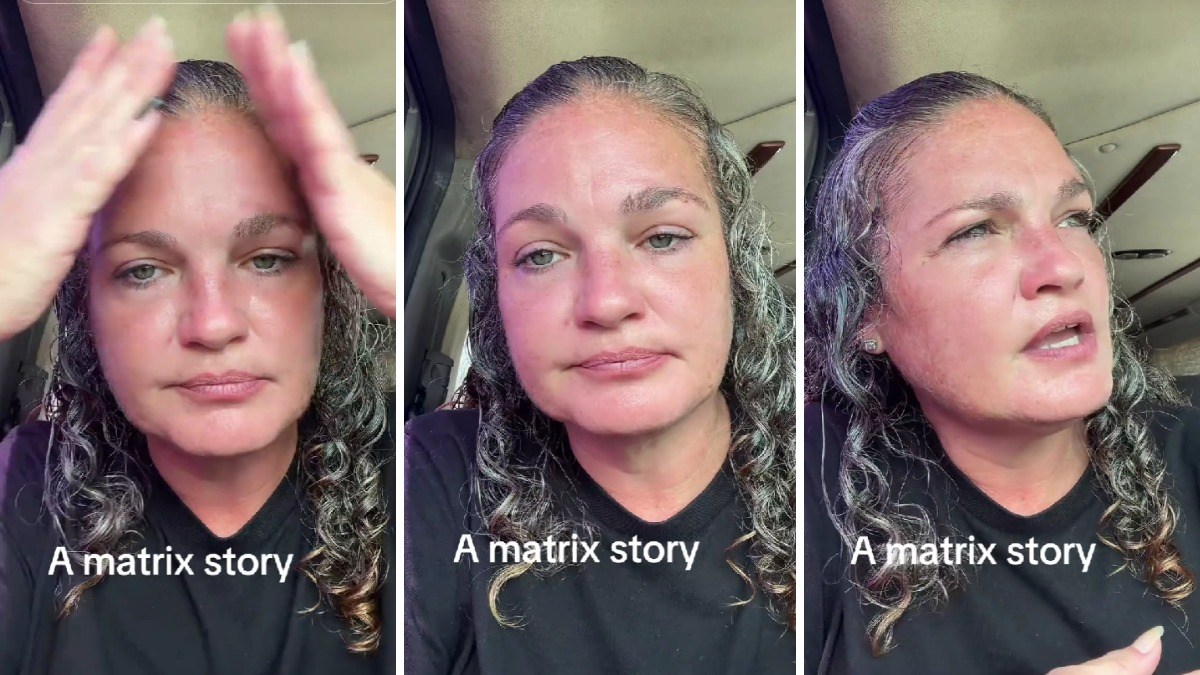
Lydia, who posts on TikTok as @dimplez_lydia, shared a video of her trip to Home Depot that quickly spiraled into a rant about corporate surveillance and what she calls “the matrix people.” She had just finished an exchange at the store, where an employee struggled to scan her receipt before eventually issuing her a store credit in the form of a gift card.
When she tried to use that same gift card at self-checkout, the system prompted her to scan her driver’s license. The request left her furious, and she didn’t hold back in her response. “I do my shopping and I go to the line and I’m doing self checkout,” she says in the video. “When I went to go scan my gift card… This is a gift card. This is a gift card to Home Depot, okay, mind you, they made me scan my license.”
Lydia adds, “She asked, ‘Do you have your license?’ And I’m like, ‘I do, well why would you need my license in order to use a gift card? Are you serious?'”
Her frustration only grew from there
“That gift card, I could have given to anyone,” she continued. “I could have given it to my daughter to run inside to purchase something, and you’re telling me that we have to use our f—— license to use a gift card at f—— Home Depot now? And everybody’s cool with this? You guys are completely cool with this?”
The video has struck a nerve, tapping into broader frustrations about data privacy, corporate policies, and the growing sense that even simple transactions are becoming tangled in bureaucracy. Home Depot’s official gift card terms don’t explicitly state that an ID is required for redemption, but stores do reserve the right to request one in certain situations, particularly for fraud prevention or high-value purchases.
For Lydia, though, the policy felt arbitrary and invasive. This sentiment is resonating with viewers who are tired of being asked to hand over personal information for routine tasks.
This isn’t the first time Home Depot has found itself at the center of a privacy controversy
According to Snopes, in July 2026, a class action lawsuit alleged that the company secretly surveilled California customers using Flock license plate readers in its parking lots. The cameras, installed at store entrances and exits, captured vehicle details like license plates, makes, models, and colors, then stored that data in a searchable database accessible by law enforcement.
The lawsuit argued that Home Depot’s use of the technology violated California privacy laws, which require companies to disclose such surveillance practices and limit how the data can be shared. Flock, the company behind the cameras, has pushed back against claims that its technology includes facial recognition. A spokesperson confirmed to Snopes that Flock’s products don’t have facial recognition capabilities, nor is the company developing any.
The lawsuit itself doesn’t mention facial recognition, but social media posts about the case conflated it with a separate, now-dismissed lawsuit from 2025 that did allege Home Depot used facial recognition in checkout lanes.
The 2026 lawsuit specifically cites California Civil Code Section 1798.90.5, which outlines rules for automated license plate readers (ALPRs). The law includes a minimum damages provision of $2,500 per individual, a figure the plaintiffs in the case are seeking.
However, social media posts about the lawsuit often misrepresented this as a maximum payout, leading to confusion about how much affected customers might actually receive. The case is still ongoing, so it’s unclear what the final outcome will be, but the allegations have already fueled concerns about how much data retailers are collecting– and who they’re sharing it with.
For Lydia, the gift card incident was another example of corporate overreach
“There should be no absolute reason that you need to scan my f—ing license in order for me to use the f—ing gift card I just got,” she says in the video. “Not one f—ing reason.” Her anger isn’t just about the inconvenience of the moment; it’s about the larger systems she believes are designed to control and monitor consumers. Whether it’s a gift card at self-checkout or a license plate reader in the parking lot, the message is the same: privacy is turning into a luxury instead of remaining a right.
Home Depot’s privacy policy does include a section on ALPRs, acknowledging that the data collected by Flock cameras could be sold, shared, or transferred to third parties, including law enforcement. The policy also outlines who can access that information, but for customers like Lydia, the disclosure might as well be buried in fine print. The fact that a routine errand can turn into a debate about surveillance and personal autonomy is exactly what’s driving the backlash.
The gift card incident might seem like a small inconvenience, but it’s part of a much larger conversation about how much control retailers have over our data, and how much we’re willing to tolerate. For now, Lydia’s video is serving as a rallying cry for anyone who’s ever felt like a transaction was just an excuse to collect more information.
(Featured images: Lydia @dimplez_lydia on TikTok )
Have a tip we should know? [email protected]
Follow The Mary Sue:
