


Glendale city worker is emptying trash cans at Brand Park in California. Then the worker finds a live 4-foot ball python curled up in one
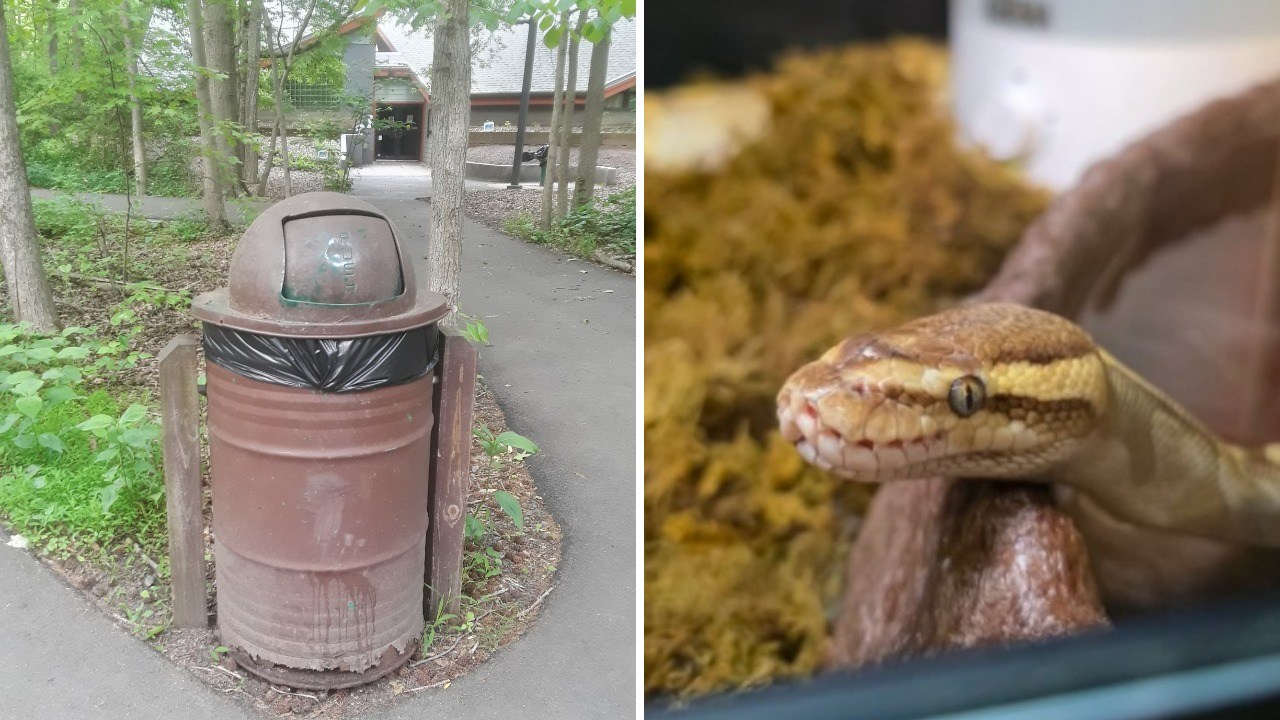
Park maintenance crews expect to haul out food wrappers and soda cans, not reptiles. A worker checking bins at Glendale’s Brand Park on Monday instead found a four-foot ball python inside one of them, according to NBC. An animal control officer with Pasadena Humane removed the snake from the bin that morning.
Staff then took the nonvenomous python in for veterinary exams to check for illness and injuries, and the shelter said it also enjoyed soaks in a pool between checkups. Details about how the snake got into the bin were not immediately available. However, the python’s species offers a strong clue about its origin.
Ball pythons are native to West and Central Africa, which suggests this one was likely someone’s pet. Florida has spent decades dealing with invasive pythons descended from pets that were released or escaped. Burmese pythons were first sighted in the Everglades in the 1970s and now range across much of South Florida, from Monroe County to Palm Beach County.
Nobody has said yet how the snake ended up in that bin
Pasadena Humane shared the rescue on Instagram, saying its team rarely sees snakes like this one but moves quickly to give them the specialized care they need. No owner has been publicly identified. It also remains unclear whether the ball python wandered away from a nearby home or was placed in the bin on purpose.
The snake appears to be doing well at the facility now. Pasadena Humane has not said whether it plans to put the ball python up for adoption or try to trace an owner. Animals like this need a stable environment, and a park trash can is not the place for one.
A ball python can stick around for decades, which is a lot to sign up for
Ball pythons typically live 20 to 30 years in captivity and can pass 50, according to the World Wildlife Fund. Adults usually measure three to four feet, which suggests the Glendale snake is likely fully grown. As they cannot regulate their own body temperature, pet ball pythons generally need a heated enclosure with controlled humidity.
Pet snakes that survive after being released can cause lasting damage, and Florida is the best-known case. According to the National Park Service, Burmese pythons became established in Everglades National Park through the accidental or intentional release of captive pets. The U.S. Geological Survey estimates tens of thousands now live there, and the park links them to sharp declines in mammals.
Dozens of nonnative snake species turn up free-ranging in the United States each year, usually after escaping or being released from the pet trade, the agency says. Most of them do not appear to establish wild populations. Burmese pythons became an exception in Florida, as they favor subtropical and tropical climates in their native range.
Have a tip we should know? [email protected]
Follow The Mary Sue:
